
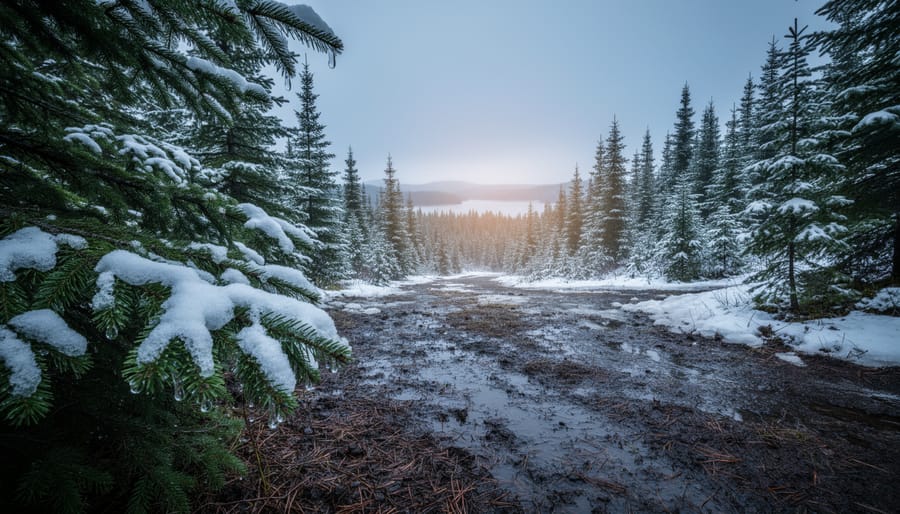
The question of what is causing climate change has a clear answer rooted in decades of scientific research: human activities are fundamentally altering Earth’s atmosphere at an unprecedented rate. Since the mid-1800s, we’ve pumped over 1.5 trillion tonnes of carbon dioxide into the air by burning fossil fuels, clearing forests, and industrializing agriculture. These actions have increased atmospheric CO2 concentrations from 280 parts per million before industrialization to over 425 ppm in 2026.
The science is straightforward. Greenhouse gases like carbon dioxide, methane, and nitrous oxide trap heat in our atmosphere, creating a warming effect similar to a blanket around the planet. While Earth’s climate has always fluctuated naturally through volcanic activity, solar variations, and orbital changes, the current warming is happening 10 times faster than the average ice-age recovery warming. The fingerprints are unmistakable: rising temperatures correlate directly with industrial emissions, ocean heat content has increased dramatically, and isotopic signatures in atmospheric carbon reveal fossil fuel origins.
Here in Canada, we’re experiencing this shift acutely. Our country is warming at roughly twice the global average, with the Arctic heating even faster. Yet understanding the causes also illuminates the path forward. Because human choices drive these changes, human innovation can redirect our trajectory.
This isn’t about blame. It’s about clarity, responsibility, and the remarkable opportunity Canadians have to lead solutions that work with natural systems rather than against them.
The Greenhouse Effect: Earth’s Natural Climate System
Without greenhouse gases, Earth would be a frozen planet averaging minus 18 degrees Celsius instead of the life-supporting 15 degrees we enjoy today. The greenhouse effect works through a straightforward process: the sun’s energy reaches Earth’s surface, which absorbs most of it and radiates it back as heat. Certain gases in the atmosphere trap a portion of this outgoing heat, preventing it from escaping into space. This natural mechanism keeps our planet warm enough for water to remain liquid, ecosystems to thrive, and civilization to flourish.
Four main gases drive this process. Water vapour is the most abundant greenhouse gas, forming clouds and humidity while responding quickly to temperature changes. Carbon dioxide enters the atmosphere through natural sources like volcanic eruptions and respiration from plants and animals. Methane comes from wetlands, termites, and oceans. Nitrous oxide arises from soil bacteria and ocean processes. Each gas absorbs different wavelengths of infrared radiation, working together to maintain Earth’s energy balance.
This greenhouse effect has operated for billions of years, creating stable conditions that allowed life to evolve and diversify. The system naturally adjusts over geological timescales through feedback loops involving oceans, ice sheets, and vegetation. For most of human history, atmospheric greenhouse gas concentrations remained relatively stable, keeping global temperatures within a narrow range. The problem we now face is not the greenhouse effect itself, which remains essential, but the rapid addition of extra greenhouse gases that amplify this natural warming process beyond Earth’s ability to adjust smoothly.
Human Activities Tipping the Balance
Burning Fossil Fuels: The Primary Driver
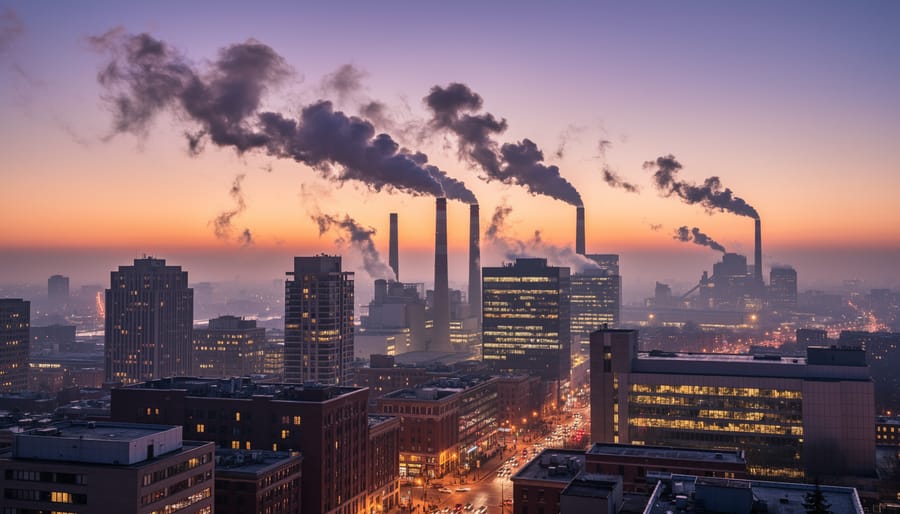
When we flip a light switch, drive to work, or heat our homes, we are tapping into energy systems built almost entirely on fossil fuels. Burning coal, oil, and natural gas releases carbon dioxide that has been locked underground for millions of years, dumping it into the atmosphere in decades. This combustion accounts for roughly three-quarters of global greenhouse gas emissions, making it the single largest contributor to climate change.
The numbers tell a stark story. Every litre of gasoline burned releases about 2.3 kilograms of carbon dioxide. A coal-fired power plant emits roughly 900 kilograms of carbon dioxide per megawatt-hour of electricity. Natural gas, though cleaner than coal, still produces around 400 kilograms per megawatt-hour. These emissions accumulate in the atmosphere, trapping heat and driving temperatures upward.
Canada’s energy landscape reflects this global pattern. We’ve historically relied on fossil fuels for transportation, heating, and industrial processes, particularly in Alberta’s oil sands and across the Prairies. But 2026 marks a turning point. Provincial grids are adding wind and solar capacity at record pace. Electric vehicle adoption is accelerating beyond earlier projections, supported by expanded charging infrastructure. Federal carbon pricing mechanisms are pushing industries toward cleaner alternatives.
The transition is not theoretical anymore. It is happening in manufacturing plants retrofitting equipment, in transit systems electrifying bus fleets, and in communities installing heat pumps. Understanding that fossil fuel combustion drives climate change makes the path forward clear: replace these energy sources with clean alternatives that do not burden the atmosphere with carbon.
Land Use Changes and Deforestation
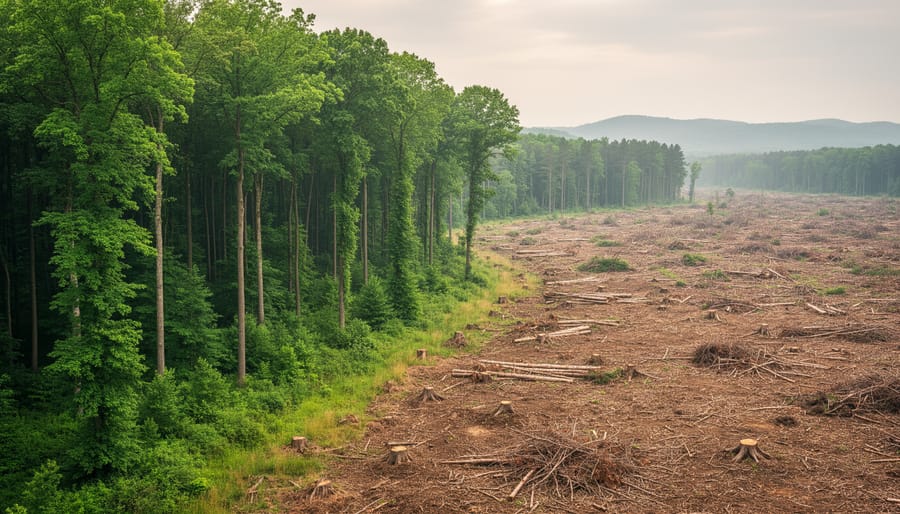
When forests disappear, the climate changes in two powerful ways. Trees and vegetation absorb carbon dioxide as they grow, storing it in their trunks, branches, and roots. Clearing land for agriculture, urban development, or resource extraction eliminates these carbon sinks while simultaneously releasing the stored carbon back into the atmosphere. This dual impact makes deforestation a major climate driver, accounting for roughly 10 percent of global greenhouse gas emissions.
Canada’s boreal forest, stretching across 552 million hectares, stores more carbon per hectare than tropical rainforests due to deep soil layers that have accumulated organic matter over thousands of years. When these forests are cleared for mining, logging, or development, centuries of stored carbon can be released within years. The disturbance also changes the land surface itself, altering how much sunlight is reflected back to space versus absorbed as heat.
Indigenous communities across Canada have demonstrated that traditional land stewardship practices maintain forest health while supporting biodiversity and carbon storage. Guardian programs in British Columbia and the Northwest Territories combine ancestral knowledge with modern monitoring technology to protect vast tracts of boreal and coastal temperate rainforest. These approaches preserve carbon sinks while sustaining communities, offering a model that respects both ecological and cultural values.
The challenge extends beyond forests. Converting grasslands and wetlands to agriculture disrupts ecosystems that naturally sequester carbon in soil and vegetation, while intensive farming practices can degrade soil quality and reduce its carbon-holding capacity over time.
Industrial Processes and Agriculture
Beyond fossil fuels, agriculture and industry contribute substantially to climate change through distinct emission pathways. Understanding these sources matters because they require different solutions than switching from coal to solar.
Livestock farming produces methane, a greenhouse gas 28 times more potent than carbon dioxide over a century. Cattle, sheep, and other ruminants generate methane during digestion, while manure management adds more. Rice paddies release methane when flooded fields create oxygen-free conditions where microbes thrive. These agricultural emissions represent roughly 10-12% of global greenhouse gases.
Synthetic fertilizers applied to crops break down into nitrous oxide, which traps 265 times more heat than carbon dioxide. The chemical reaction happens in soil after application, making it difficult to prevent entirely. Modern farming’s reliance on these fertilizers means agriculture contributes about 75% of global nitrous oxide emissions.
Industrial processes create emissions beyond energy use. Cement production, essential for construction, releases carbon dioxide when limestone is heated to extreme temperatures. Steel manufacturing, chemical production, and other heavy industries add layers of emissions through both energy consumption and chemical reactions inherent to their processes.
Canada’s agricultural sector is developing practical responses. Prairie farmers are adopting precision agriculture technologies that apply fertilizers only where needed, reducing nitrous oxide by up to 30%. Researchers at universities across the country test feed additives that cut methane from cattle by as much as 40%. These innovations demonstrate that farming can maintain productivity while shrinking its climate footprint, turning a major emissions source into a testing ground for solutions.
The Science Behind the Certainty
When you hear that climate scientists agree on human causation, that certainty comes from the Intergovernmental Panel on Climate Change (IPCC). Established in 1988 by UN Environment and the World Meteorological Organization, the IPCC brings together 195 member countries to assess climate research. Unlike most scientific bodies, the IPCC doesn’t conduct its own studies. Instead, it systematically reviews thousands of peer-reviewed papers to identify where the evidence converges.
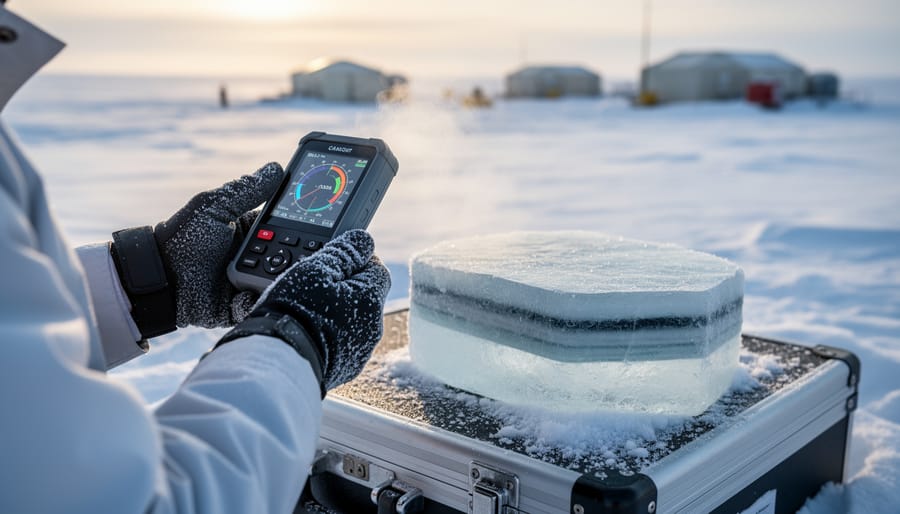
Multiple, independent lines of evidence confirm humans are warming the planet. Atmospheric measurements show rising carbon dioxide levels that match fossil fuel emissions precisely. Ice cores drilled from Greenland and Antarctica reveal atmospheric composition stretching back 800,000 years, proving current CO₂ concentrations are unprecedented in human history. These cores also show temperature and greenhouse gases moving in lockstep through natural climate cycles, but today’s spike breaks that ancient pattern.
Scientists also examine how climate is measured through attribution studies, which compare real-world observations against computer models. When researchers run simulations including only natural factors like solar variation and volcanic activity, the models can’t reproduce observed warming. Add human emissions, and the models match reality. This detective work isolates the human fingerprint on climate change.
- Carbon Isotopes
- Different carbon sources leave distinct chemical signatures. Measurements prove atmospheric CO₂ comes from burning ancient fossil fuels, not natural sources like volcanoes or oceans.
- Radiative Forcing
- The change in Earth’s energy balance caused by factors like greenhouse gases or aerosols. Positive forcing warms the planet; human activities have created strong positive forcing since 1850.
- Attribution Studies
- Research comparing climate observations to models running with and without human influences. These studies prove natural factors alone cannot explain current warming patterns.
The IPCC’s 2021 assessment stated unequivocally that humans have caused approximately 1.1°C of warming since 1850-1900. That certainty isn’t opinion or consensus for its own sake. It reflects decades of observations, experiments, and data from satellites, weather stations, ocean buoys, and research expeditions converging on the same conclusion: we’re changing the climate, and the science explaining how is rock-solid.
Canada’s Role in Climate Change and Solutions
Canada accounts for roughly 1.5% of global greenhouse gas emissions, but our per capita footprint ranks among the highest in the world. Our cold climate drives heating demands, vast geography requires transportation infrastructure, and resource extraction industries, oil and gas, mining, forestry, form pillars of the economy. These realities make emissions reductions challenging, yet they also position Canada as an innovation laboratory for solutions applicable across northern economies.
The oil sands remain our largest emissions source, but investments in carbon capture and methane reduction technologies are showing measurable results. Meanwhile, provinces are charting different paths: British Columbia’s electricity generation mix relies overwhelmingly on hydropower, while Alberta pilots hydrogen production and grid-scale battery storage. Ontario phased out coal-fired generation entirely, demonstrating that jurisdictions dependent on fossil fuels can transition without economic collapse.
Clean technology companies across Canada are driving what many call an energy revolution. Quebec manufacturers produce wind turbines for international markets. Saskatchewan startups develop direct air capture systems that pull carbon dioxide from the atmosphere. Indigenous-led renewable projects in remote communities displace diesel generators, cutting emissions while creating local employment and energy sovereignty.
Policy momentum accelerated through 2026. Federal carbon pricing continues rising, making clean alternatives increasingly competitive. Investment tax credits for clean electricity and hydrogen production are unlocking private capital. The Canadian Net-Zero Emissions Accountability Act requires five-year progress reports, embedding transparency into national climate strategy.
Challenges remain significant. Political divisions over resource development persist, and some workers face uncertain transitions. But the economic opportunity is undeniable: global demand for clean energy solutions will exceed two trillion dollars annually by 2030. Canada possesses the critical minerals, engineering talent, and manufacturing capacity to capture substantial market share. Understanding what causes climate change clarifies where intervention works, and where Canadian innovation can lead.
Understanding what’s causing climate change isn’t just an academic question, it’s the foundation for effective action. The science is unequivocal: human activities, primarily burning fossil fuels and altering land use, have warmed our planet approximately 1.1°C since pre-industrial times. This clarity empowers us to make informed choices. Canada stands at a pivotal moment, transforming climate commitments into action through clean energy innovation, sustainable resource management, and forward-thinking policies. The transition to net-zero isn’t a burden, it’s an economic opportunity that will define Canadian competitiveness in the decades ahead. By understanding the causes, we can build solutions that work.