
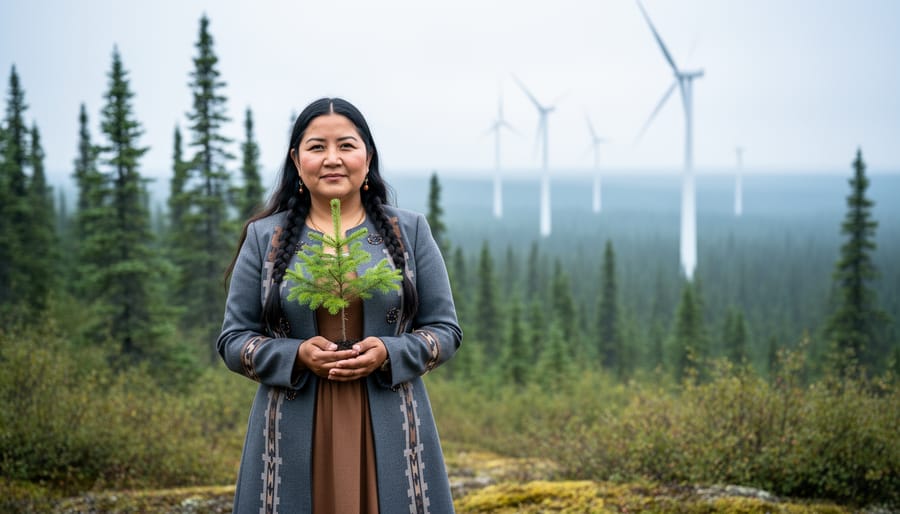
Every year on June 5th, over 150 countries pause to recognize World Environment Day, the United Nations’ flagship initiative for environmental action. Since 1973, this global observance has mobilized millions of people to confront our planet’s most pressing ecological challenges. But what began as a symbolic gesture has evolved into something far more tangible: a 24-hour catalyst for policy announcements, grassroots initiatives, and the kind of ambitious commitments that reshape how nations approach sustainability.
For Canadians, this day carries particular weight. Our vast boreal forests store more carbon than any other ecosystem on Earth. Our coastlines span three oceans. We’re stewards of 20 percent of the world’s freshwater supply. These aren’t just statistics. They’re responsibilities that demand innovation, courage, and a willingness to lead even when the path forward seems uncertain.
This year’s theme arrives at a critical juncture. Canada has committed to reducing emissions by 40 to 45 percent below 2005 levels by 2030. We’re investing billions in clean technology, renewable energy infrastructure, and nature-based climate solutions. Indigenous communities are reclaiming their role as environmental guardians, bringing millennia of ecological knowledge to conservation efforts that Western science is only beginning to validate.
The question isn’t whether Canada will participate in World Environment Day. It’s how we’ll translate one day of awareness into 365 days of meaningful action that future generations will recognize as the turning point we desperately needed.
World Environment Day 2026: A Global Call to Climate Action
World Environment Day, observed each year on June 5, has grown into one of the largest global platform for environmental outreach since its inaugural celebration in 1973. Led by the United Nations Environment Programme (UNEP), this annual observance mobilizes governments, businesses, and citizens from more than 150 countries to address the most pressing environmental challenges of our time. What began as a modest awareness initiative has evolved into a worldwide movement that drives tangible policy change and grassroots action across continents.
The theme and host for 2026 carry particular weight. Azerbaijan will host the global observance, bringing the spotlight to climate change through the campaign #NowForClimate. This focus arrives at a critical juncture for nations grappling with the dual imperatives of economic development and emissions reduction. The choice of climate change as the central theme underscores the urgency of transitioning away from fossil fuel dependence while building resilience against accelerating environmental disruption.
For Canada, this year’s theme hits especially close to home. As a resource-rich nation with significant oil and gas reserves, Canada faces a complex balancing act between economic interests tied to traditional energy sectors and ambitious climate commitments. The country’s vast geography, from carbon-storing boreal forests to Arctic regions experiencing rapid warming, makes it both a crucial player in global climate action and a nation uniquely vulnerable to climate impacts. World Environment Day 2026 offers Canada a moment to demonstrate how a major resource economy can chart a credible path toward decarbonization without abandoning the communities and workers who have built their livelihoods on conventional energy.
Canada’s Climate Policy Landscape: Where We Stand
Canada has set ambitious climate targets, but the real test lies in the policies and mechanisms designed to deliver them. Under the Canadian Net-Zero Emissions Accountability Act, the federal government committed to reducing greenhouse gas emissions by 40 to 45 percent below 2005 levels by 2030, with a legally binding goal of net-zero by 2050. These aren’t aspirational numbers, they’re legislative requirements that shape everything from industrial regulations to infrastructure investment.
Carbon pricing stands as the cornerstone of Canada’s climate strategy. The federal carbon pricing system, which applies in provinces without equivalent mechanisms, puts a price on pollution that rises incrementally each year. As of April 2024, the carbon price reached $80 per tonne of CO2 equivalent, with scheduled increases continuing toward $170 per tonne by 2030. The policy remains contentious, yet it has demonstrably influenced corporate decision-making and energy choices across sectors, particularly in heavy industry and transportation.
Recent legislative developments signal a broader policy shift. The Clean Electricity Regulations, finalized in 2024, mandate that Canada’s electricity grid achieve net-zero emissions by 2035, a decade earlier than many comparable economies. The Investment Tax Credits for clean technology and hydrogen production provide billions in direct support for renewable energy projects and carbon capture infrastructure. Meanwhile, the Emissions Reduction Plan sets sector-specific targets for oil and gas, transportation, buildings, and heavy industry.
Provincial policies add complexity and opportunity. British Columbia’s CleanBC roadmap, Quebec’s cap-and-trade system linked to California’s market, and Alberta’s Technology Innovation and Emissions Reduction framework create a patchwork of approaches that reflect regional economic realities. Some provinces move faster than federal minimums; others resist.
The challenge isn’t designing policies, it’s implementation at scale. Regulatory timelines, permitting processes, and funding mechanisms will determine whether these frameworks translate into the measurable emissions reductions Canada has promised.
Clean Energy Innovations Leading Canada’s Transition
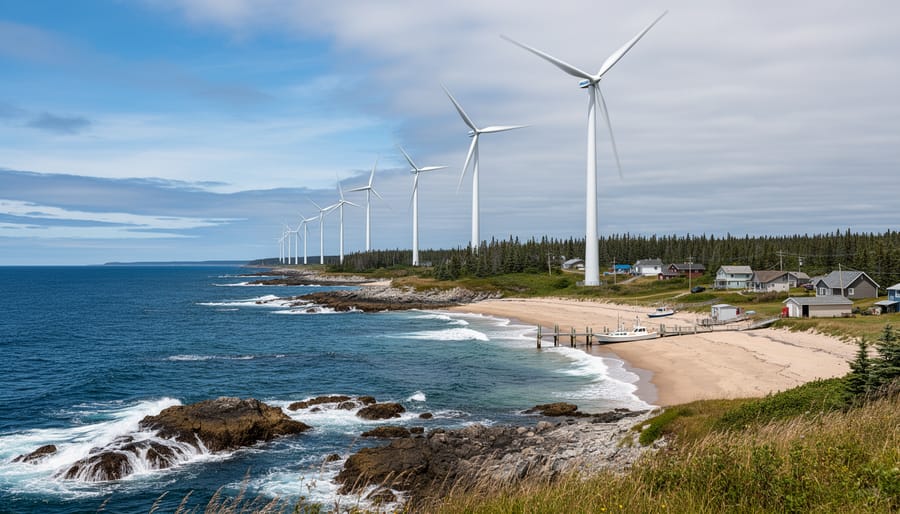
Renewable Energy Projects Reshaping Our Grid
Canada’s renewable energy infrastructure is expanding at an unprecedented scale, fundamentally transforming the country’s electricity mix and setting the stage for a cleaner grid. In Alberta, the 400-megawatt Stirling Wind Project represents one of the largest wind farms in the province, generating enough clean power for roughly 150,000 homes while creating over 200 construction jobs in rural communities. British Columbia’s Site C hydroelectric project, despite controversy, will add 1,100 megawatts of capacity, enough to power roughly 450,000 homes annually, and demonstrates the scale of investment required to meet growing electricity demand without fossil fuels.
Ontario’s shift is equally dramatic. The province has approved several large-scale solar farms in recent years, including developments that prioritize agricultural land sharing, allowing farmers to generate income from solar arrays while continuing crop production beneath panels. In Atlantic Canada, the Maritime Link interconnector now enables Newfoundland and Labrador to export clean hydroelectric power to Nova Scotia, displacing coal generation and proving that regional collaboration accelerates the transition.
These projects deliver more than megawatts. They’re anchoring economic development in communities historically dependent on resource extraction, retraining workers, and proving that Canada can build the infrastructure its climate commitments demand.
Clean Technology Breakthroughs From Canadian Innovators
Canada’s clean tech sector is proving that environmental necessity breeds innovation. From coast to coast, clean energy innovators are developing solutions that address the most pressing challenges in our energy transition.
In energy storage, companies like Hydrostor are pioneering advanced compressed air energy storage systems that can hold renewable energy for days rather than hours. Their facility in Goderich, Ontario, uses underground caverns to store compressed air, releasing it to generate electricity when wind and solar production dips. This technology solves one of renewable energy’s biggest obstacles: intermittency.
Carbon capture technology is advancing rapidly through Canadian ingenuity. Carbon Engineering, based in British Columbia, has developed direct air capture systems that pull CO2 directly from the atmosphere. Their technology doesn’t just capture carbon from industrial sources; it actively removes existing atmospheric carbon, offering a pathway to reverse emissions rather than simply slow them.
The challenge isn’t just generating clean energy anymore, it’s storing it efficiently and integrating it seamlessly into existing infrastructure. That’s where Canadian innovation is making real breakthroughs.
Green hydrogen represents another frontier where Canadian researchers are leading. Hydrogen produced using renewable electricity offers a clean fuel alternative for heavy industry and transportation sectors that can’t easily electrify. Projects across Alberta and Quebec are scaling production, with facilities designed to serve both domestic needs and export markets.
These innovations share a common thread: they’re moving beyond laboratory prototypes into commercial deployment. Canadian clean tech isn’t just theoretical promise; it’s generating jobs, attracting investment, and proving that climate solutions can drive economic growth while reducing emissions.
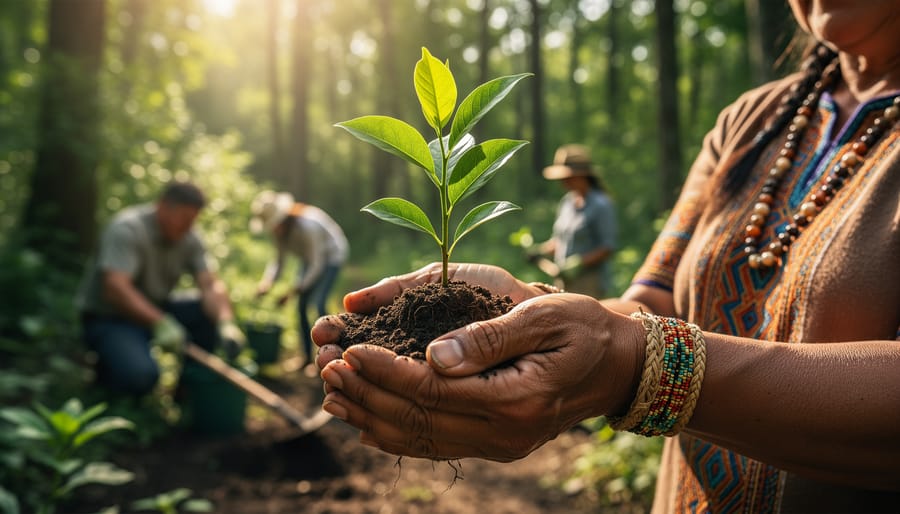
Indigenous Leadership in Environmental Stewardship
Canada’s progress on climate action owes much to Indigenous communities who have protected 80 percent of the planet’s biodiversity while representing just 5 percent of the global population. In Canada, Indigenous Peoples manage or have interests in roughly 30 percent of the land mass, making their leadership essential to achieving national climate targets.
This stewardship extends beyond conservation. The Taykwa Tagamou Nation in northern Ontario operates a 19-megawatt solar farm that powers 5,000 homes, while the T’Sou-ke Nation in British Columbia became one of Canada’s first energy-independent communities through their solar installation. These projects demonstrate how renewable energy development can align with self-determination, creating local jobs and revenue streams that reduce reliance on diesel generators in remote areas.
Traditional ecological knowledge is reshaping how Canada approaches environmental management. Fire management practices developed over millennia, controlled burns that reduce catastrophic wildfire risk and promote ecosystem health, are now being integrated into provincial forestry programs in Alberta and Saskatchewan. Two-eyed seeing, a Mi’kmaq principle that values both Indigenous knowledge and Western science equally, has informed watershed management in Nova Scotia and species recovery programs across the country.
The partnership model matters. The federal government’s Target 1 Challenge commits to supporting Indigenous-led conservation, recognizing that protected areas guided by Indigenous governance show better biodiversity outcomes. The Indigenous Guardians program now supports over 80 communities in monitoring their territories, combining satellite technology with traditional observation methods.
Yet genuine partnership requires more than funding announcements. It means consulting Indigenous communities before projects break ground, respecting free, prior and informed consent, and recognizing Indigenous legal orders alongside Canadian law. When these principles guide development, the results benefit everyone: healthier ecosystems, more resilient energy systems, and climate solutions rooted in knowledge tested across generations.
How Canadians Can Join the Movement
Canada’s climate transition won’t succeed through policy alone, it requires millions of Canadians making deliberate choices in their daily lives and communities. World Environment Day offers a natural starting point, but meaningful impact comes from sustained action that extends well beyond June 5.
- Join or organize a local World Environment Day event in your community. Many municipalities, environmental groups, and Indigenous organizations host tree-planting initiatives, cleanup drives, and educational workshops. These gatherings connect you with neighbours who share your concerns and can spark ongoing collaboration.
- Advocate for climate action at the municipal level. Attend city council meetings to support bike infrastructure, electric buses and green building standards. Local governments control significant levers for emissions reduction, and councillors respond to constituent pressure.
- Make your residence an eco-friendly home by prioritizing high-impact upgrades. Switching to a heat pump, improving insulation, or installing solar panels delivers far greater emissions reductions than small behavioural changes alone.
- Support businesses demonstrating genuine climate leadership. Vote with your wallet for companies publishing verified emissions data, investing in renewable energy, and setting science-based targets rather than those making vague sustainability claims.
- Contact your MP about federal climate policy. Specific asks carry more weight than general expressions of concern, request faster permitting for renewable projects, stronger building codes, or increased funding for Indigenous-led conservation.
These actions compound over time. A resident who installs solar panels inspires neighbours; a parent advocating at school board meetings influences curriculum; a small business switching to renewable energy demonstrates viability to competitors. Canada’s path to net-zero depends on this distributed effort across every sector and community.

Canada’s journey toward a sustainable future isn’t measured in single days or symbolic gestures. This World Environment Day reminds us that real progress comes from the cumulative effect of policy decisions, technological breakthroughs, community action, and individual choices compounding over time. The renewable energy projects reshaping our grid, the clean tech innovations emerging from Canadian labs, and the Indigenous-led stewardship initiatives protecting our ecosystems represent tangible steps forward, not just aspirations.
Yet honesty demands we acknowledge the distance still to travel. Meeting our emissions targets requires acceleration, not maintenance of current pace. The gap between commitment and implementation remains our greatest challenge.
What sets this moment apart is the alignment of opportunity with urgency. Canada possesses the natural resources, technical expertise, and increasingly, the political will to become a clean energy leader. The question isn’t whether we can make the transition, but whether we’ll move fast enough to capitalize on the economic and environmental advantages of early action.
Progress depends on sustained pressure and participation across every sector. Policymakers need public support to enact ambitious legislation. Innovators need investment to scale breakthrough technologies. Communities need resources to implement local solutions. This World Environment Day, the most meaningful action you can take is committing to stay engaged beyond June 5, holding decision-makers accountable, supporting Canadian clean energy initiatives, and making the changes within your control. The future we’re building requires all of us.