
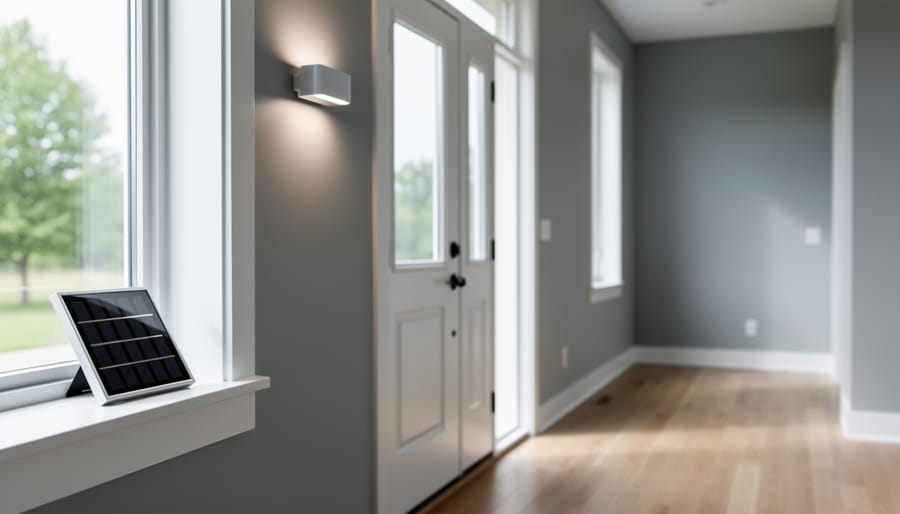
Solar lights designed for indoor use bring sun-powered illumination to spaces where wiring is impractible or absent, and the technology has matured enough that Canadian homeowners can now find reliable options starting around C$42 for basic models and reaching C$62 for feature-rich units with motion sensors and remote dimming. These systems work by charging photovoltaic panels in sunlight (either mounted outdoors or near south-facing windows) and delivering stored energy to LED fixtures positioned anywhere in your home, garage, shed, or workshop.
The value proposition is straightforward: eliminate electrical costs for secondary spaces, avoid contractor fees for new wiring, and align your lighting choices with Canada’s clean energy revolution. But the buying decision hinges on understanding which solar indoor light category fits your needs. A 172-LED pendant with pull-switch control solves different problems than a motion-activated flood light or a dusk-to-dawn accent fixture.
Current 2026 models vary widely in brightness (from 600 lumens for ambient glow to 3,000 lumens for task lighting), control options (manual switches, timers, remote dimmers, or automatic sensors), and panel placement flexibility. alone lists more than 10,000 configurations, which means choosing wisely requires clarity on your priorities: Are you lighting a dark basement stairwell that needs automated activation? A detached garage where you want daylight-equivalent work lighting? Or a seasonal cabin where minimal wiring and year-round off-grid reliability matter most?
This guide walks through the decision factors that determine performance in Canadian conditions, compares the main product categories with real-world examples and verified pricing, and highlights the mistakes that turn a promising solar solution into a frustrating underperformer.
What Makes Indoor Solar Lighting Work in Canada
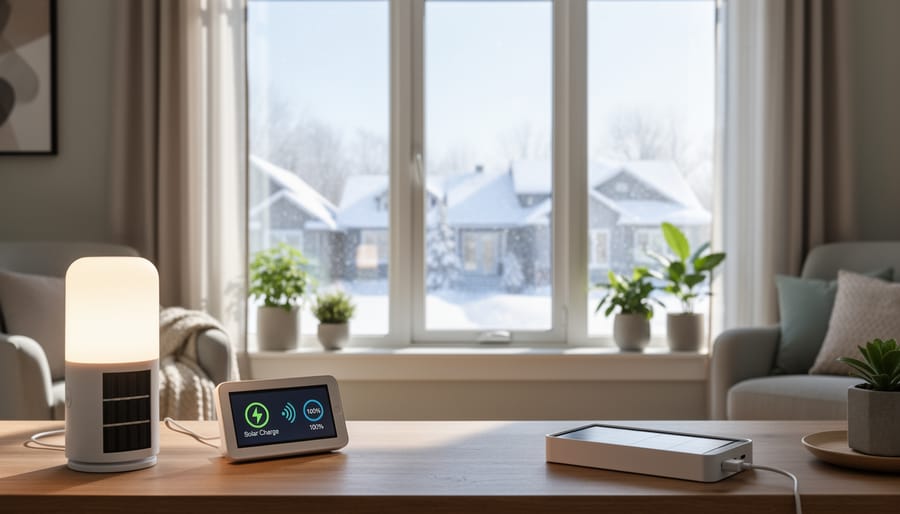
Solar-powered indoor lights work by converting sunlight into electricity through photovoltaic panels that store energy in rechargeable batteries for later use. In Canadian homes, these systems typically charge in one of two ways: through small integrated panels placed near south-facing windows, or via separate outdoor solar panels connected to indoor fixtures with low-voltage wiring. The panels capture daylight and convert it to electrical current, which charges lithium-ion or nickel-metal hydride batteries that power LED bulbs when needed.
The technology fits naturally into Canada’s broader shift toward energy-efficient infrastructure offering off-grid lighting without tapping into household electrical circuits. Most current models include light sensors that automatically switch the fixture on at dusk and off at dawn, while motion sensors add flexibility for spaces where constant illumination isn’t necessary. Control options range from simple pull switches to remote controls with dimming functions, letting you adjust brightness from 600LM for ambient bedroom lighting up to 3000LM for workshop tasks.
Canadian homes face unique considerations because sunlight availability shifts dramatically across seasons and geography. Southern Ontario receives roughly 2,000 hours of bright sunshine annually, while northern territories may see extended summer daylight but prolonged winter darkness. Modern solar indoor lights compensate through efficient battery storage that holds charges for multiple days, and many include USB backup charging ports for stretches when natural light runs scarce. The key limitation isn’t whether the technology works in Canada, it does, but rather matching panel size and battery capacity to your location’s seasonal patterns and the room’s natural light access.
Key Factors When Choosing Solar Indoor Lights
Brightness and Light Quality
Choosing the right brightness starts with understanding lumen ratings. Entry-level solar indoor lights typically produce 600-1000LM, sufficient for bedrooms, home offices, or accent lighting where gentle illumination works best. Mid-range options deliver 1200-1800LM, ideal for kitchens, living rooms, and spaces where you read or work regularly. High-output models reach 2000-3000LM, these suit workshops, garages, or utility rooms that demand bright, task-oriented light.
Light colour matters as much as intensity. Warm white (2700-3000K) creates a cozy atmosphere in living spaces and bedrooms, matching traditional incandescent bulbs. Cool white (5000-6500K) provides crisp, energizing light for workshops and areas where colour accuracy matters. Some Canadian models offer adjustable settings across nine brightness levels, letting you fine-tune output to match the time of day or activity.
Match brightness to room size using a simple rule: multiply your space’s square footage by 20 for general ambient lighting, or by 50 for task-focused areas. A 100-square-foot bedroom needs roughly 2000 lumens total, easily covered by two 1000LM solar lights. Oversized rooms or multi-purpose spaces benefit from dimmable models that adapt to changing needs throughout the day.
Control Features and Automation
Control features separate basic illumination from truly functional solar lighting in Canadian homes. The main options, pull switches, remote controls, motion sensors, smart light sensors, and dusk-to-dawn automation, each solve different practical challenges.
Pull switches offer the simplest operation: yank the cord to cycle through brightness levels or turn the light off entirely. They work well in garages and workshops where you approach the fixture directly and want tactile, reliable control without fumbling for remotes. Models with two dimmable settings let you choose full 2000LM output for detailed work or lower brightness for background lighting.
Remote controls add convenience when fixtures mount high or in hard-to-reach spots. A dimmable remote lets you adjust brightness from across the room and switch between lighting modes without climbing a ladder, ideal for vaulted ceilings in living areas or barn loft installations.
Motion sensors activate lights automatically when you enter a space, then shut off after a set period. They conserve battery power in hallways, storage rooms, and outdoor sheds where you need hands-free operation while carrying tools or supplies.
Smart light sensors and dusk-to-dawn functions detect ambient brightness and respond accordingly. A fixture with 9-level adjustable settings and three timer options adapts automatically to Canada’s dramatic seasonal light shifts, providing illumination only when natural daylight drops below a threshold. This automation maximizes battery life through long summer evenings while ensuring reliable lighting during short winter days.
Choose controls based on how you’ll actually use the space, not the longest features list.
Durability and Installation Flexibility
Canadian homes demand solar lights that can handle diverse conditions, from humid basement workshops to unheated sheds facing minus-thirty winters. The IP65 waterproof rating has become the baseline for utility spaces, protecting against dust infiltration and water spray from hoses or condensation. This certification matters most for garages, barns, and chicken coops where moisture and temperature swings test electronics. Models with IP65 construction typically feature sealed battery compartments and reinforced casing, though they cost slightly more than basic indoor-only units.
Rotation design separates practical options from frustrating ones. Adjustable heads let you aim light precisely where you need it, over a workbench, into storage corners, or across a shed’s full width. Some units rotate 360 degrees at the panel mount, while others tilt up to 180 degrees. This flexibility proves critical in Canadian garages with awkward layouts or when repurposing a light from one room to another.
Mounting styles split between pendant and fixed installations. Pendant lights hang from a cord, making them ideal for high ceilings in workshops or positioning over specific work areas. They’re easier to relocate but need overhead anchor points. Fixed mounts attach directly to walls or ceilings, offering stability in low-clearance spaces like crawl spaces or utility closets. The 2000LM two-pack model at C$49.99 includes both a pull switch and IP65 rating, combining durability with straightforward pendant installation, a practical choice for multiple Canadian outbuilding applications.
Types of Solar Indoor Lights Compared
Basic Solar Pendant Lights
Basic solar pendant lights offer the most straightforward entry point for Canadians exploring this technology. These models typically deliver 600-1,000 lumens, enough to illuminate a bedroom, home office, or reading nook without overpowering smaller spaces. Most feature warm white colour temperatures that create comfortable ambient lighting rather than the harsh glare of higher-output workshop models.
The simplicity here works in your favour. Entry-level pendants usually include basic light sensors that automatically switch on at dusk and off at dawn, eliminating the need for manual operation. The verified 600LM warm light model available at C$42.29 demonstrates this category well: it includes nine adjustable brightness levels and three timer settings, giving you control over intensity and duration without complex programming. This flexibility matters in Canadian homes where you might want brighter task lighting during short winter afternoons but dimmer ambient light during long summer evenings.
Installation typically requires mounting a small solar panel near a south-facing window and connecting it to the pendant via included wiring. The lights themselves hang from standard hooks or ceiling mounts, making them suitable for rentals where permanent electrical changes aren’t permitted. For bedrooms and offices, these models provide adequate illumination for daily activities while keeping upfront costs under C$50, a practical way to test solar technology before committing to higher-output systems for larger spaces.
Motion-Sensor Solar Lights
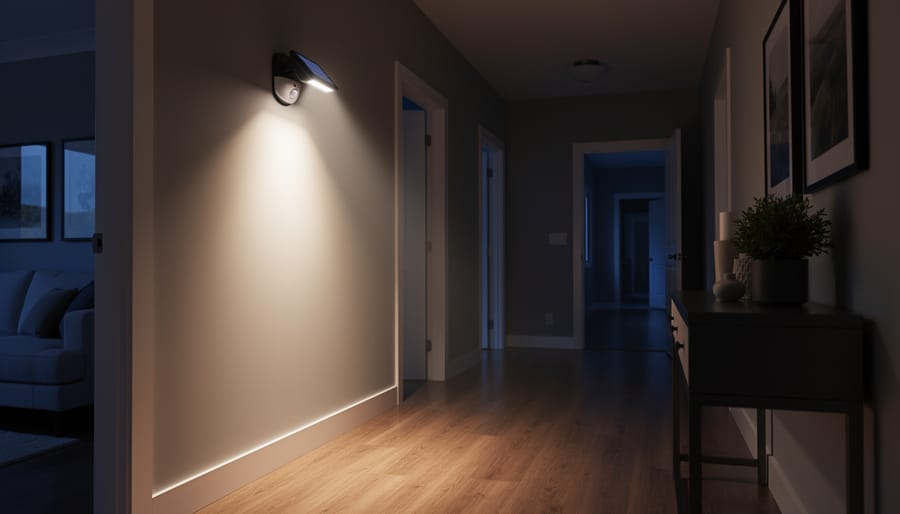
Motion-sensor solar lights bring an automation layer that suits Canadian homes needing hands-free operation in high-traffic areas. These models detect movement within a defined range, typically three to five metres, and trigger full brightness, then dim or switch off after no activity. That reduces wasted energy and extends battery life between charges, a practical advantage during shorter winter days when solar input drops.
Most motion-sensor units offer three or four lighting modes: constant dim glow, motion-activated bright, sensor-off for manual control, and sometimes a dusk-to-dawn setting that combines ambient light detection with motion response. Remote controls let you switch modes without reaching the fixture, useful for ceiling-mounted lights in hallways or stairwells. Some remotes also adjust brightness across nine levels, giving you fine control over ambience and runtime.
Expect brightness between 600LM and 3000LM depending on the model. Lower-output versions work well for bedrooms or corridors where you need gentle lighting triggered by nocturnal movement. Higher-output motion sensors suit utility rooms, basements, and entryways where security and visibility matter more than soft ambience. Rotation-design housings let you angle the light head toward doors or work areas, maximizing coverage from a single mounting point.
Prices range from around C$42 for basic 600LM warm-light models with smart sensors to C$62 for 3000LM cool-white units with remote dimmers and waterproof construction. Choose motion sensors when convenience and energy efficiency outweigh the simplicity of a manual switch.
High-Output Shed and Workshop Lights

When serious work demands reliable illumination, whether you’re rebuilding an engine, tending livestock before dawn, or storing equipment in an unheated barn, high-output solar lights deliver the brightness and ruggedness that Canadian utility spaces require. These 2000-3000LM models represent the upper tier of solar indoor lighting, designed specifically for environments where durability matters as much as visibility.
The defining feature of this category is robust construction. IP65 waterproof ratings protect against dust intrusion and moisture common in garages, sheds, and agricultural buildings. Unlike living-space models, these lights typically feature simple pull-switch controls rather than remote systems, a practical choice when you’re wearing work gloves or your hands are full. The cool white output maximizes visibility for detail work, from reading part numbers to inspecting wiring.
Multi-pack options address a common Canadian reality: most workshops and outbuildings need multiple light sources for adequate coverage. A verified 2-pack model offering 2000LM per fixture with dimmable settings and pull-switch operation is available at C$49.99, making the per-light cost competitive with basic single units while solving the coverage problem immediately. At the premium end, a 3000LM rotating fixture with waterproof construction and remote dimming capability lists at C$61.83, a worthwhile investment for spaces requiring flexible positioning or frequent brightness adjustments.
These lights handle the temperature swings and humidity that define Canadian utility spaces year-round. The trade-off? Larger solar panels and heavier battery packs mean bulkier housings than decorative indoor models, but function trumps aesthetics when you’re working through a Prairie winter evening.
Recommended Solar Indoor Lights for 2026
Best for Living Spaces and Bedrooms
For living spaces and bedrooms, prioritize warm-light models in the 600-1000LM range that create a comfortable ambiance without harsh glare. These lower-output options suit residential rooms where you need soft, inviting illumination rather than workshop-level brightness. Look for smart light sensors that automatically adjust to natural daylight levels, this prevents wasted battery power during sunny afternoons and ensures the light activates only when genuinely needed.
The dusk-to-dawn function proves particularly valuable in bedrooms and living areas, maintaining consistent evening lighting without manual switches. Models with 9-level adjustable settings let you fine-tune brightness to match activities: dim for relaxing evenings, brighter for reading or tasks. Timer settings add convenience, allowing programmed shutoff after a set duration so you don’t drain the battery overnight.
Current Canadian market options in this category start around C$42.29 for models combining warm white output, smart sensors, adjustable brightness levels, and timer controls. These entry-level prices make solar lighting accessible for testing in one or two rooms before expanding throughout your home. Choose pendant-style fixtures that distribute light evenly across the room rather than directional spots that create shadows in living spaces.
Best for Workshops and Utility Rooms
Workshops, garages, and utility rooms demand solar lights that deliver serious illumination while standing up to dust, moisture, and temperature swings. Look for models rated at 2000-3000LM, roughly equivalent to a 150-200W incandescent bulb, to adequately light work surfaces and eliminate shadows in larger spaces. At this output level, you can comfortably perform detailed tasks like woodworking or equipment maintenance without supplemental lighting.
Waterproof construction matters more in these environments than anywhere else in your home. An IP65 rating protects the fixture from direct water spray and prevents dust infiltration, essential for humid basements, unheated garages, or barn installations where condensation accumulates. The best workshop models include pull-switch operation rather than sensors, giving you instant manual control when you need full brightness immediately, not gradual activation from motion detection.
Current Canadian options include a 2000LM pull-switch model available in a two-pack at C$49.99, specifically designed for chicken coops, barns, and garage applications with dimmable settings. For maximum output, a 3000LM model with rotation design and remote dimming capability sits at C$61.83, offering both indoor and outdoor certification plus cool white light that enhances visibility for precision work.
Dimmable features extend battery life during long work sessions when you don’t need full brightness. Position the solar panel where it captures winter sunlight, critical for Canadian workshops that see heavy use year-round, and expect 4-8 hours of operation depending on your brightness setting and seasonal charging conditions.
Best for Multi-Purpose Applications
Versatile solar lights blur the line between indoor and outdoor applications, making them ideal for Canadians who need lighting solutions that adapt to changing needs throughout the year. These multi-purpose models typically feature rotation designs that let you direct light exactly where you need it, whether that’s illuminating a workspace one month or providing ambient patio lighting the next.
Look for lights certified for both indoor and outdoor use with IP65 waterproof ratings. The C$61.83 3000LM model with rotation design exemplifies this category, offering remote-controlled dimming alongside its weather-resistant construction. This flexibility matters in Canadian homes where a garage might double as a workshop in winter and open onto a deck in summer, or where a shed serves storage duty six months of the year before becoming a gardening station.
Multiple control options distinguish the best multi-purpose lights from single-function alternatives. Models combining motion sensors, remote controls, and manual switches give you three ways to operate the same fixture depending on context. A basement stairwell might benefit from motion detection during daily use, while the same light switched to manual mode works perfectly for extended project sessions or as emergency backup lighting during power outages that affect many Canadian regions each winter.
Common Mistakes to Avoid When Buying
Canadian buyers excited about solar-powered indoor lighting often make predictable errors that undermine performance and satisfaction. Learning from these mistakes saves money and frustration.
The most common misstep is underestimating winter charging requirements. Many assume a solar panel near any window will suffice year-round, but Canada’s shortened daylight hours and low-angle sun from November through February drastically reduce charging capacity. Panels positioned on north-facing windows or in shaded areas may not gather enough energy to keep lights functional during the darkest months. South-facing placement is critical, and buyers in northern regions should consider models with detachable panels that can be moved outdoors during winter or supplemented with occasional USB charging.
Choosing inadequate brightness ranks as another frequent error. A 600LM light might seem sufficient in-store, but it disappoints when installed in a 200-square-foot workshop or garage. Buyers often select based on price rather than lumen output matched to room size. For living spaces and bedrooms, 600-1000LM works well. Workshops, sheds, and utility rooms need 2000-3000LM for safe, functional illumination. Verify the lumen rating and compare it to the square footage you’re lighting before purchasing.
Ignoring control preferences leads to daily annoyance. Some users discover too late that they dislike climbing a ladder to pull a cord switch, while others find motion sensors trigger unnecessarily or smart sensors fail to activate when needed. Consider how you’ll realistically use the space: pull switches suit infrequent-access storage areas, motion sensors work for high-traffic hallways, and remote controls or smart sensors fit living spaces where you want convenient adjustments.
Overlooking durability needs for humid spaces costs buyers replacement units within months. Standard models without waterproof ratings fail quickly in damp basements, unheated garages where condensation forms, or garden sheds. If your installation site experiences moisture, temperature swings, or occasional water exposure, IP65-rated construction isn’t optional, it’s essential for longevity.
Installation Tips for Canadian Homes
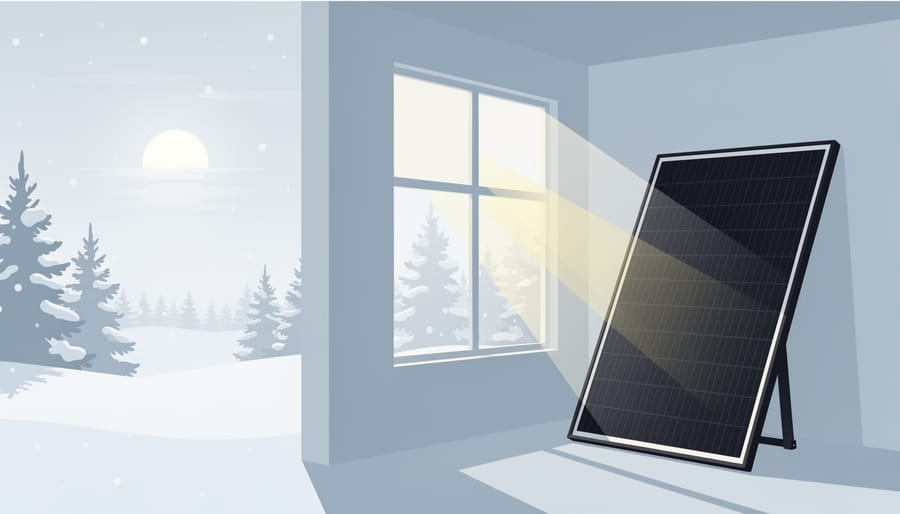
Getting your solar-powered indoor lights working properly depends on smart placement and simple installation steps that account for Canada’s unique seasonal conditions. Start by mounting your solar panel where it receives maximum daylight, ideally near a south-facing window that gets direct sun for at least four to six hours daily. For homes with limited southern exposure, southwest or southeast windows work as acceptable alternatives. Secure the panel firmly with adhesive mounts or screws, ensuring it sits flush against the glass to avoid shadows from window frames.
Run the connecting cable from the panel to your light fixture along baseboards or through walls using cable clips, keeping wires away from heat sources and high-traffic areas. Most models come with 16-foot cables, giving you flexibility to position lights in the centre of rooms while keeping panels at windows. If drilling is required, use proper anchors for your wall type and seal any exterior penetrations to prevent air leaks.
Position your lights based on room layout and brightness output. A 600-1000LM model works well centered in a small bedroom or office, while 2000-3000LM fixtures suit workshops and garages where you need broader coverage. For rooms with multiple light needs, consider two-pack options placed strategically rather than one high-output unit creating uneven illumination.
Maintaining performance through winter requires periodic panel cleaning, snow, ice, and condensation can block sunlight during Canadian winters. Wipe panels monthly with a soft cloth, and if you notice dimming during short winter days, recharge batteries fully by moving panels to the brightest window available. Some Canadian households pair their solar lighting with participation in clean energy programs to offset grid use further, creating a comprehensive approach to home energy efficiency that works year-round.
Frequently Asked Questions
Do solar-powered indoor lights really work during Canadian winters? Can they hold a charge in rooms without direct sunlight? These questions come up constantly from homeowners considering the switch to solar indoors, and the answers matter for making a smart investment in eco-friendly renovations.
Do solar indoor lights work well in Canadian winters?
Yes, but performance depends on your panel placement and sunlight access. Models charged through south-facing windows maintain function through winter months, though shorter daylight hours mean batteries may not reach full capacity daily. Northern regions with limited winter sun should consider supplemental outdoor panel systems.
How long do solar indoor light batteries typically last?
Quality lithium-ion batteries in current models usually provide 3-5 years of service before capacity noticeably drops. Runtime on a full charge ranges from 6-12 hours depending on brightness settings, with dimmer modes extending operation through the night.
Can I use solar lights in windowless basements or interior rooms?
Not effectively with integrated panels, but yes with separate outdoor panel systems connected by wiring. This setup charges the battery outside while the light fixture operates in any interior space, making solar viable for basement workshops or windowless storage areas.
Are solar indoor lights actually cost-effective compared to wired options?
Initial costs run higher than basic fixtures, with quality models ranging from C$42 to C$62, but you eliminate electricity costs and avoid wiring installation expenses. For spaces without existing electrical access like sheds or garages, solar proves cheaper than hiring an electrician to run new circuits.
Maintenance requirements stay minimal. Wipe the solar panel monthly to remove dust buildup that blocks charging efficiency, especially in winter when grime accumulates faster. Check battery connections annually for corrosion, particularly in humid spaces like basements or utility rooms. Most current models use sealed units requiring no regular battery replacement until capacity naturally degrades after several years.
The winter performance question deserves deeper attention for Canadian buyers. Your latitude makes a real difference. Southern Ontario homes get enough winter sun through windows to keep batteries topped up, while Yukon residents face genuine charging challenges during December and January. A south-facing window provides the best year-round performance, but west-facing exposure works for most models too. East-facing windows deliver morning charge, which suffices if you use lights primarily in evenings. North-facing windows rarely provide enough intensity except during summer months.
Choosing the right solar-powered indoor lighting does more than brighten a room. It connects your daily habits to Canada’s broader clean energy transition, turning a simple home improvement into a tangible step toward national climate commitments. Every kilowatt-hour you generate from sunlight instead of drawing from the grid reduces fossil fuel demand, lowers emissions, and demonstrates that renewable technology works in real Canadian homes, from St. John’s to Victoria.
The selection process comes down to matching technology to your specific needs. Consider brightness requirements for your space, whether you need motion sensors or manual controls, and which mounting style fits your home’s layout. Factor in seasonal sunlight patterns, especially if you live in northern regions where winter charging requires south-facing window placement or outdoor panel runs. Durability matters for utility spaces, while aesthetic choices like warm versus cool white make the difference in living areas.
Think about how design for sustainability transforms ordinary purchases into intentional contributions. With over 10,000 solar indoor lighting options now available on Canadian platforms, accessibility isn’t the barrier, making an informed choice is. Whether you’re outfitting a workshop with high-output shed lights or adding ambient warmth to a bedroom, your decision matters.
Small changes multiply. When thousands of Canadians choose solar-powered solutions for everyday needs, the collective impact builds momentum toward a cleaner energy future. Start with one room, see how it performs through the seasons, and let practical experience guide your next step.