
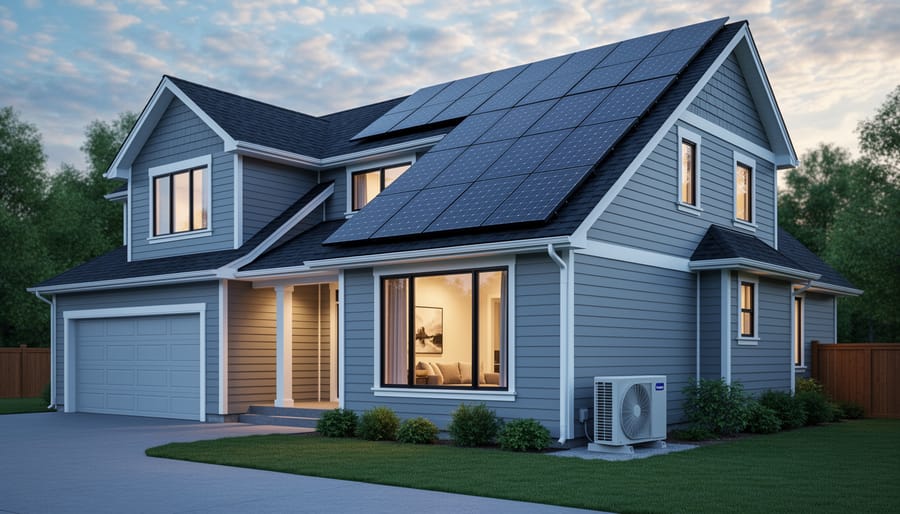
Eco-friendly home renovations cut residential carbon emissions by 30 to 50 percent while reducing energy bills by $1,500 to $3,000 annually, making them one of the most practical investments Canadian homeowners can make in 2026. The approach centers on three high-impact interventions: upgrading insulation and air sealing, replacing fossil fuel heating systems with electric heat pumps, and installing solar panels where feasible.
The business case has never been stronger. Federal and provincial programs now cover up to 40 percent of retrofit costs through grants like the Canada Greener Homes Initiative, while rising electricity prices and extreme weather events make energy resilience a priority. A homeowner in Winnipeg who upgrades from a natural gas furnace to a cold-climate heat pump and adds attic insulation can expect payback within seven to ten years, faster in provinces with carbon pricing or net metering policies.
But the environmental dividend extends beyond your utility statement. Buildings account for 18 percent of Canada’s greenhouse gas emissions, and residential renovations represent the fastest path to decarbonizing existing housing stock. New construction can be built to net-zero standards, but the 15 million homes already standing will shape our climate trajectory for decades.
This isn’t about sacrificing comfort or style. Modern green materials, from reclaimed timber to low-VOC paints, deliver superior performance and healthier indoor air. Smart thermostats and energy monitoring systems give you granular control. The renovation becomes an opportunity to align your home with your values, creating a space that works better, costs less to operate, and contributes to a livable future.
Why Canadian Homeowners Are Choosing Green Renovations
Canadian homeowners are embracing eco-friendly renovations at an unprecedented rate, driven by a confluence of economic, environmental, and practical motivations. Energy costs have surged across most provinces in recent years, making inefficient homes increasingly expensive to heat and cool. For many families, winter heating bills alone can exceed $200 monthly in colder regions, creating a powerful financial incentive to upgrade insulation, windows, and heating systems. The payback calculation has shifted: what once seemed like a luxury investment now looks like a necessary hedge against rising utility rates.
Government support has made green renovations more accessible than ever. The Canada Greener Homes Grant provides up to $5,000 for eligible energy-efficiency upgrades, while the accompanying interest-free loan program offers an additional $40,000 for comprehensive retrofits. Provincial programs layer on top of these federal incentives, British Columbia’s CleanBC rebates, Quebec’s Rénoclimat, and Ontario’s various utility-sponsored programs all reduce upfront costs significantly. These financial tools have transformed the economics of renovation, turning projects that might have had fifteen-year payback periods into five- or seven-year propositions.
Beyond personal finances, many Canadians feel a responsibility to act on climate. The country’s commitment to net-zero emissions by 2050 places residential buildings squarely in the conversation, as homes account for roughly 13% of national greenhouse gas emissions. Homeowners increasingly understand that their renovation choices matter at scale. There’s also growing awareness of embodied carbon, the emissions produced during manufacturing and transporting building materials. Choosing reclaimed lumber over new, or cellulose insulation over foam, reduces the carbon footprint of the renovation itself, not just the home’s operational emissions afterward.
Canadian climate zones create distinct renovation priorities that differ markedly from milder regions. In Zone 6 and 7 areas (much of the Prairies and northern Ontario), extreme winter temperatures make insulation upgrades and air sealing the highest-impact interventions. Coastal BC homeowners face dampness and milder winters, prioritizing moisture management and heat pump installations that provide both heating and cooling. Atlantic Canada’s combination of humidity and cold demands particular attention to vapor barriers and ventilation alongside insulation. These regional differences mean that effective eco-renovations must be tailored to local conditions, not imported wholesale from warmer climates or European models designed for different weather patterns.
High-Impact Renovation Strategies for Energy Efficiency
Deep Energy Retrofits: Insulation and Air Sealing
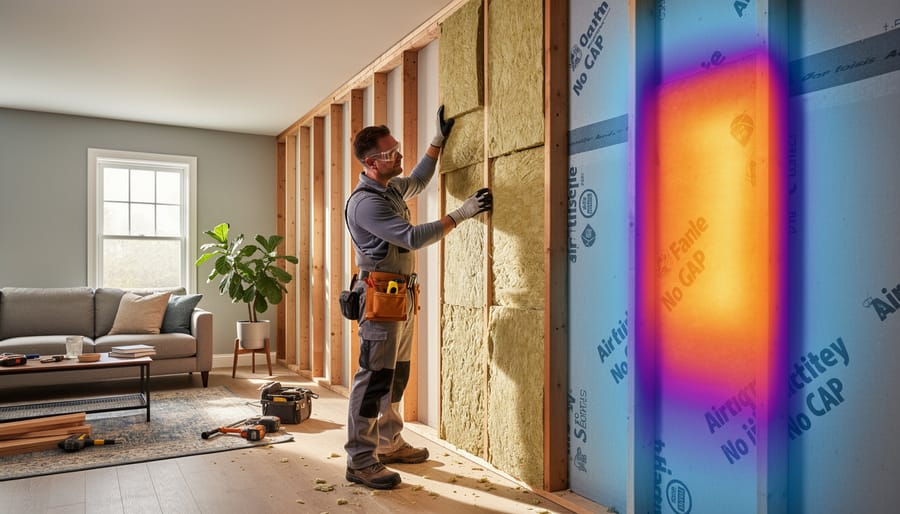
Upgrading your home’s thermal envelope through deep energy retrofits delivers the biggest bang for your renovation dollar. By tackling insulation and air sealing together, you address the two main culprits behind excessive heating and cooling loads: heat transfer through building materials and uncontrolled air leakage. These upgrades form the foundation of energy-efficient infrastructure that slashes energy bills while improving indoor comfort year-round.
In Canadian homes, priority zones for insulation upgrades include attics, exterior walls, and basements. Attics should meet or exceed R-50 in most regions, while walls typically require R-20 to R-24 and basements R-20 to R-28, depending on your climate zone. The climate-specific insulation R-values you need vary considerably between Vancouver Island and northern Ontario, so check local building codes and energy advisor recommendations for your area.
Material choice matters. Blown cellulose, made from recycled paper, offers excellent coverage in attics and dense-pack wall cavities at a lower embodied carbon footprint than many alternatives. Spray foam provides superior air sealing and insulation in one application, though it carries higher costs and environmental concerns around blowing agents. Mineral wool batts resist moisture and fire while maintaining performance in humid conditions, making them ideal for basements.
Air sealing amplifies insulation performance. Without it, warm air escapes through gaps around windows, electrical boxes, plumbing penetrations, and rim joists, wasting up to thirty percent of your heating energy. Professional blower door tests identify leakage points before and after sealing, providing measurable proof of improvement.
In cold climates, vapor barriers on the warm side of insulation prevent moisture from condensing inside walls, which can lead to mold and structural damage. Your contractor should understand local code requirements for vapor control, as strategies differ significantly between coastal and prairie regions.
High-Efficiency Heating and Cooling Systems
Replacing your home’s heating and cooling system represents one of the most impactful renovations for cutting emissions and energy bills. Fossil fuel furnaces and boilers are now giving way to electric heat pumps, which move heat rather than generate it through combustion, achieving efficiencies up to 300 percent.
Air-source heat pumps extract warmth from outdoor air even in freezing temperatures. Modern cold-climate models operate effectively down to -25°C or colder, a threshold that addresses concerns many Canadian homeowners held about earlier generations of heat pump technology. Advances in cold-climate heat pump performance mean these systems now handle Prairie winters and Atlantic storms without requiring backup heating in most scenarios. They reverse in summer to provide air conditioning, eliminating the need for separate cooling equipment.
Ground-source (geothermal) heat pumps tap into stable underground temperatures through buried loops, delivering even greater efficiency but requiring higher upfront investment and suitable property conditions for installation. They excel in extreme climates where consistent performance matters most.
High-efficiency condensing furnaces remain a practical choice where natural gas infrastructure exists and immediate electrification isn’t feasible, achieving annual fuel utilization efficiency ratings above 95 percent. Pairing them with programmable thermostats and zoned heating reduces waste.
Radiant floor heating, powered by electric resistance or a heat pump water heater, distributes warmth evenly from the ground up, allowing lower thermostat settings while maintaining comfort. It works especially well in bathrooms, basements, and open-concept spaces.
Federal programs currently offer grants up to $5,000 for heat pump installations as part of the Canada Greener Homes initiative, with additional provincial and utility incentives stacking on top in many regions. These rebates significantly shorten payback periods, often bringing total system costs in line with conventional replacements while delivering ongoing energy savings.
Window and Door Upgrades
Windows and doors account for up to 25% of heat loss in Canadian homes, making them critical targets for eco-friendly upgrades. Modern replacements dramatically outperform older single or double-pane units, especially in climates with harsh winters and hot summers.
Triple-pane windows feature three layers of glass with gas-filled spaces between them, typically argon or krypton, which act as insulators. Combined with low-emissivity (low-E) coatings, microscopic metallic layers that reflect heat back into your home in winter while blocking excessive solar heat in summer, these windows can cut energy loss by 30 to 50% compared to conventional double-pane models.
When shopping for windows, you’ll encounter two key performance metrics. The U-factor measures how well a window prevents heat from escaping; lower numbers mean better insulation. For Canadian climates, look for U-factors of 0.20 or below. The solar heat gain coefficient (SHGC) indicates how much solar radiation passes through, rated from 0 to 1. In colder regions, a higher SHGC (around 0.40) helps capture winter warmth, while southern exposures might benefit from lower values to reduce summer cooling loads.
Energy Star-certified doors and windows meet rigorous efficiency standards tailored to Canada’s climate zones. However, even the best products fail if poorly installed. Gaps around frames create thermal bridges, pathways where heat bypasses insulation entirely. Professional installation with proper air sealing, flashing, and insulated framing ensures your investment delivers its full potential for emissions reduction and comfort.
Solar Panel Integration
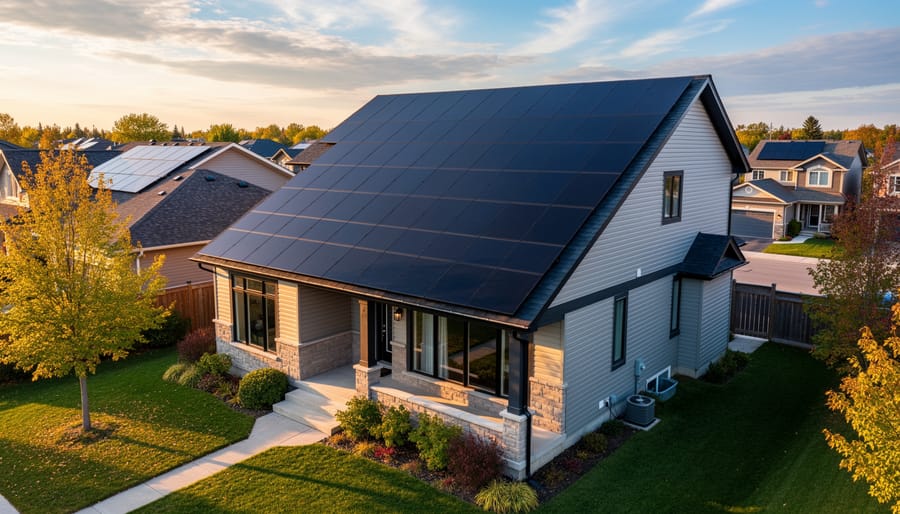
Adding solar panels during a renovation lets you lock in both immediate energy savings and long-term resilience. Rooftop solar converts sunlight into electricity that offsets your draw from the grid, and in most Canadian provinces, net metering programs credit you for any surplus power you send back. British Columbia, Ontario, Alberta, and Nova Scotia all offer net metering, though credit rates and rollover rules vary by utility, so check your provider’s terms before you size your system.
A typical residential installation ranges from three to ten kilowatts, depending on roof space, orientation, and your household’s consumption. South-facing roofs with minimal shading deliver the best output, but east-west arrays can still perform well. Panel efficiency has improved sharply in recent years, meaning you can generate more power from a smaller footprint than older systems required.
Battery storage is becoming more attractive as costs decline. Pairing panels with a home battery lets you store midday generation for evening use, smooth out seasonal dips, and maintain power during outages. While batteries add upfront expense, they increase self-consumption and reduce reliance on the grid, especially valuable as utilities integrate more renewable capacity and smart grids enable time-of-use pricing.
Solar works best when your home is already efficient. Deep insulation, air sealing, and high-performance windows shrink your energy demand, so a modestly sized solar array can cover a larger share of your needs. Some Canadian homeowners who combine aggressive efficiency retrofits with solar achieve net-zero annual energy consumption, meaning their panels generate as much as they use over twelve months. That outcome turns your renovation into a climate solution with measurable impact.
Sustainable Materials and Low-Carbon Building Practices
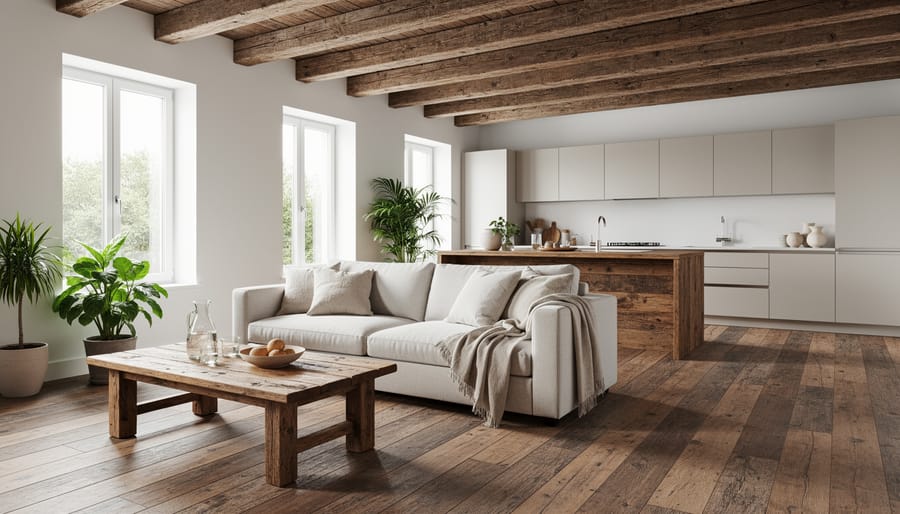
The materials you choose for your renovation can slash embodied carbon, the emissions locked into manufacturing, transport, and disposal, often more than you’d expect. A design for sustainability approach means selecting products that minimize environmental harm across their lifecycle, not just at installation.
Reclaimed wood, salvaged from old barns, industrial buildings, or demolished homes, carries near-zero embodied carbon compared to new lumber. It’s widely available through specialty yards in Ontario, Quebec, and BC, and it adds character while diverting material from landfills. For new wood, FSC-certified lumber ensures responsible forestry, and Canadian suppliers stock it in most regions. Mass timber products like cross-laminated timber (CLT) are gaining traction as structural alternatives to steel and concrete, storing carbon rather than emitting it.
| Conventional Material | Sustainable Alternative | Environmental Benefit |
|---|---|---|
| Standard fiberglass insulation | Cellulose or sheep’s wool | Lower embodied energy, recycled content or renewable source |
| Oil-based paints | Low-VOC or zero-VOC water-based paints | Reduced air pollutants and toxins during application and curing |
| Virgin aluminum or steel | Recycled metal products | Up to 95% less energy to produce recycled aluminum vs. virgin |
| New virgin glass | Recycled glass tiles or aggregate | Lower manufacturing emissions, diverts waste |
Low-VOC paints and finishes matter because conventional products off-gas volatile organic compounds for months, degrading indoor air quality. Canadian brands like Para Paints and ECOS offer low-VOC lines that perform just as well. Natural insulation, cellulose made from recycled newsprint, hemp fibre, or sheep’s wool, provides excellent R-values with a fraction of the carbon footprint of spray foam.
Sourcing materials locally cuts transportation emissions and supports regional economies. Specify Canadian-made or regionally quarried stone, locally milled lumber, or tiles fired in-province. Contractors can often find reclaimed brick, salvaged fixtures, and recycled concrete aggregate within 150 km, slashing the carbon cost of hauling materials cross-country. Ask suppliers about origin; many now publish embodied carbon data, making it easier to compare options and choose the lowest-impact path.
Water Conservation in Home Renovations
Water-efficient renovations deliver a double environmental benefit: they reduce municipal water demand and cut the energy needed to heat water, which can account for nearly 20% of a home’s total energy use.
Start with fixtures. WaterSense-labeled toilets use just 4.8 litres per flush compared to older models that consume 13 litres or more. Low-flow showerheads and faucet aerators maintain strong pressure while cutting water use by 30-50%, translating to measurable savings on both water and heating bills. A four-person household can save roughly 100,000 litres annually through fixture upgrades alone.
For more ambitious projects, greywater systems capture water from showers, sinks, and laundry, then filter and redirect it to toilets or irrigation. While provincial regulations vary, Ontario and British Columbia have clearer approval pathways, these systems can reduce household water consumption by up to 40%. Rainwater harvesting offers similar benefits, collecting roof runoff in cisterns for outdoor use or, with proper treatment, indoor applications.
Outdoor water use matters too, especially during summer months. Replacing thirsty lawns with native, drought-resistant plants and xeriscaping reduces irrigation needs dramatically. Permeable paving allows rainwater to recharge groundwater rather than overwhelming storm drains. In regions facing water stress or where municipalities charge tiered rates, these landscaping choices pay off quickly while supporting local ecosystems and pollinators that struggle in conventional turf environments.
Navigating Rebates, Incentives, and Certification Programs
Understanding which financial supports are available can transform an eco-renovation from wishful thinking into a funded project. The Canada Greener Homes Grant offers up to $5,000 for eligible upgrades like insulation, heat pumps, and solar panels, while the companion interest-free loan provides up to $40,000 for more comprehensive retrofits. Both require an EnerGuide home evaluation before and after work is completed, ensuring improvements deliver measurable energy savings.
Provincial programs add another layer of support. British Columbia’s CleanBC Better Homes rebate stack with federal grants for heat pump installations, Ontario offers the Home Efficiency Rebate Plus, and Quebec provides Rénoclimat incentives. Many utilities run their own rebate programs for specific upgrades, Enbridge and FortisBC, for instance, offer substantial credits for high-efficiency furnaces and insulation projects. Some municipalities sweeten the deal further with property tax exemptions for energy-efficient improvements or expedited permitting for net-zero renovations.
The EnerGuide evaluation is your starting point. A certified energy advisor conducts a blower door test and thermal imaging scan, then generates a detailed report showing your home’s current energy performance and recommended upgrades. This pre-retrofit assessment unlocks access to grants and helps prioritize which renovations deliver the biggest impact. After completing your work, a second evaluation confirms the improvements and triggers final rebate payments.
Indigenous homeowners should explore dedicated programs like the Indigenous Community-Based Climate Monitoring Program and band-specific housing initiatives that support energy-efficient renovations on reserve lands. Working with a qualified energy advisor familiar with these programs simplifies the process when you apply for clean energy rebates and ensures you capture every available dollar.
Common Questions About Eco-Friendly Renovations
Homeowners considering eco-friendly renovations often grapple with similar concerns before starting their projects. Understanding the financial realities, finding the right professionals, and determining where to begin can make the difference between a successful retrofit and a stalled plan.
The financial payback on green renovations varies significantly by upgrade type and local energy costs. Deep energy retrofits involving insulation, air sealing, and heat pump installation typically show payback periods of seven to fifteen years through reduced utility bills, though federal and provincial incentives can shorten this timeline substantially. Solar panels in provinces with strong net metering programs often break even within twelve to twenty years, while simpler upgrades like LED lighting or low-flow fixtures pay for themselves within months. The key is viewing renovations as long-term investments that increase property value while delivering immediate comfort improvements and emissions reductions.
Finding qualified contractors requires more diligence than traditional renovations. Look for professionals certified through programs like Natural Resources Canada’s EnerGuide Rating System, LEED accreditation, or Passive House training. Provincial home builder associations often maintain directories of contractors specializing in energy-efficient construction. Request references from recent retrofit projects, verify insurance and licensing, and ensure contractors understand the integration between building envelope improvements and mechanical systems, a poorly installed heat pump in a leaky home wastes both money and potential.
What should I prioritize on a limited budget?
Start with air sealing and attic insulation, which deliver the highest return per dollar invested by reducing heating and cooling losses. These foundational improvements make subsequent upgrades like heat pumps more effective and affordable.
Can I renovate a heritage home without compromising its character?
Yes, with careful planning. Interior insulation, window restoration with storm windows, and hidden mechanical upgrades preserve exterior heritage features while achieving significant energy improvements.
Is it better to renovate all at once or incrementally?
Incremental renovations allow budget flexibility and learning between phases, but comprehensive retrofits avoid redundant work and ensure proper integration between systems. An EnerGuide evaluation can create a phased roadmap that builds logically toward your goals.
How do I know if my contractor understands eco-friendly methods?
Ask specific questions about thermal bridging, vapor barriers for your climate zone, and their experience with blower door testing. Qualified contractors will explain how individual upgrades work together as a system rather than treating them as isolated improvements.
Budget constraints don’t have to derail sustainability goals. Prioritizing the building envelope first creates a foundation that maximizes the efficiency of later mechanical upgrades. A home that retains heat requires a smaller, less expensive heat pump, and proper air sealing prevents moisture issues that could undermine insulation investments. Many homeowners successfully phase renovations over three to five years, aligning projects with available rebate programs and personal cash flow while maintaining livability throughout the process.
Heritage homes present unique challenges but remarkable opportunities for sensitive retrofits that honor historical character while achieving modern performance standards. Interior wall insulation, basement upgrades, and attic improvements can dramatically reduce energy consumption without altering protected facades, and many heritage designation programs now recognize energy efficiency as part of responsible stewardship.
Real-World Success: Canadian Homes Leading the Way
Across Canada, homeowners are proving that ambitious eco-renovations deliver real results. In Toronto’s Leslieville neighbourhood, the Chen family transformed their 1920s brick semi-detached home through a comprehensive deep energy retrofit. They added dense-pack cellulose insulation to walls and attic (achieving R-60 overhead), installed triple-pane windows, and replaced their aging gas furnace with a cold-climate air-source heat pump. The renovation cut their natural gas use by 92% and reduced overall energy consumption by 68%, dropping their annual heating costs from $2,400 to roughly $850. Their EnerGuide rating jumped from 48 to 84, and total greenhouse gas emissions from the home fell by approximately 4.2 tonnes annually.
In rural Nova Scotia, the Leblanc family pursued a passive house renovation of their 1970s bungalow, working with clean energy innovators to integrate a ground-source heat pump and rooftop solar array. The project included exterior insulation wrapping the entire building envelope, a heat recovery ventilator for fresh air without heat loss, and meticulous air sealing that achieved 0.4 air changes per hour at 50 pascals. The home now generates nearly as much energy as it consumes annually, and the family reports stable indoor temperatures year-round without temperature swings common in older rural homes.
Heritage renovations present unique challenges, but they’re achievable with careful planning. In Winnipeg’s Exchange District, a designated heritage building underwent an interior retrofit preserving its brick façade and original windows while adding interior insulation, upgrading mechanical systems, and installing a solar thermal system for hot water. The project balanced conservation requirements with a 55% reduction in energy use, demonstrating that historic character and sustainability aren’t mutually exclusive.
Eco-friendly home renovations aren’t just an environmental gesture, they’re a strategic investment that pays dividends in comfort, lower bills, and reduced emissions. For Canadian homeowners facing harsh winters and rising energy costs, upgrading insulation, switching to heat pumps, and choosing sustainable materials directly address both climate commitments and household budgets.
The path forward doesn’t require tackling everything at once. Start with an EnerGuide assessment to identify where your home loses the most energy, then prioritize the upgrades that deliver the greatest impact for your specific situation and climate zone. Whether you begin with air sealing and insulation, transition to efficient heating systems, or integrate solar panels, each step moves you closer to a home that’s healthier, more resilient, and significantly cheaper to operate.
When thousands of Canadian households make these changes, the collective effect accelerates the country’s shift toward clean energy and net-zero targets. Your renovation becomes part of a broader transformation, one that proves sustainability and practicality aren’t opposing forces, but complementary goals shaping Canada’s energy future.