

The Alberta Energy Regulator (AER) stands as the single independent agency overseeing the full lifecycle of Alberta’s energy resources, from exploration and development through to abandonment and reclamation. Established in 2013 to consolidate three separate regulatory bodies, the AER manages over 400,000 wells, 450,000 kilometres of pipelines, and countless energy facilities across the province. Its mandate balances economic development with environmental protection, public safety, and resource conservation, making it one of Canada’s most influential energy institutions during a period of profound transformation.
As Canada navigates the energy revolution the AER has emerged as a testing ground for regulatory innovation that extends far beyond Alberta’s borders. The regulator’s recent adoption of play-based regulation, which groups similar oil and gas operations under streamlined approval processes, demonstrates how modern oversight can reduce bureaucratic timelines while maintaining rigorous environmental standards. These changes arrive at a critical juncture. Alberta produces roughly 80 percent of Canada’s oil and gas, yet the province faces mounting pressure to reconcile hydrocarbon development with climate commitments and Indigenous rights.
For Canadians watching the clean energy transition unfold, understanding the AER means grasping how regulatory frameworks can either accelerate or impede progress. The agency’s decisions ripple through investment flows, job creation, emissions trajectories, and the pace at which Alberta diversifies its energy mix.
Understanding the Alberta Energy Regulator: More Than Just an Oversight Body
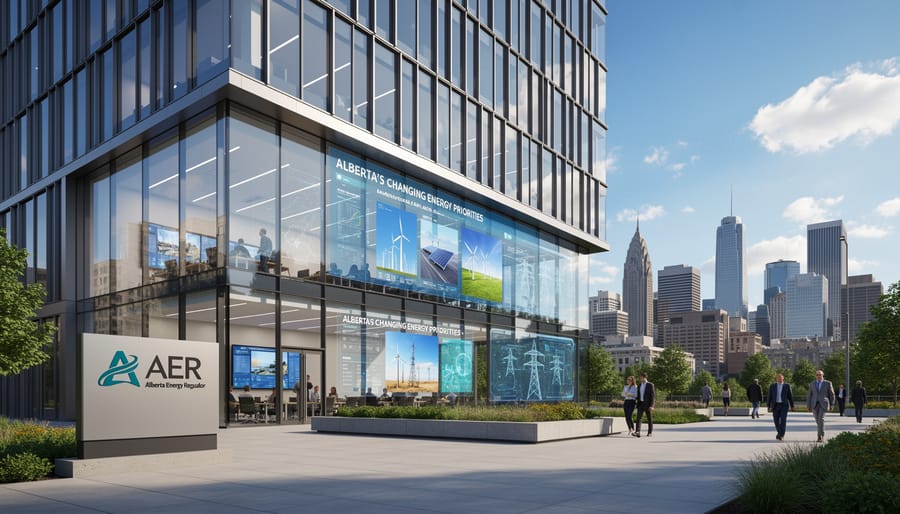
The Alberta Energy Regulator isn’t just another government agency shuffling paperwork. It’s the single body responsible for overseeing Alberta’s entire energy sector from the moment a company starts exploring for resources until the last well is plugged and the land reclaimed. Created in 2013 through the consolidation of three separate regulators, the AER took on a mandate that distinguishes it from most energy oversight bodies: ensuring energy development proceeds efficiently, safely, orderly, and, crucially, in an environmentally responsible manner.
What makes the AER distinct is its full-life-cycle approach. Most regulators focus on specific phases of energy projects, but Alberta’s regulator tracks every stage. When a company wants to drill a well, install a pipeline, or build renewable energy infrastructure, the AER reviews the application. Once operational, the regulator monitors compliance with safety and environmental standards. And when a facility reaches the end of its productive life, the AER ensures proper decommissioning and land restoration occur. This cradle-to-grave oversight creates accountability that extends beyond profit-taking years into the environmental legacy phase that often gets neglected.
- Full-Life-Cycle Regulation
- Oversight that spans from initial exploration and development through active operations to final decommissioning and site reclamation. This approach ensures operators remain accountable for environmental impacts throughout a project’s entire existence, not just during profitable production years.
- Efficient Development
- Streamlining regulatory processes to avoid unnecessary delays while maintaining rigorous standards. The goal is preventing red tape from stalling legitimate projects without compromising safety or environmental protection.
- Environmentally Responsible Development
- Requiring energy projects to minimize ecological harm, protect water and air quality, and restore land after operations cease. This principle balances resource extraction with long-term environmental stewardship.
The AER’s full mandate covers conventional and unconventional oil and gas, oil sands, coal, pipelines, and increasingly, renewable energy projects like wind and solar farms. It’s a regulatory portfolio that touches nearly every corner of Alberta’s energy economy, making the AER’s decisions pivotal for both industry operators and communities living near energy infrastructure. For a province where energy drives economic prosperity and shapes environmental outcomes, having a regulator that sees projects through from conception to closure changes how accountability works.
2026 Regulatory Shifts: What Recent Changes Signal for Alberta’s Energy Landscape
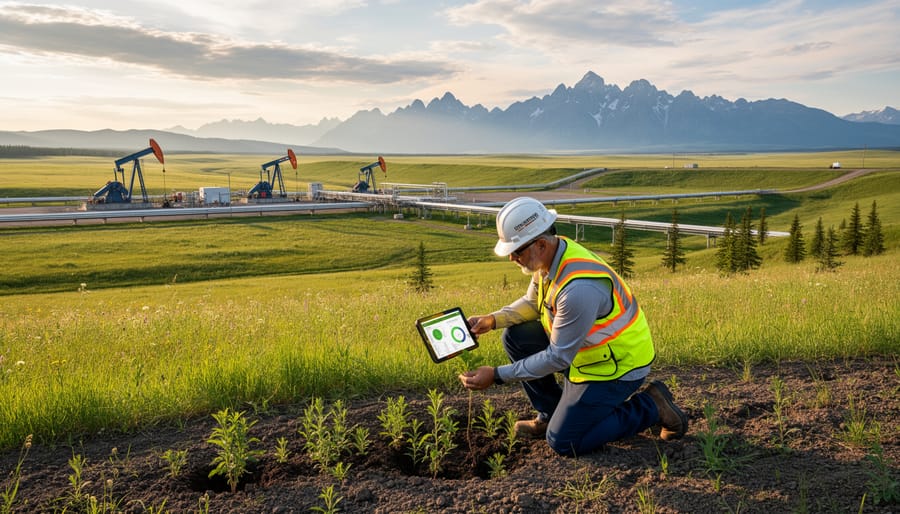
The Industry Levy: Funding Accountability and Oversight
Every April 1, Alberta’s energy operators receive invoices that fund the province’s regulatory backbone. For 2026/27, that bill totals $260 million, a levy collected by the Alberta Energy Regulator to sustain the oversight machinery that keeps the province’s energy sector running responsibly.
This isn’t a tax that disappears into general revenue. The levy directly supports the AER’s day-to-day work: inspecting well sites, reviewing project applications, monitoring reclamation progress, and ensuring companies meet environmental standards from the first drill bit to final site closure. Without this funding, the full-life-cycle regulation that defines Alberta’s approach would collapse, leaving operators without clear guidance and communities without environmental safeguards.
The $260 million reflects the scale and complexity of regulating one of North America’s most active energy jurisdictions. It covers technical staff who assess geological risks, field inspectors who verify compliance, scientists who track water and air quality, and administrators who process thousands of permits annually. In a province where energy development intersects with agricultural land, Indigenous territories, and sensitive ecosystems, this investment in regulatory capacity matters.
For Albertans concerned about how the clean energy transition unfolds, the levy represents accountability in action, money earmarked to ensure that as the province’s energy mix evolves, oversight keeps pace with innovation.
New Rules of Practice: Streamlining or Strengthening?
The Bulletin 2026-22 changes released May 5, represent a deliberate recalibration of how the regulator enforces compliance and manages disputes. While the bulletin highlights three principal modifications to the Rules of Practice, the AER hasn’t detailed every mechanism publicly, leaving operators to parse whether these shifts tighten environmental accountability or simply reduce administrative friction.
What’s clear is that these revisions matter for both sides of Alberta’s energy conversation. Streamlined processes could accelerate project approvals and cut red tape for renewables and conventional operators alike, potentially speeding the deployment of solar farms or geothermal pilots that need regulatory green lights. Yet if the changes weaken environmental safeguards or limit public participation in hearings, they risk undermining the trust and transparency that credible regulation demands.
The challenge for the AER is ensuring these rule updates serve both goals: making compliance easier for responsible operators while holding laggards accountable. Getting that balance right will determine whether 2026’s regulatory tweaks become a footnote or a turning point in how Alberta governs its energy future.
Innovation in Regulation: The Play-Based Approach
In 2014, the Alberta Energy Regulator launched a Play-Based Regulation pilot project that represented a departure from one-size-fits-all oversight. Rather than applying identical rules across every energy operation in the province, PBR tailors regulatory requirements to the specific geological formations, or “plays”, where companies operate. A play refers to a distinct underground rock formation with shared characteristics: similar geology, hydrocarbon properties, and extraction techniques. By recognizing these differences, the AER can calibrate oversight to match actual risks and opportunities on the ground.
The logic is straightforward. A deep shale gas operation in the Montney formation faces different technical challenges and environmental considerations than a shallow conventional oil well in southern Alberta. Play-based thinking lets regulators set performance standards, monitoring protocols, and approval processes that reflect those realities instead of forcing operators into generic categories. Companies working in a well-understood play with proven track records might face streamlined approvals, while newer or higher-risk formations receive closer scrutiny.
This regulatory flexibility matters beyond oil and gas. As Alberta expands wind farms, solar installations, and geothermal projects, the PBR framework offers a template for integrating renewables into the province’s regulatory structure. Geothermal energy, for instance, shares technical overlap with conventional drilling, understanding subsurface geology, managing well integrity, monitoring groundwater, but serves an entirely different purpose. A play-based lens could allow the AER to adapt existing expertise to renewable contexts without rebuilding the system from scratch.
The pilot also opens doors for smarter infrastructure planning. When regulators understand the geological and operational nuances of a region, they can identify opportunities to coordinate energy-efficient infrastructure across projects, shared pipelines, transmission corridors, or monitoring systems that reduce duplication and environmental footprint. That kind of strategic thinking becomes essential as Alberta balances its traditional energy base with the clean energy investments needed to meet national climate commitments.
Balancing Act: Traditional Energy, Renewables, and Indigenous Perspectives
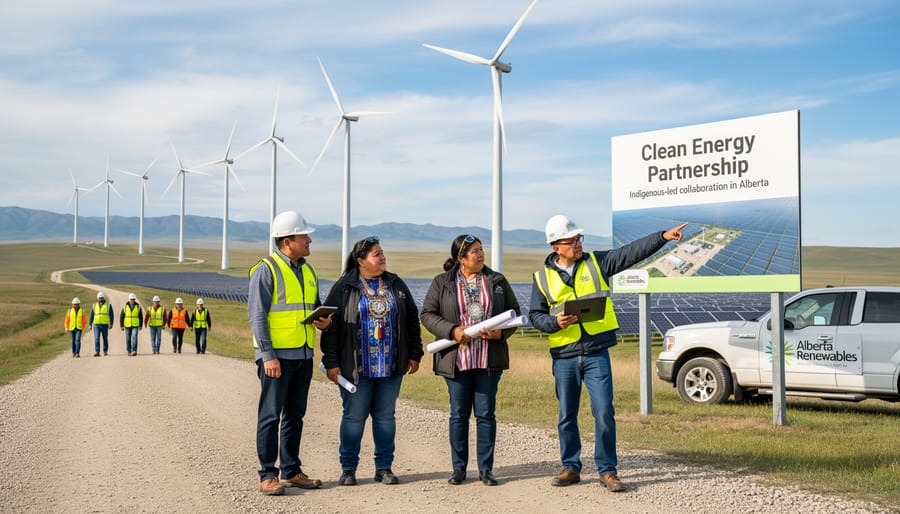
The AER operates at the intersection of Alberta’s storied petroleum industry and an emerging renewable energy sector that’s quietly but steadily reshaping the province’s energy portfolio. In 2026, the regulator oversees not only the conventional oil sands projects and natural gas operations that built Alberta’s economy, but also a growing number of wind farms, solar installations, and geothermal exploration initiatives. This dual mandate requires the AER to apply regulatory frameworks originally designed for hydrocarbon extraction to energy sources with fundamentally different environmental footprints, operational timelines, and community impacts.
Alberta’s renewable energy capacity has expanded significantly in recent years, yet the regulatory approach remains rooted in principles developed for fossil fuel projects. The AER’s Play-Based Regulation pilot, initiated in 2014, offers a glimpse of how tailored oversight might work, adjusting requirements based on specific geological and operational contexts rather than applying uniform rules. This flexibility could prove valuable as renewable projects proliferate across diverse landscapes, from wind turbines on Treaty 7 grasslands to solar arrays near Métis settlements.
The regulatory process directly affects First Nations and Métis communities in tangible ways. When the AER evaluates a proposed project, whether a pipeline extension or a wind farm, decisions about site selection, environmental monitoring, and decommissioning timelines ripple through Indigenous territories. Communities have raised concerns about consultation processes that arrive late in project planning, limiting their ability to shape outcomes. Some Indigenous leaders point to examples where traditional land use studies weren’t adequately integrated into environmental assessments, or where concerns about water quality near sacred sites received insufficient weight in approval decisions.
Progressive energy companies and some communities are developing co-ownership models and benefit-sharing agreements that go beyond standard consultation, creating economic opportunities while respecting Indigenous sovereignty. The AER’s role in facilitating, or hindering, these partnerships will shape whether Alberta’s energy transition becomes a story of inclusive prosperity or repeated conflict. As the regulator refines its approach through updates like those in Bulletin 2026-22, the test will be whether new rules strengthen Indigenous voices in energy decision-making or simply streamline processes that have historically marginalized them.
What This Means for Canada’s Clean Energy Leadership
Alberta’s energy choices ripple far beyond provincial borders. As one of Canada’s largest energy producers, the province’s regulatory framework directly influences whether the country meets its climate commitments or falls short. When the AER strengthens environmental oversight, streamlines renewable project approvals, or holds industry accountable through measures like the 2026/27 levy, it creates tangible pathways for national decarbonization.
Effective regulation in Alberta unlocks opportunities that extend across the country. Clearer rules and consistent enforcement give clean energy innovators the certainty they need to invest in solar farms, wind projects, and hydrogen infrastructure. These investments translate into jobs, not just in installation and maintenance, but in engineering, manufacturing, and research that position Canada as a serious player in the global clean energy economy.
The regulatory evolution also matters for accessing federal support. Ottawa’s climate funding and incentives depend on provinces demonstrating credible regulatory frameworks that ensure energy projects meet environmental standards. Alberta’s willingness to adapt its approach signals alignment with national goals, making it easier for federal and provincial governments to work together rather than at cross-purposes.
Beyond economics, there’s a credibility factor. When Canada speaks at international climate forums, the world watches what happens in Alberta. A province known for oil and gas that manages a genuine transition sends a powerful message: fossil fuel economies can evolve without collapsing. That narrative strengthens Canada’s voice on the global stage and demonstrates that ambitious climate action is compatible with economic pragmatism.
The Alberta Energy Regulator’s evolution reflects a broader truth about Canada’s energy future: transformation doesn’t require choosing between prosperity and environmental stewardship. The regulatory shifts unfolding in 2026, from the industry levy structure to updated Rules of Practice, demonstrate that thoughtful oversight can create space for both traditional energy operations and emerging clean technologies to coexist and thrive.
Alberta’s path matters far beyond provincial borders. As Canada’s largest energy producer, how this province manages its regulatory framework ripples through national climate commitments, Indigenous reconciliation efforts, and our collective ability to lead on the global clean energy stage. The AER’s willingness to innovate, as shown through initiatives like Play-Based Regulation, signals that Alberta isn’t simply managing decline in one sector while pivoting to another. Instead, it’s building the regulatory architecture for a diversified energy economy that can meet both today’s needs and tomorrow’s climate imperatives.
Strong regulation isn’t a barrier to progress. It’s the foundation that makes ambitious transitions possible, ensuring environmental accountability while unlocking economic opportunity for communities across the province.