
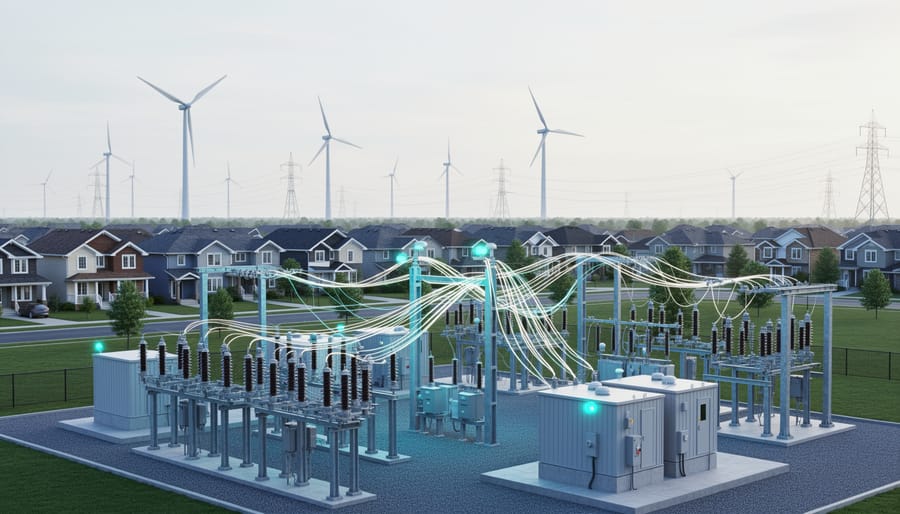
A smart grid is an electricity network that uses digital technology, sensors, and two-way communication to deliver power more efficiently, reliably, and sustainably than conventional grids. Unlike traditional power systems that simply push electricity from centralized generators to homes and businesses, smart grids continuously gather and analyze data about energy flow, allowing utilities and consumers to make informed decisions in real time.
This technology matters because Canada’s aging electrical infrastructure faces mounting pressure from extreme weather events, increasing energy demand, and the urgent transition to renewable sources like wind and solar. Traditional grids were designed for predictable, one-way power delivery from large coal or nuclear plants. They struggle to accommodate the variable nature of renewable energy and lack the flexibility needed for modern demands like electric vehicle charging or distributed solar panels on residential rooftops.
Smart grids address these challenges through a sophisticated network of sensors, automated controls, and advanced software that can detect outages within seconds, reroute power around damaged equipment, integrate renewable energy sources smoothly, and even allow homeowners to sell excess solar power back to the grid. The benefits extend far beyond convenience. Communities across Canada are already experiencing fewer blackouts, lower electricity bills through dynamic pricing, reduced greenhouse gas emissions, and greater energy independence.
For environmentally conscious Canadians, understanding smart grid benefits is essential. This technology represents one of the most significant infrastructure innovations of our time, fundamentally reshaping how we generate, distribute, and consume electricity. The choices we make today about grid modernization will determine whether Canada meets its 2050 climate commitments while maintaining affordable, reliable power for all communities.
What Smart Grids Mean for Canada’s Energy System
A smart grid is an electrical network that uses digital sensors, communication tools and automated controls to manage power delivery in real-time. Unlike the traditional grid that simply pushes electricity from power plants to your home in a one-way flow, smart grids create a two-way conversation between utilities and consumers. This intelligence allows the system to detect problems instantly, balance supply and demand automatically, and integrate renewable energy sources that weren’t possible with yesterday’s infrastructure.
Canada’s conventional power grid was designed decades ago when electricity flowed predictably from large coal or hydro plants to homes and businesses. That model worked when energy use was steady and predictable. Today, as Canada turns climate commitments into action by adding solar panels, wind farms and electric vehicles to the mix, the old one-directional system struggles to keep up. Smart grids solve this challenge by transforming the network into a responsive, adaptive platform.
- Smart meters
- Digital devices that record electricity consumption in intervals and communicate that data back to utilities, replacing manual meter reading with automated, real-time monitoring.
- Distributed energy resources
- Smaller-scale power generation units like rooftop solar panels or community wind turbines located close to where energy is used, rather than centralized power plants.
- Demand response
- Programs where consumers adjust their electricity use during peak periods in exchange for lower rates, helping balance the grid without building new power plants.
- Grid resilience
- The network’s ability to withstand and quickly recover from disruptions like storms, equipment failures or cyber threats while maintaining power delivery.
- Bidirectional communication
- The two-way exchange of information between utilities and customer devices, enabling dynamic pricing, outage alerts and coordinated energy management.
The difference is profound. Where traditional grids react slowly to outages and waste energy through inefficient routing, smart grids anticipate problems, reroute power automatically and optimize every electron’s journey from source to socket.
How Smart Grid Technology Works
Real-Time Monitoring and Control
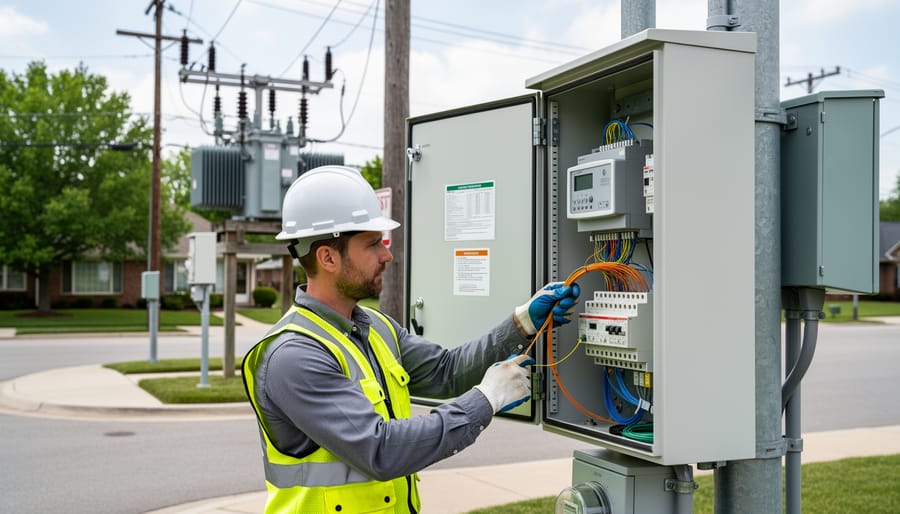
At the heart of smart grid technology sits a network of sensors and digital controls that work together like a nervous system for electricity. These devices continuously measure voltage, current, and power quality at thousands of points across the distribution network, feeding data back to central management systems every few seconds.
When a tree branch touches a power line or demand suddenly spikes in one neighbourhood, sensors detect the anomaly instantly. Automated switches can then reroute electricity around the problem or adjust power flow to prevent overloads, often before customers notice anything wrong. In British Columbia, BC Hydro uses these systems to pinpoint outage locations within minutes rather than waiting for customer calls.
The real power lies in optimization. Smart controls balance electrical loads dynamically, directing power where it’s needed most and reducing strain on transformers and cables. During peak hours on hot summer afternoons, the system might automatically adjust voltage levels across different zones to prevent equipment failures. This constant, intelligent adjustment means less wasted energy, fewer blackouts, and infrastructure that lasts longer, all without human operators making thousands of manual decisions every hour.
Two-Way Communication Between Grid and Users
Traditional power grids operate like one-way streets: electricity flows from the utility to your home, and you receive a bill at the end of the month. Smart grids flip this model by creating continuous dialogue between energy providers and consumers.
Smart meters serve as the communication hub in your home, transmitting detailed consumption data back to utilities every few minutes. Unlike old mechanical meters read once monthly by technicians, these digital devices capture exactly when and how you use electricity. Utilities analyze this information to predict demand patterns, identify potential equipment failures before they cause outages, and adjust power generation in real time.
The conversation runs both ways. Your utility can send pricing signals directly to your smart meter, automatically adjusting rates based on grid conditions. During peak afternoon hours when demand strains the system, prices might increase to encourage conservation. Late at night when renewable energy floods the grid, rates drop to incentivize usage. Smart appliances can respond to these signals without your intervention, your water heater might delay heating until rates fall, saving you money while reducing grid stress.
Canadian utilities like BC Hydro and Hydro-Québec use this two-way flow to offer time-of-use pricing plans. Consumers access web portals or mobile apps showing hourly consumption and costs, making informed decisions about when to run dishwashers or charge electric vehicles. This transparency transforms customers from passive recipients into active grid participants.
Core Components of Modern Smart Grids
Modern smart grids rely on several interconnected technologies working together to create responsive, resilient electrical networks. While traditional grids simply pushed power from generators to homes and businesses, smart grids coordinate multiple sophisticated systems that constantly monitor, communicate, and adjust to changing conditions.
The foundational components include:
- Advanced metering infrastructure (AMI), digital meters that record consumption in real-time and communicate usage data back to utilities
- Distribution automation, sensors and automated switches that detect faults, reroute power, and restore service without human intervention
- Energy management systems, software platforms that analyze grid data and optimize power flow across the network
- Grid-scale batteries, storage facilities that capture excess renewable energy and release it during peak demand
- Demand response platforms, systems that allow utilities to communicate with connected devices and temporarily reduce consumption during strain
- Electric vehicle charging infrastructure, networked charging stations that can schedule charging to match renewable energy availability
These components transform passive electrical networks into intelligent systems capable of integrating variable renewable sources while maintaining stability. Canada has emerged as a testing ground for several innovations, particularly in cold-climate battery storage and rural grid automation. BC Hydro’s deployment of over one million smart meters demonstrated how AMI enables targeted conservation programs, while Ontario’s Grid Innovation Fund has supported pilot projects integrating energy efficient infrastructure with real-time controls.
Energy storage deserves special attention because it solves the mismatch between when renewables generate power and when consumers need it. Saskatchewan’s Cowessess First Nation operates one of Canada’s largest Indigenous-owned solar-plus-storage installations, pairing 10 megawatts of solar panels with lithium-ion batteries. This combination supplies consistent power even after sunset, showcasing how storage enables remote communities to reduce diesel dependence while maintaining reliability.
The Benefits Smart Grids Bring to Canadian Communities
Enabling Renewable Energy Integration
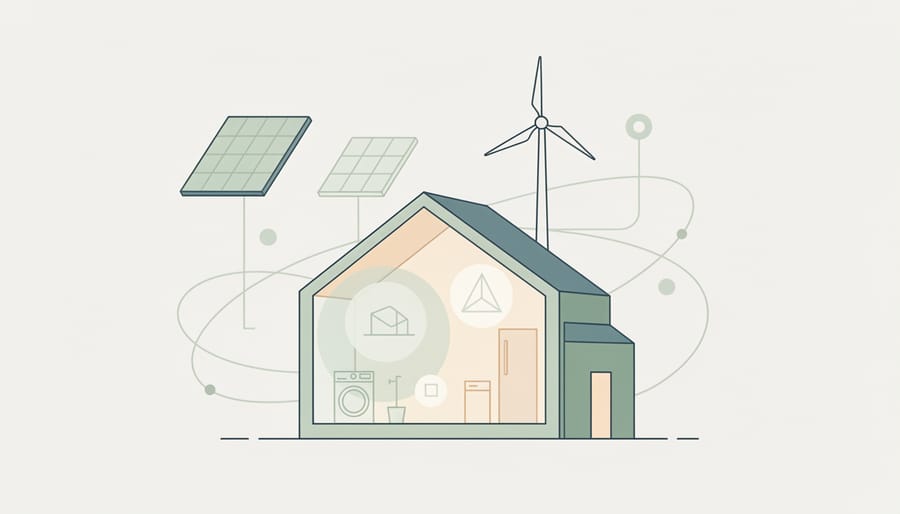
Wind and solar power are clean, but they don’t produce electricity on demand, the wind doesn’t always blow when people need power, and the sun sets every evening. Smart grids solve this intermittency problem by coordinating energy storage, forecasting generation patterns, and balancing supply across multiple sources in real time. When solar panels on thousands of rooftops generate more electricity than homes need during a sunny afternoon, smart systems can route that surplus to charge batteries, power electric vehicle charging stations, or supply industrial users elsewhere on the network.
This intelligent coordination is what makes large-scale renewable integration possible. Research on smart grids and renewables demonstrates how digital controls and advanced analytics enable utilities to manage variable generation without compromising reliability. In Ontario, smart grid technology helps integrate over 5,500 megawatts of wind capacity by predicting output and adjusting other generation sources accordingly. Alberta’s grid operators use similar systems to balance the province’s rapidly growing solar installations, now exceeding 2,000 megawatts, with natural gas plants that can ramp up or down within minutes.
The result? Canada can add clean energy capacity without building redundant backup infrastructure for every solar farm and wind turbine, making the transition both faster and more affordable.
Reducing Energy Waste and Carbon Emissions
Smart grids cut energy waste by matching supply and demand with precision traditional systems can’t achieve. Conventional grids lose 8-15% of electricity during transmission and distribution, power that vanishes as heat along aging wires. Smart sensors identify these losses in real time, rerouting electricity through more efficient pathways and flagging equipment that needs upgrading.
The impact on Canada’s carbon footprint is substantial. By reducing transmission losses alone, smart grids could eliminate emissions equivalent to taking hundreds of thousands of vehicles off the road annually. Advanced metering enables utilities to smooth out demand peaks that force coal and gas plants to fire up. Instead of running expensive, carbon-intensive peaker plants during high-demand hours, smart systems shift flexible loads to off-peak periods when cleaner baseload generation handles the work.
Demand-supply matching gets sharper too. When wind farms generate surplus power at 2 a.m., smart grids can trigger electric vehicle charging or heat water heaters automatically, storing that clean energy rather than curtailing it. Ontario’s smart meter rollout demonstrated a 3.6% reduction in peak demand, translating to measurable emissions cuts.
These efficiency gains compound over time. As Canada targets net-zero by 2050, smart grids form critical infrastructure that makes every kilowatt-hour work harder while reducing the carbon intensity of the electricity we use.
Improving Grid Reliability and Resilience
When a storm knocks out power in a traditional grid, utilities often depend on customer calls to pinpoint the problem. Smart grids flip that script entirely. Sensors embedded throughout the network detect outages instantly, sometimes before anyone notices the lights went out, and pinpoint the exact location without dispatching crews to search neighborhoods.
These digital systems take reliability even further through self-healing capabilities. When a fault occurs, automated switches reroute power around the damaged section within seconds, restoring service to unaffected areas while isolating the problem. This means fewer people lose power during storms, and those who do get reconnected faster.
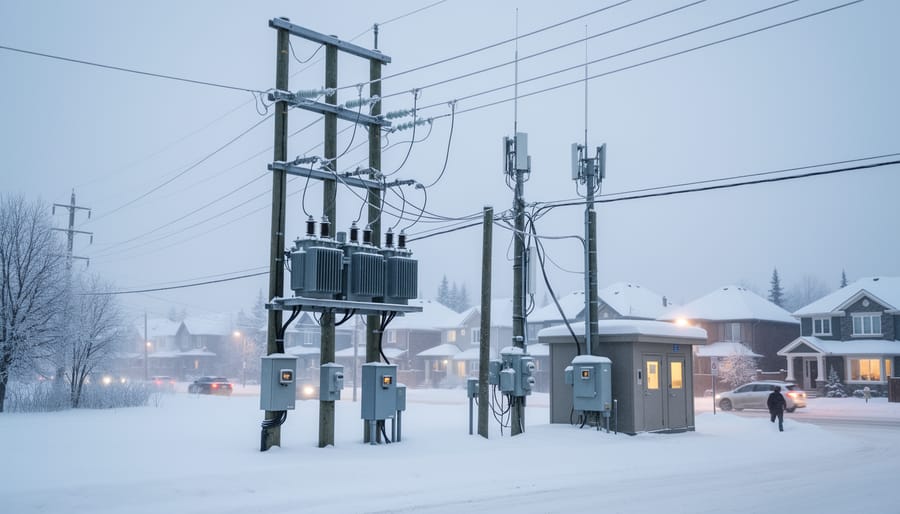
Canada’s increasingly volatile weather makes this resilience critical. From ice storms in Quebec to wildfires in British Columbia, extreme events strain electrical infrastructure. Smart grids monitor equipment health continuously, predicting failures before they happen and enabling preventive maintenance. They also manage distributed power sources during emergencies, keeping critical facilities running when centralized generation fails.
The result is a grid that doesn’t just react to problems but anticipates and adapts to them, delivering the reliable power modern life demands.
Empowering Consumers with Energy Control
Smart grids shift the traditional power dynamic between utilities and consumers, transforming households from passive recipients into active energy managers. With smart meters installed, Canadians gain unprecedented visibility into their electricity consumption patterns through online portals and mobile apps that display usage in near real-time. This transparency reveals which appliances consume the most power and when, enabling informed decisions about reducing waste.
Time-of-use pricing programs leverage this technology to reward flexibility. Consumers who shift laundry, dishwashing, or electric vehicle charging to off-peak hours pay substantially less per kilowatt-hour. Ontario’s time-of-use rates, for example, can vary by over 50% between peak and off-peak periods, creating tangible savings for those willing to adjust their routines.
Demand response programs take this further, allowing participants to receive credits for reducing consumption during grid stress events. Some utilities now send automated signals to smart thermostats or water heaters, temporarily adjusting settings with homeowner permission. This participation doesn’t just cut individual bills; it reduces the need for expensive peaker plants that run only during highest demand, benefiting everyone through lower overall system costs.
Creating Clean Energy Jobs and Economic Opportunities
Smart grid deployment is creating thousands of skilled jobs across Canada’s clean energy sector. Utilities need technicians to install and maintain smart meters, engineers to design distribution automation systems, and data analysts to interpret real-time grid information. Software developers build the platforms that manage two-way communication between utilities and consumers, while cybersecurity specialists protect critical infrastructure from threats.
Beyond direct grid work, the ripple effects reach equipment manufacturers, renewable energy integrators, and energy management consultancies. These positions offer competitive wages and often require specialized training programs, creating pathways into the growing clean tech economy for workers from diverse backgrounds and regions.
How Smart Grids Are Being Used Across Canada
Across Canada, utilities and communities are turning smart grid concepts into working reality. Ontario led early deployment with its Smart Grid Fund, which supported over 50 projects between 2011 and 2014, laying groundwork for province-wide advanced metering. Today, nearly all Ontario homes have smart meters that enable time-of-use rates, shifting demand away from peak hours and reducing strain on generation capacity.
British Columbia’s FortisBC operates one of North America’s most advanced distribution systems, using automated switches and sensors that detect faults and reroute power within seconds. After a 2018 ice storm, the utility’s self-healing grid restored service to thousands of customers automatically, cutting average outage times by 40 percent compared to traditional manual restoration.
In Quebec, Hydro-Québec’s $5 billion smart meter rollout reached 4 million customers by 2018. The utility now uses granular consumption data to forecast demand with unprecedented accuracy, optimizing water releases at hydroelectric facilities and minimizing waste. Their grid analytics platform predicts equipment failures days in advance, preventing outages before they occur.
Alberta’s transformation shows how Alberta clean energy future depends on intelligent infrastructure. The province’s first utility-scale battery storage system in Brooks works with wind farms to smooth output fluctuations, storing excess generation during high-wind periods and releasing it when demand peaks.
Indigenous communities are emerging as smart grid innovators. The T’Sou-ke Nation in British Columbia installed solar panels with smart inverters and battery storage, creating a microgrid that operates independently during outages while selling surplus power back to BC Hydro. Their system demonstrates energy sovereignty alongside environmental stewardship.
Saskatchewan’s SaskPower piloted vehicle-to-grid technology in Regina, where electric vehicles feed stored energy back to the grid during peak demand. This bi-directional flow turns cars into mobile batteries, a model Canadian electric innovators are scaling across provinces.
These deployments prove smart grids work in Canada’s diverse climate and geography, from coastal communities to prairie cities, delivering measurable improvements in efficiency, reliability, and clean energy integration.
Common Questions About Smart Grid Benefits
As smart grid technology transforms Canada’s electricity infrastructure, questions naturally arise about costs, privacy, and what this shift means for everyday users. Understanding these concerns helps Canadians embrace the transition with confidence.
Will smart grids increase my electricity bill?
Smart grids typically reduce costs over time through improved efficiency, fewer outages, and programs that reward off-peak energy use. While initial infrastructure investments may affect rates temporarily, the long-term economic benefits and energy savings generally offset these costs.
How do smart grids protect my data?
Canadian utilities employ encryption, secure communication protocols, and strict privacy regulations to safeguard consumption data collected by smart meters. Personal information remains protected under provincial and federal privacy laws, with data used primarily for billing and grid optimization.
When will smart grids be available across Canada?
Deployment varies by province, with Ontario, British Columbia, and Quebec leading adoption. Most urban centres already have smart meters installed, while full grid modernization continues through 2030 as utilities upgrade distribution systems and integrate renewable sources.
Can I benefit from smart grids if I don’t have solar panels?
Absolutely. Smart grids deliver advantages to all consumers through improved reliability, time-of-use pricing options that reward flexible energy habits, faster outage restoration, and participation in demand response programs that provide credits for reducing consumption during peak periods.
The comparison between smart and traditional grids highlights why this technology matters for Canada’s clean energy ambitions and what it means for our future. Conventional systems operate as one-way power highways with limited visibility into consumption patterns or grid conditions, requiring utilities to build excess capacity for peak demand that sits idle most of the time. Smart infrastructure eliminates this waste through real-time monitoring and automated adjustments that match supply with actual needs.
Concerns about implementation timelines reflect the scale of upgrading decades-old infrastructure across a geographically vast country. Yet the phased approach allows utilities to learn from early deployments, refine technologies, and address regional challenges while maintaining service reliability throughout the transition.
Smart grids represent far more than an infrastructure upgrade. They’re the backbone of Canada’s transition to a cleaner, more resilient energy future. By enabling seamless renewable integration, empowering consumers with unprecedented control, and dramatically improving system reliability, this technology addresses the core challenges facing our electricity networks while unlocking economic opportunities across the country.
The benefits outlined throughout this article demonstrate that smart grids aren’t just nice to have. They’re essential for meeting Canada’s climate commitments, reducing energy waste, and building communities that can withstand increasingly severe weather events. From cutting carbon emissions through optimized distribution to creating thousands of jobs in clean technology sectors, smart infrastructure delivers measurable results that align perfectly with national sustainability goals.
Canada stands at the forefront of this transformation. Our vast geography, abundant renewable resources, and commitment to innovation position us to become global leaders in smart grid deployment. The communities already embracing this technology show what’s possible when we combine digital intelligence with environmental responsibility.
The path forward is clear. Smart grids aren’t the future of energy management. They’re the present, and they’re powering Canada’s leadership in the global clean energy transition.