

Accessing Canadian government clean energy funding is straightforward: identify the program that fits your project, gather your technical and financial documentation, submit your application through the designated portal, and work through the approval process, which typically takes 60 to 90 days from submission to decision. Whether you’re a homeowner looking to install solar panels, a small business planning an energy retrofit, or a community organization launching a green infrastructure initiative, federal and provincial programs offer grants, rebates, and low-interest loans that can cover 25% to 75% of eligible costs.
Canada’s clean energy transition relies on making these financial tools accessible to everyone. Since 2022, the federal government has streamlined application processes and expanded eligibility criteria, recognizing that widespread adoption depends on removing bureaucratic barriers. The result is a funding landscape designed for real people and real projects, not just institutional players.
This guide walks you through the complete application process: what documents you need before you start, how to assess whether your project qualifies, the step-by-step submission sequence, and how to verify your application was received and is progressing. You’ll learn how to avoid common pitfalls that delay approval, understand what evaluators look for in a strong application, and discover strategies to maximize your funding amount.
The opportunity is significant. In 2026 alone, federal clean energy programs have allocated over $3.2 billion for residential, commercial, and community projects. Getting your share starts with understanding the process.
Understanding What You Need Before You Apply

Before you begin any application, gathering the right materials upfront will save you time, reduce back-and-forth with program administrators, and significantly improve your approval odds. Most Canadian clean energy programs, whether federal initiatives or provincial counterparts, require a core set of documents that verify your identity, project scope, and financial readiness. Treating this preparatory stage as seriously as the application itself sets you up for success.
Start with proof of property ownership or a long-term lease agreement if you’re a renter or business tenant. Programs need assurance that you have the legal authority to make permanent modifications to the building or site. Homeowners should have recent property tax statements or land title documents ready. Tenants should secure written landlord consent, especially for projects involving structural changes or grid-tied renewable installations.
For residential retrofits and upgrades to energy-efficient infrastructure an energy audit report from a certified advisor is typically mandatory. This baseline assessment identifies where your home or building loses energy and recommends specific improvements. Many programs, including the Canada Greener Homes Initiative, require this audit before you apply and a follow-up audit after work is completed to verify savings. Book your audit early, wait times can stretch weeks during peak seasons.
Commercial applicants and larger community projects need detailed project proposals. These should outline the technology you plan to deploy (solar arrays, heat pumps, biomass systems), expected emission reductions, timelines, and cost breakdowns. Include contractor quotes from certified installers and, where relevant, feasibility studies or environmental assessments. Financial statements, recent tax returns, cash flow projections, or audited accounts, demonstrate your capacity to manage funds and complete the project.
Proof of compliance with provincial building codes and permits is essential. Regulators want confirmation that installations meet safety and grid-connection standards. Check with your municipality early to understand permit requirements and inspection schedules.
Here’s a quick checklist of common documents and information needed across federal clean energy programs:
- Property ownership documents or landlord consent letter
- Pre-retrofit energy audit report (for residential programs)
- Contractor quotes and installer certifications
- Project proposal with timelines and emission reduction estimates
- Recent financial statements or tax returns
- Building permits and code compliance documentation
- Proof of insurance and liability coverage (for commercial projects)
Indigenous communities pursuing self-determined clean energy projects have access to specialized pathways that respect sovereignty and unique governance structures. Programs like the Indigenous Community-Based Climate Monitoring and the Clean Energy for Rural and Remote Communities initiative allow for Band Council Resolutions, community engagement records, and Traditional Knowledge documentation in place of standard ownership proofs. These pathways acknowledge the distinct legal and cultural context of Indigenous-led projects and often provide dedicated support staff to guide communities through the process.
Investing time in this preparation phase transforms the application from a daunting bureaucratic hurdle into a straightforward submission. You’ll avoid delays, demonstrate credibility, and position yourself as a serious candidate for funding.
Important Eligibility and Timing Considerations
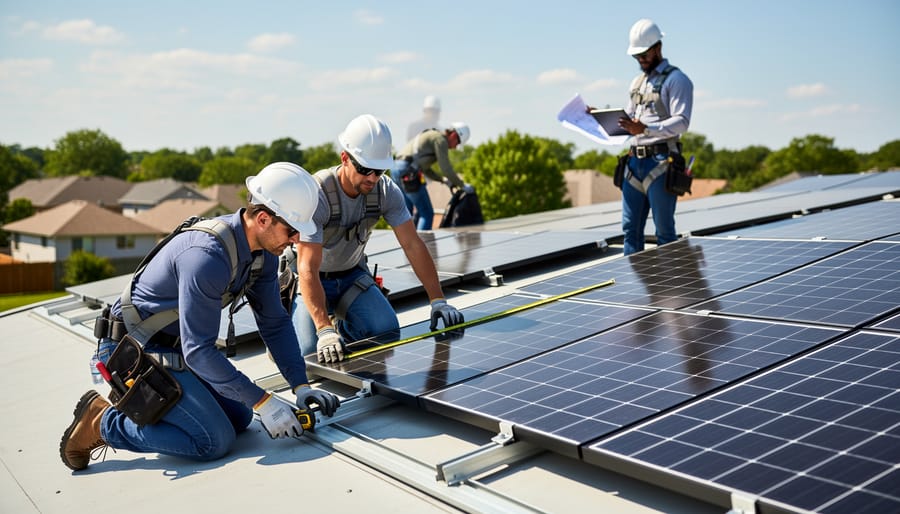
Before you submit any application, understand the critical timing and eligibility factors that can make or break your funding request. Most Canadian clean energy programs operate on fiscal year cycles (April 1 to March 31), and many allocate funds on a first-come, first-served basis until the budget is exhausted. A program advertised in April may close by November if demand is high, so monitoring funding caps and deadlines throughout the year is essential. Provincial programs often mirror this cycle but may have different cutoff dates, British Columbia’s CleanBC initiatives, for instance, sometimes refresh allocations quarterly.
Common disqualifications include projects that don’t meet minimum emission reduction thresholds (often 20% for residential retrofits, higher for commercial ventures), equipment that isn’t on approved technology lists, or applicants who’ve already started work. Pay close attention to technology standards: solar panels, heat pumps, and battery storage systems must carry specific certifications. If your project involves complex infrastructure like smart grids grid-tied renewable systems, or multi-stakeholder partnerships, especially Indigenous community-led initiatives that require consultation protocols and rights recognition, pause before applying. These scenarios demand specialized legal, engineering, and policy expertise that goes beyond standard application guidance. Seek advice from certified energy advisors, Indigenous energy coordinators, or industry consultants who understand the nuances of federal-provincial jurisdictional overlaps and can help you navigate procurement rules, environmental assessments, and partnership agreements. Missing a detail in these complex applications can delay funding by months or result in outright rejection.
Step-by-Step: How to Navigate the Application Process
Step 1: Identify the Right Program for Your Project
Start by defining your project in specific terms, whether you’re planning a home heat pump upgrade, rooftop solar array, commercial building envelope retrofit, or a community-owned wind farm. Each category unlocks different funding streams. Residential energy efficiency improvements typically fall under the Canada Greener Homes Initiative, which offers grants up to $5,000 for insulation, windows, and heating system upgrades following an EnerGuide assessment. Solar installations may qualify through provincial programs like Ontario’s Peak Perks or BC Hydro’s Net Metering, which handle grid connection incentives separately from federal rebates.
Businesses pursuing energy efficiency or renewable generation should explore the Clean Energy Fund and regional development programs that recognize business climate advantage as both environmental stewardship and competitive positioning. Indigenous communities have dedicated pathways through programs like the Indigenous Community-Based Climate Monitoring initiative and the Indigenous Off-Diesel Initiative, designed with sovereignty principles and long-term self-determination in mind.
Navigate to Natural Resources Canada’s main portal and use the “Find Funding” tool, which filters programs by applicant type, technology, and province. Provincial energy agencies maintain parallel directories, check your province’s environment or energy ministry website for local incentives that often stack with federal support.
Step 2: Complete Pre-Application Requirements
Before you hit submit, most Canadian clean energy programs require you to complete specific preparatory steps that validate your project and ensure you’re working with qualified professionals. For homeowners pursuing efficiency upgrades booking an energy audit with NRCan-registered energy advisors is typically mandatory, this assessment identifies baseline energy use and eligible improvements, and you’ll need the report number to proceed. Secure at least two contractor quotes from installers certified to work with the technologies you’re proposing; programs often maintain approved vendor lists to prevent substandard work. For commercial or community-scale projects, a feasibility study demonstrating technical viability, cost-benefit analysis, and emissions impact is usually required before applications are reviewed. Finally, create your account on the relevant government portal, whether Natural Resources Canada’s eServices platform or your provincial equivalent, as registration can take several business days and you’ll need login credentials to upload documents and track progress. Completing these steps thoroughly prevents delays and demonstrates you’ve done the groundwork necessary for approval.
Step 3: Gather and Prepare Your Documentation
Once you’ve identified your program and completed pre-application requirements, methodically organize your documentation package. Start by creating digital folders that mirror the application checklist, most programs now accept PDF uploads through portals like Natural Resources Canada’s eServices.
For financial records, scan recent tax returns, property assessments, and contractor quotes with itemized costs. If you’re applying for a community project, reach out early to municipal councils, Indigenous leadership, or local organizations for letters of support; these typically require two to three weeks to obtain and should articulate how your project serves broader community goals.
Environmental assessments vary by project scale. Residential applicants rarely need formal studies, but commercial or community-scale renewable installations may require provincial environmental screening certificates. Check your program’s technical guidelines for approved formats, some accept self-assessments while others mandate third-party reports.
Name files clearly using program-specific conventions: many portals auto-reject submissions with generic labels like “document1.pdf.” If you face barriers accessing digital platforms, most programs offer phone support or partner with local service organizations to assist with uploads and form completion.
Step 4: Submit Your Application
With your documents organized, you’re ready to submit. Most clean energy programs use dedicated online portals, Natural Resources Canada’s eServices platform handles federal initiatives like the Canada Greener Homes program, while provinces run their own systems. Ontario’s Save on Energy portal and BC Hydro’s application hub are typical examples.
Start by creating an account if you haven’t already. You’ll need a valid email address and will set up security questions. Once logged in, locate your specific program and begin a new application. The portal will guide you through structured forms asking for project details, property information, and financial data. Upload your prepared documents in the accepted formats, usually PDF for reports and contracts, JPEG or PNG for photos.
Before hitting submit, review everything carefully. Most portals generate a confirmation number instantly and send an email receipt within minutes. Save both.
Application review typically takes four to twelve weeks, though high-demand periods may extend this. Check your portal dashboard regularly for status updates or requests for additional information. Set a calendar reminder to follow up if you haven’t heard back within the stated timeline.
Step 5: Respond to Follow-Up Requests and Approval Conditions
After you submit your application, expect a review period where program administrators may request clarification or additional documentation. Respond promptly to these requests, delays can push your approval past funding deadlines or fiscal year cutoffs. Common follow-up requests include updated contractor quotes, revised project timelines, proof of municipal permits, or clarification on technical specifications like equipment efficiency ratings.
Many programs issue conditional approvals that specify requirements you must meet before work begins. These conditions might include securing additional permits, finalizing contractor agreements, or providing proof of insurance. Read approval letters carefully and address every condition before starting your project. Starting work prematurely can disqualify you from funding entirely, even if you’ve received preliminary approval.
If your application is denied, the decision letter will explain why. Common reasons include incomplete documentation, ineligible technology, or projects that don’t meet minimum emission reduction thresholds. Most programs allow resubmission after you address the stated deficiencies. Some offer formal appeal processes for decisions you believe were made in error. Contact the program administrator directly to understand your options, many have dedicated support staff who can guide you through strengthening a resubmission. Persistence pays off when you’re addressing legitimate concerns rather than simply reapplying without changes.
How to Verify Your Application Success and Next Steps
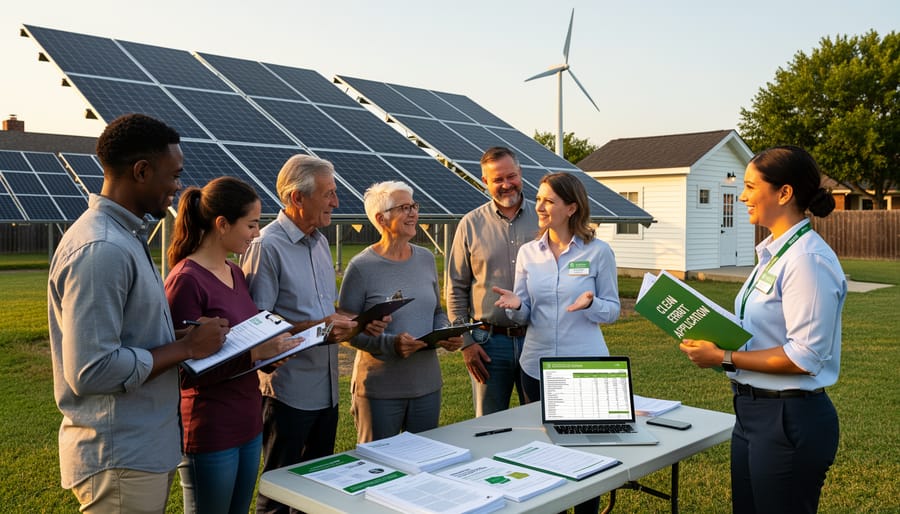
Approval is just the beginning. Your funding agreement will detail the timeline for project completion, reimbursement milestones, and compliance requirements. Most programs operate on a reimbursement model, meaning you pay contractors upfront and submit invoices after work is finished. Read the agreement carefully to understand payment schedules, some programs release funds in stages tied to project phases, while others reimburse only after a final inspection confirms the work meets program standards.
Confirming that your project meets program standards is a non-negotiable step. For home retrofits, this typically means scheduling a post-completion energy audit with the same certified advisor who conducted your pre-application assessment. For commercial or community projects, expect site inspections by program administrators or third-party engineers who verify that installations match approved specifications and comply with safety codes. Submit all required documentation promptly, photos, contractor certifications, equipment serial numbers, and commissioning reports. Delays in verification can hold up your final payment.
Keep meticulous records. Save every receipt, email, approval letter, and inspection report for at least seven years. The Canada Revenue Agency may require proof of expenditures if you claim related tax credits, and future program applications often ask whether you have received prior government funding. Many programs also require annual reporting on energy savings or emissions reductions, especially for larger grants tied to climate accountability.
Once your project is verified and funds are received, consider sharing your experience. Many programs highlight success stories on their websites, and your journey could inspire neighbours, business peers, or other communities to pursue clean energy upgrades. Document your energy savings over the first year and celebrate the tangible impact, lower utility bills, reduced carbon footprint, and your contribution to Canada’s clean energy future. Your story becomes part of a collective movement proving that these programs work.
Frequently Asked Questions About Clean Energy Program Applications
Can I apply to multiple clean energy programs at once?
Yes, you can apply to multiple programs simultaneously as long as you’re not using the same funding source for the same expense, this is called “stacking,” and most programs allow it up to a combined maximum. Always disclose other funding applications to avoid disqualification.
What if I’m a renter and want to make energy upgrades?
Renters typically need written permission from their landlord to apply for most retrofit programs, and the property owner must be listed as the applicant or co-applicant. Some provinces offer specific incentives for landlords who upgrade rental properties, creating an opportunity for negotiation.
How long does funding take to arrive after approval?
Most programs operate on a reimbursement model, meaning you pay upfront and submit invoices after project completion for payment within 6-12 weeks. A few programs offer advance payments for Indigenous communities or non-profit organizations facing financial barriers.
Are there programs specifically for rural or remote communities?
Absolutely, federal programs like the Rural and Northern Indigenous Communities Program and provincial northern energy initiatives offer higher funding caps and flexible eligibility to address off-grid challenges and transportation costs. These programs often prioritize diesel displacement and community-owned renewable projects.
What happens if my project costs exceed the grant amount?
You’re responsible for covering the difference between the grant and your total project cost. Budget carefully during planning, and consider phasing your project or combining programs to maximize coverage without overextending financially.
Do I need to pay back the funding?
No, clean energy grants and rebates are non-repayable as long as you complete the project as approved and meet reporting requirements. Low-interest loans through programs like the Canada Infrastructure Bank do require repayment but offer favorable terms that make clean energy innovation financially accessible.
Understanding these common concerns helps you approach applications with confidence. If your specific situation isn’t covered here, most program administrators offer helplines and webinars where you can get personalized guidance before investing time in a full application.
Applying for a clean energy program isn’t just about securing funding, it’s about joining a nationwide movement toward a cleaner, more resilient future. Every solar panel installed, every building retrofitted, and every community energy project launched brings Canada closer to its climate commitments while delivering real benefits: lower utility bills, healthier indoor environments, and jobs that stay local.
You’re not navigating this alone. Energy advisors, community organizations, industry partners, and program administrators are ready to help you succeed. Indigenous communities are reclaiming energy sovereignty through culturally grounded initiatives. Municipalities are piloting district heating systems. Homeowners are transforming century-old houses into net-zero showcases. These stories prove that clean energy isn’t a distant aspiration, it’s happening now, propelled by everyday Canadians taking that crucial first step.
Canada’s ambition to lead in clean energy innovation depends on collective action. Government programs provide the framework and financial support, but it’s individual decisions, your decision to explore eligibility, gather documents, and submit an application, that turn policy into progress. Whether you’re upgrading a single home or developing a regional renewable energy hub, your project contributes to emission reductions that matter globally and economic opportunities that matter locally.
Start today. Identify the program that fits your project, reach out for guidance if you need it, and move forward with confidence. The path to clean energy is open, accessible, and waiting for you to walk it.