
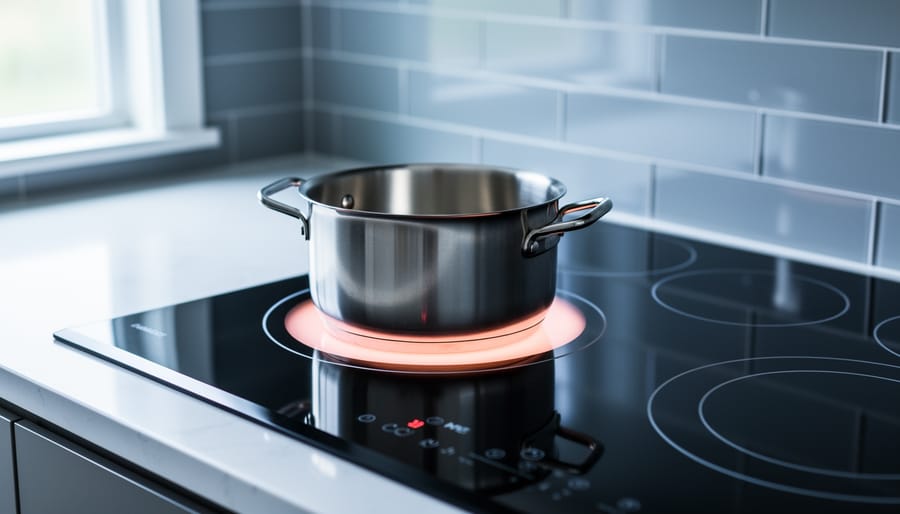
Induction cooktops convert 85 to 90 percent of the electrical energy they draw into cooking heat, making them the most efficient electric cooking technology available for Canadian kitchens in 2026. This stands in sharp contrast to conventional electric coil or smooth-top stoves, which hover around 65 to 70 percent efficiency, and gas ranges, which waste roughly half their energy output as ambient heat that never reaches the pot.
The efficiency advantage matters beyond monthly utility bills. When a cooktop transfers more energy directly into the cookware and less into the surrounding air, kitchens stay cooler, ventilation systems work less, and overall household energy demand drops during meal preparation. For households across Canada committed to reducing their carbon footprint, that efficiency translates into fewer emissions at the generation source, particularly as provinces continue shifting toward renewable electricity grids.
Understanding how induction achieves this performance requires looking at the physics beneath the glass surface. Instead of generating heat and then transferring it to a pot, induction technology uses electromagnetic fields to induce heat directly within ferrous cookware. No intermediary heating element loses energy to the air. The cooktop itself remains relatively cool, and nearly all the electrical input becomes usable cooking energy within seconds.
This article breaks down the mechanics that deliver such high efficiency, examines the components responsible, compares real-world performance against other cooking methods, and offers practical guidance for maximizing energy savings. Canadian clean energy innovators continue refining induction designs, and understanding how they work helps homeowners and policymakers alike make informed decisions about kitchen electrification.
What Induction Cooktop Energy Efficiency Means
Energy efficiency in induction cooking refers to how much of the electrical energy drawn from the grid actually becomes heat that cooks your food. Induction cooktops achieve energy conversion rates between 80% and 90%, meaning only 10-20% of the electricity is lost during the cooking process. By contrast, conventional electric coil stoves convert just 65-75% of their energy to usable heat, while gas ranges typically manage only 40-55% efficiency.
The difference comes down to how heat reaches your cookware. Traditional methods waste energy by heating the air around the pan or radiating heat away from the cooking surface. Gas flames send most of their energy up the sides of the pot and into your kitchen, while electric coils radiate heat in all directions before it reaches the pan bottom. Induction skips these wasteful steps entirely.
- Energy conversion rate
- The percentage of input electricity that becomes usable cooking heat, rather than being lost to the surrounding environment.
- Electromagnetic induction
- The process by which alternating electrical current in a coil generates a magnetic field that induces heat directly in ferromagnetic cookware.
- Thermal efficiency
- A measure of how effectively a cooking appliance transfers heat energy to food, accounting for all losses in the heating process.
- Standby power
- The small amount of electricity consumed when an appliance is plugged in but not actively cooking, typically under 1 watt for modern induction units.
Instead of creating heat that must then transfer to your pan, induction generates heat directly within the cookware itself through electromagnetic energy transfer. When you place a ferromagnetic pot on an active induction element, the magnetic field induces electrical currents in the metal, and the pot’s own electrical resistance creates the heat. No flames, no glowing coils, no intermediate heating element, just a direct conversion of electricity to cooking heat exactly where you need it. This fundamental difference explains why boiling water on induction takes nearly half the time of gas while using less energy, and why your kitchen stays cooler during meal preparation.
How Induction Efficiency Works
The Electromagnetic Process
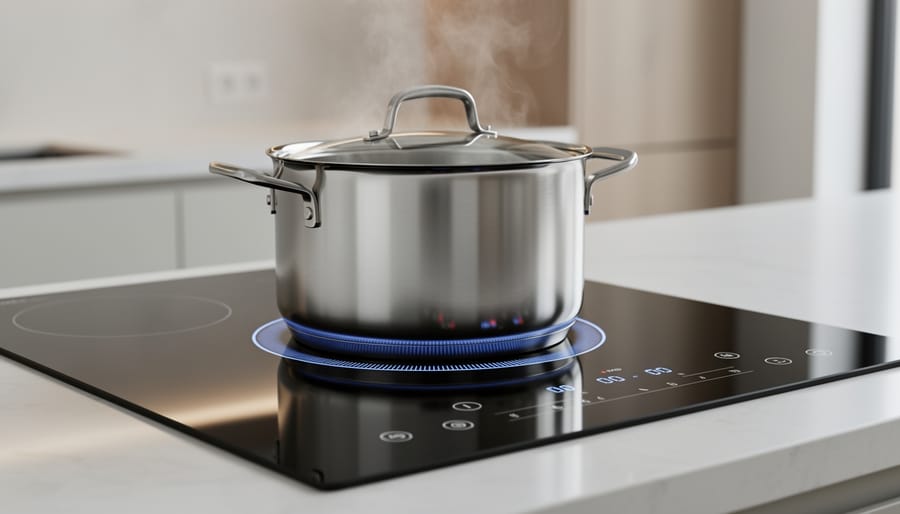
When you turn on an induction burner and place a steel or cast-iron pan on top, you’re triggering a chain reaction that generates heat without flame or glowing coils. A copper coil beneath the ceramic surface receives alternating current from your home’s electrical supply, in Canada, this cycles 60 times per second. Each reversal of current direction creates a rapidly changing magnetic field that extends upward through the cooktop surface.
This fluctuating magnetic field passes through the metal base of your cookware and induces tiny electrical currents called eddy currents to flow within the pan itself. Because ferromagnetic materials like iron and steel resist these electrical flows, they convert that electromagnetic energy directly into thermal energy, heat. The pan becomes its own heating element.
The process happens instantly. There’s no intermediary step where a separate heating element warms up first, then transfers heat to your cookware. The magnetic field does nothing to non-magnetic materials like glass or aluminum, which is why the cooktop surface around your pan stays relatively cool. All the energy conversion occurs exactly where you need it: in the cooking vessel. This direct electromagnetic coupling is what allows induction to convert 80-90% of input electricity into usable cooking heat, compared to roughly 50-60% for conventional electric coils.
Where Energy Savings Happen
Induction cooking saves energy at four critical points where conventional methods bleed heat and power.
First, induction eliminates ambient heat loss entirely. Gas flames and electric coils radiate heat into the surrounding air, warming your kitchen instead of your food. Induction generates heat only in the pan itself, so nearly zero energy escapes into the room. This means your air conditioner doesn’t work overtime in summer, compounding the savings.
Second, induction boils water in half the time of gas or electric coil stoves. Faster heating means the cooktop runs for fewer minutes to accomplish the same task, directly cutting kilowatt-hours consumed. Canadian households boiling pasta water or morning tea see this advantage daily.
Third, precise temperature control prevents overshoot. When you dial down power, the response is instant, unlike gas flames or electric elements that continue radiating stored heat. You use only the energy required for the cooking stage, not excess power to compensate for lag.
Fourth, instant on/off response eliminates standby waste. The moment you turn off an induction burner, energy delivery stops. No cooling-down period, no residual element glow consuming electricity after you’ve finished cooking.
Components That Drive Induction Efficiency
Coil Design and Power Electronics
The copper coil beneath an induction cooktop’s glass surface determines how effectively electrical energy transforms into usable cooking heat. Larger coils with more windings create stronger magnetic fields, transferring energy to cookware more efficiently, typically converting 84-90% of input electricity compared to 65-70% for conventional electric elements. The coil’s geometry matters: tightly wound spirals concentrate the magnetic field where the pan sits, reducing stray energy that dissipates as waste heat.
Modern inverter technology plays an equally crucial role in efficiency. These power electronics convert standard alternating current into high-frequency current (20,000-100,000 Hz), which creates the rapid magnetic field oscillations needed for induction heating. Higher frequencies improve energy transfer precision and allow instantaneous power adjustments without the lag time that wastes energy in conventional elements. Quality inverters incorporate resonant circuits that recycle electromagnetic energy during the switching cycle, capturing power that would otherwise escape as electrical loss. In Canadian homes, this means a 2,200-watt induction burner delivers more actual cooking power than a 3,000-watt conventional coil burner drawing significantly more from the grid.
Smart Controls and Sensors
Modern induction cooktops embed temperature sensors beneath the cooking surface that constantly track heat levels in the pan. When a pot of water hits boiling point, the system automatically dials back power to maintain a steady simmer rather than continue drawing maximum electricity. This closed-loop feedback prevents the energy waste that happens when a conventional burner keeps blasting heat long after you’ve reached your target temperature.
Advanced models use pan-detection sensors to shut off power the moment you lift cookware, eliminating standby losses. Some units recognize when a small pot sits on a large zone and concentrate energy only where the pan makes contact, rather than heating empty space.
Timer functions and keep-warm modes further reduce consumption by applying minimal power once cooking finishes, so you’re not running the cooktop at full capacity unnecessarily. Canadian households report these automated adjustments cut energy use by 10-15% compared to manually controlled induction units, particularly during long simmer tasks like soup or sauce preparation. The smarter the controls, the less electricity you waste on guesswork.
Real-World Applications and Energy Savings
Residential Cooking Efficiency
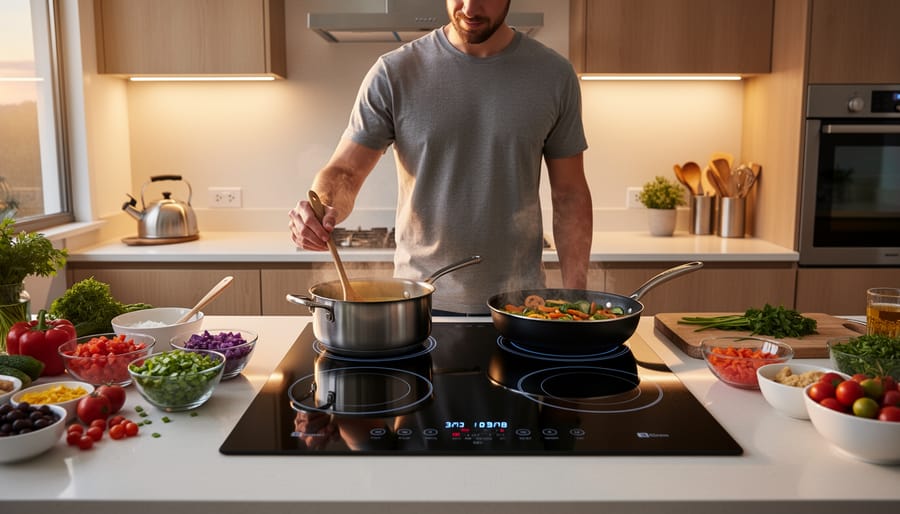
Canadian homeowners switching to induction are seeing measurable reductions in both cooking times and electricity consumption. A typical weeknight dinner, boiling 2 litres of water for pasta, sautéing vegetables, and simmering a sauce, uses approximately 0.4 kWh on an induction cooktop compared to 0.7 kWh on a conventional electric range, a 43% energy saving for one meal. Boiling water for morning coffee drops from 4-5 minutes on a coil stove to under 2 minutes with induction, translating to 50% less energy per task.
These efficiency gains compound across daily use. A Vancouver household cooking two meals daily reported cutting their cooking-related electricity from roughly 45 kWh monthly to 28 kWh after switching to induction, saving about $3-4 per month at BC Hydro rates. While modest per household, these savings add up: if 100,000 Canadian homes made the switch, collective annual savings would exceed 20 million kWh.
Provincial rebates and clean energy programs are accelerating adoption. Ontario’s recent appliance efficiency initiative offers up to $300 toward induction purchases, while Quebec provides rebates for homes transitioning from gas. The faster cooking times also mean less time standing at the stove, a quality-of-life benefit homeowners consistently cite alongside the energy savings.
Commercial and Institutional Use
Commercial kitchens and institutions across Canada are discovering that induction technology delivers measurable energy savings that align with climate goals and operational budgets. Vancouver’s Fable Kitchen replaced gas ranges with induction units in 2023, cutting cooking energy use by 43% while reducing kitchen ambient temperatures by nearly 6°C, slashing air conditioning loads during summer service. The restaurant now boils stock in half the time and maintains tighter temperature control for delicate sauces.
Toronto’s hospital network has installed induction equipment in several patient food preparation facilities, where precise temperature management prevents energy waste during extended cooking cycles. A dietary kitchen at Sunnybrook Health Sciences Centre reports 38% lower electricity consumption compared to their previous electric coil setup, with the added benefit of cooler working conditions for staff during 12-hour shifts.
School boards in Calgary and Ottawa are piloting induction ranges in culinary arts programs, where students learn commercial cooking techniques on equipment that responds instantly and wastes minimal energy. Red Deer Public Schools documented a 31% reduction in cooking energy costs after switching six teaching kitchens to induction, while improving ventilation efficiency because less heat escapes into the room. These institutions demonstrate that induction’s efficiency translates directly to lower operating costs and carbon footprints at scale.
Comparing Induction to Other Cooking Methods
When you compare cooking methods by their energy efficiency, induction stands apart. A typical induction cooktop converts 80-90% of the electricity it uses into cooking heat. Gas stoves manage only 40-55% efficiency, more than half the energy escapes as ambient heat that warms your kitchen instead of your food. Conventional electric coil burners fare slightly better at 65-75%, while smooth-top radiant glass cooktops reach 70-75%.
These numbers translate to real differences in your kitchen. Boiling two litres of water on an induction burner takes about four minutes and consumes roughly 0.2 kilowatt-hours of electricity. The same task on a gas stove takes eight to nine minutes and uses energy equivalent to 0.35 kWh when you account for the natural gas burned. An electric coil needs six to seven minutes and 0.28 kWh.
The efficiency gap widens during actual cooking. Because induction responds instantly when you adjust temperature, it wastes no energy during the lag time that gas flames and electric elements need to heat up or cool down. A 2024 study tracking energy consumption across Canadian households found that switching from gas to induction reduced cooking-related energy use by 47% on average.
Cost implications depend on your local energy rates, but in most Canadian provinces where electricity prices range from 8 to 16 cents per kWh, induction proves cheaper to operate than gas once you factor in delivery charges and carbon pricing. Electric resistance methods cost similar amounts to run per hour, but induction’s speed means shorter cooking times and lower total consumption for the same meals.
Maximizing Your Induction Cooktop’s Efficiency
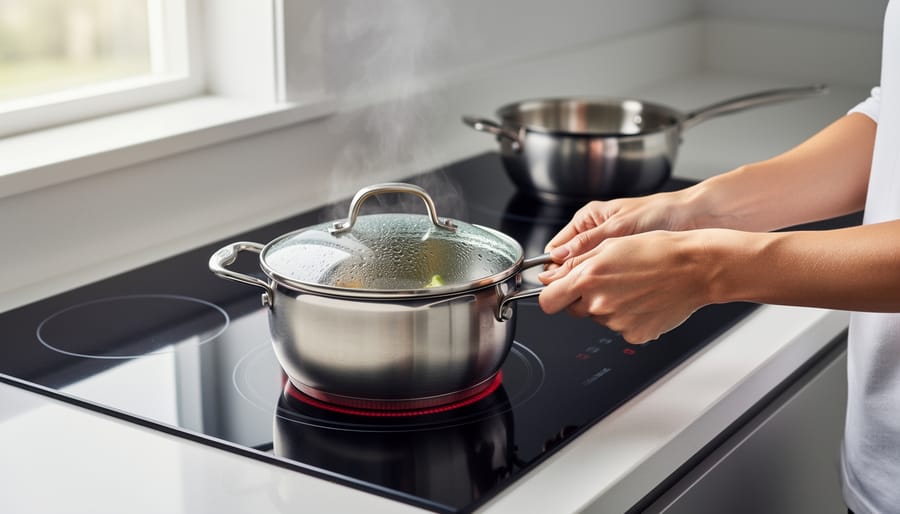
Getting the most from your induction cooktop’s inherent efficiency comes down to a few smart habits that reduce waste and speed up cooking. The biggest factor is cookware: flat-bottomed pots and pans with magnetic bases (cast iron, stainless steel with magnetic properties, or induction-compatible clad aluminum) transfer energy most effectively, while warped or thin bases create air gaps that waste power. Check that the base diameter matches or slightly exceeds the burner zone you’re using, an oversized pan won’t heat evenly, and an undersized one leaves the coil cycling energy into empty space.
Beyond equipment choices, small adjustments deliver measurable savings:
- Use lids whenever possible to trap heat and cut cooking time by up to 25%
- Start with higher power for rapid heating, then reduce to maintain temperature rather than running full power continuously
- Turn off the burner a minute or two early and let residual heat finish gentle tasks like melting cheese or keeping food warm
- Center pans properly on the burner to ensure full contact with the magnetic field
- Wipe the glass surface clean after each use so debris doesn’t interfere with heat transfer or scratch the cooktop
Canadian households can also take advantage of time-of-use electricity rates where available: running your induction cooktop during off-peak hours costs less and eases demand on the grid. Regular maintenance matters too, check that ventilation isn’t blocked and that cookware bases remain smooth and flat over time. These practices compound the efficiency induction already delivers, turning an 85% efficient appliance into one that wastes almost nothing in real-world use.
Common Questions About Induction Energy Efficiency
Understanding the real-world performance and cost implications of induction cooktops helps Canadian households make informed decisions about upgrading their kitchens. Here are answers to the most common questions about induction energy efficiency.
Do induction cooktops actually achieve their rated efficiency in real cooking?
Yes, induction cooktops consistently deliver 80-90% energy efficiency in typical home use, closely matching their rated performance. Unlike gas stoves that lose efficiency with dirty burners or electric coils that degrade over time, induction maintains stable efficiency throughout its lifespan.
How much standby power do induction cooktops use when not cooking?
Most modern induction units draw less than 1 watt in standby mode, comparable to other kitchen appliances. The control panel and sensors require minimal power when idle, adding only a few dollars annually to your electricity bill.
Does my choice of cookware affect the energy efficiency?
Absolutely. Flat-bottomed pans with full magnetic contact transfer energy most efficiently, while warped or undersized cookware can reduce efficiency by 10-15%. Quality ferromagnetic pans designed for induction ensure you get the maximum energy conversion.
How long does it take to recoup the cost of switching to induction at Canadian electricity rates?
With average Canadian residential rates around 13 cents per kWh, households cooking daily typically see payback in 3-5 years through reduced energy consumption. Homes currently using electric resistance or propane see faster returns than those switching from natural gas in provinces with lower gas rates.
The carbon reduction advantage deserves special attention. Even in provinces where electricity generation includes fossil fuels, induction cooking produces lower emissions than direct gas combustion in your home. As Canada’s grid continues decarbonizing with more renewable sources, the climate benefit of electric induction increases year over year, making it a future-proof choice aligned with national emissions targets.
Induction cooktops represent one of the most straightforward ways Canadian households can improve energy efficiency while reducing their environmental footprint. With 80-90% energy conversion rates and minimal heat waste, these appliances align perfectly with Canada’s grid decarbonization targets and provincial clean energy commitments.
As more Canadians adopt electric cooking technologies, the collective impact grows substantial. Every household switching from gas or conventional electric to induction reduces energy demand and carbon emissions, a shift that becomes even more meaningful as provinces integrate renewable generation and smart grids into their infrastructure. The technology delivers immediate energy savings while supporting long-term climate goals.
Policy developments signal growing momentum. Federal net-zero building codes increasingly favour electric cooking, while provincial rebate programs make induction more accessible. Major retailers now stock affordable models, and cookware manufacturers offer compatible options at every price point.
Your cooking choices connect directly to Canada’s energy transition. Induction technology proves that household efficiency improvements need not compromise performance, they often enhance it. As the grid becomes cleaner and adoption spreads, early adopters help normalize a technology that makes both economic and environmental sense for the country’s sustainable future.