
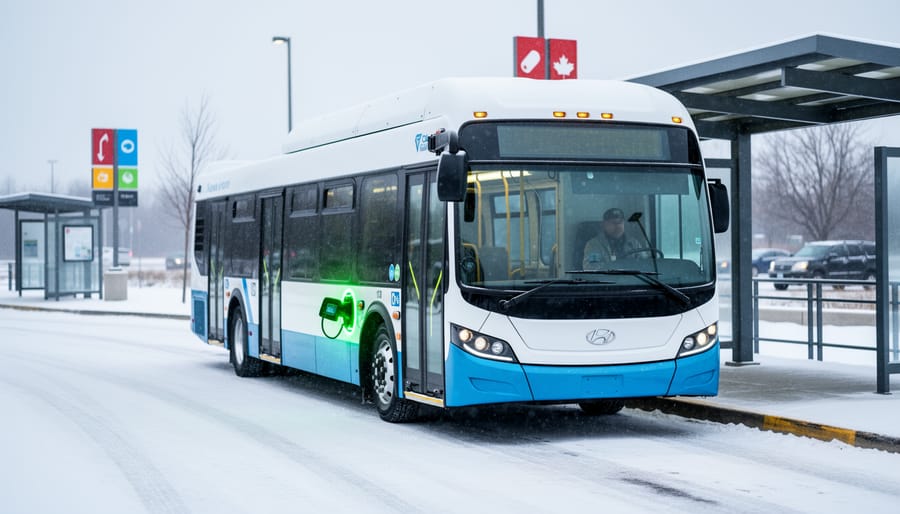
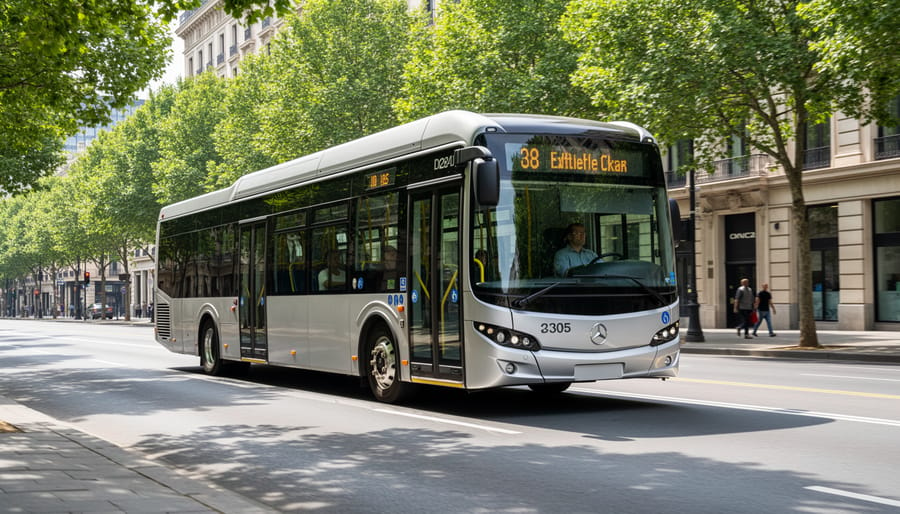
A battery electric bus is a public transit vehicle powered entirely by electricity stored in onboard battery packs, eliminating the need for diesel or gasoline and producing zero tailpipe emissions. These buses represent one of the most significant shifts in urban transportation infrastructure in decades, combining proven electric vehicle technology with the high-capacity demands of mass transit.
Cities across Canada are deploying these vehicles to meet climate commitments while discovering unexpected benefits: quieter streets, lower operating costs, and cleaner air in the neighborhoods that need it most. The transition isn’t just about swapping fuel sources. It requires reimagining depot infrastructure, training mechanics in high-voltage systems, and coordinating charging schedules with route demands. Transit agencies from Vancouver to Halifax are navigating these challenges in real time, building knowledge that’s shaping how North American cities electrify their fleets.
The technology behind battery electric buses has matured rapidly. Where early models struggled with range anxiety and thermal management in Canadian winters, today’s buses routinely complete full service days in temperatures that plunge below -30°C. Canadian electric innovators have contributed battery thermal management systems and charging solutions designed specifically for northern climates, pushing the industry beyond technologies optimized for mild weather.
This article explains how battery electric buses function, breaks down the main types operating in Canadian transit systems, and examines real-world performance data from agencies already running electric fleets. Whether you’re a municipal decision-maker evaluating procurement options, a transit professional preparing for electrification, or simply curious about the buses appearing on your local routes, you’ll find the technical foundation and practical context needed to understand this transformation in public transportation.
What Battery-Electric Buses Mean for Canadian Transit
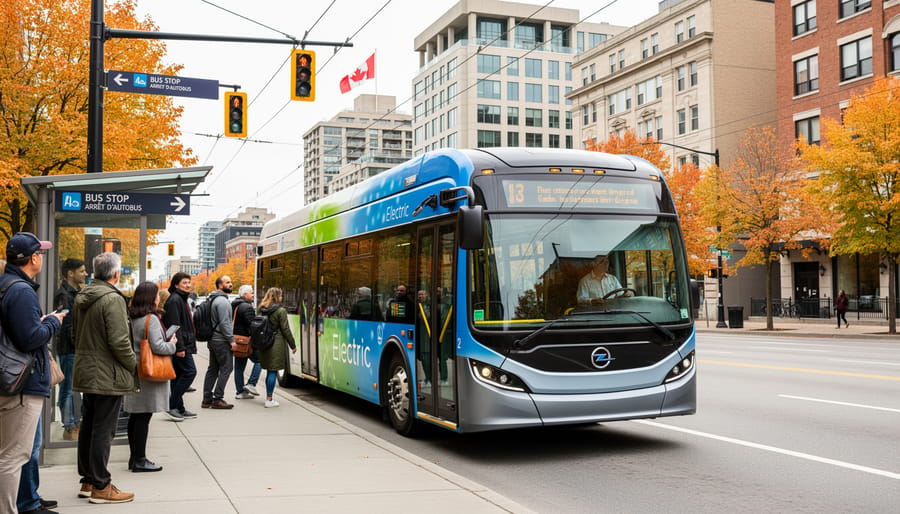
A battery-electric bus is a public transit vehicle that runs entirely on electricity stored in rechargeable battery packs, producing zero tailpipe emissions during operation. Unlike conventional buses that burn diesel fuel or compressed natural gas, these vehicles draw power from onboard batteries that charge from the electrical grid, eliminating direct greenhouse gas emissions and local air pollutants like nitrogen oxides and particulate matter.
The technology represents a fundamental shift in how Canadian cities move people. Traditional diesel buses have powered urban transit for decades, but they contribute significantly to urban air pollution and climate emissions. Battery-electric buses eliminate that problem at the source. When a diesel bus idles at a stop or accelerates from a light, it releases exhaust into the surrounding neighbourhood. An electric bus does neither, it’s silent, clean, and powered by an energy source that’s increasingly renewable across Canadian provinces.
Understanding a few key concepts helps clarify how these vehicles differ from their conventional counterparts:
- Zero-Emission Vehicle
- A vehicle that produces no tailpipe exhaust or direct emissions during operation, though upstream emissions depend on the electricity generation source.
- Battery Capacity (kWh)
- The total energy storage of the battery pack, measured in kilowatt-hours, which determines how far the bus can travel on a single charge, typically 200-600 kWh for transit buses.
- Charging Infrastructure
- The network of charging stations and electrical equipment needed to recharge bus batteries, ranging from overnight depot chargers to fast-charging systems at route terminals.
- Regenerative Braking
- Technology that captures energy normally lost as heat during braking and feeds it back into the battery, extending range and reducing brake wear.
- Total Cost of Ownership
- The complete lifecycle cost of operating a bus including purchase price, fuel, maintenance, and infrastructure, where electric buses often prove cheaper over time despite higher upfront costs.
For Canada, battery-electric buses align directly with federal and provincial climate commitments. The federal government has set targets to reduce emissions 40-45% below 2005 levels by 2030, and transportation accounts for roughly a quarter of national emissions. Electrifying transit fleets delivers measurable progress toward those goals while improving air quality in the urban corridors where most Canadians live. Cities from St. John’s to Victoria are piloting or deploying electric buses, testing the technology in climates ranging from maritime mild to prairie cold, proving that zero-emission transit works across Canada’s diverse geography.
How Battery-Electric Buses Work
Battery Systems and Range
At the heart of every battery-electric bus sits a lithium-ion battery pack, the same core technology found in electric cars but scaled up dramatically for transit duty. Most buses today carry battery systems ranging from 200 to 600 kilowatt-hours (kWh), about four to twelve times the capacity of a typical passenger EV. This capacity directly determines how far a bus can travel on a single charge, with modern electric buses achieving ranges between 150 and 400 kilometres depending on battery size, route conditions, and driving patterns.
A 40-foot transit bus equipped with a 350 kWh battery pack can typically cover 250 to 300 kilometres under normal operating conditions, enough for most urban routes without mid-day charging. Larger 60-foot articulated buses require bigger battery packs, often 450 to 600 kWh, to handle their increased weight and passenger loads while maintaining similar range capabilities.
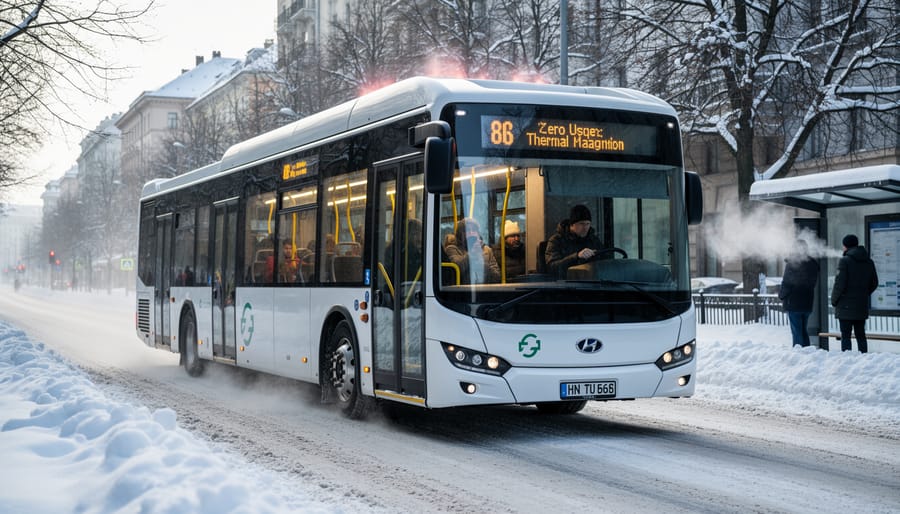
Canadian winters once posed serious challenges for battery-electric buses, as cold temperatures reduce battery efficiency and available range. However, recent engineering advances have addressed this limitation head-on. Modern buses feature sophisticated thermal management systems that pre-heat batteries while still plugged in, maintain optimal operating temperatures during service, and use heat pump technology to warm the passenger cabin without draining the battery excessively. Battery chemistries have also improved, with some manufacturers offering cold-weather-optimized packs that retain 85 to 90 percent of their rated capacity even in minus-20-degree conditions. Transit agencies in Edmonton, Winnipeg, and other northern cities have demonstrated that properly equipped electric buses can maintain reliable service through harsh Prairie winters, dispelling earlier concerns about cold-weather viability.
Charging Methods
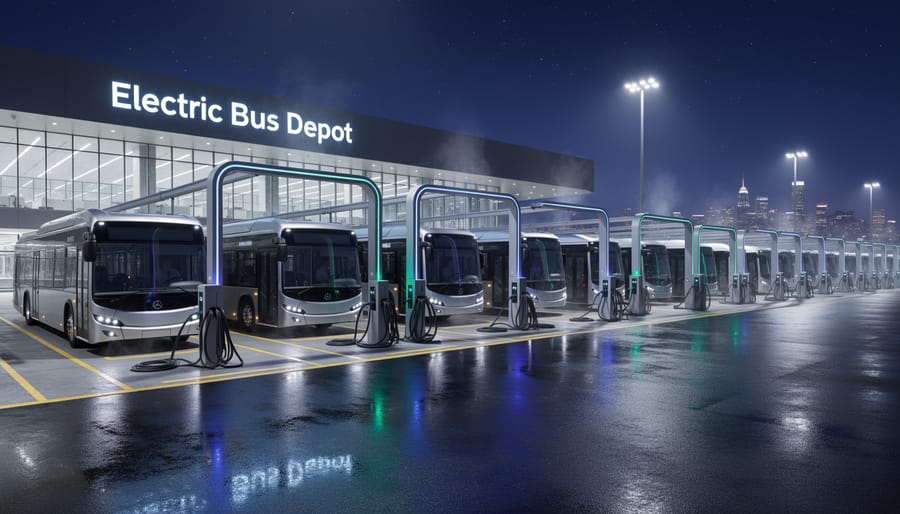
Battery-electric buses use three main charging approaches, each suited to different operational needs. Depot charging occurs overnight at transit facilities, where buses connect to high-power chargers (typically 50-150 kW) for six to eight hours, fully replenishing batteries while vehicles sit idle between service days. This method requires substantial electrical infrastructure upgrades at depots but fits naturally into existing fleet schedules.
Opportunity charging deploys fast chargers (150-500 kW) at strategic route locations, allowing buses to recharge during layovers or driver breaks. A 10-15 minute charge can add significant range, enabling longer routes without larger battery packs. However, this approach demands coordination with smart grids to manage peak demand and requires charging infrastructure along routes.
Emerging wireless inductive charging technology eliminates physical connections entirely. Buses park over ground-based charging plates that transfer energy through electromagnetic fields, reducing wear on equipment and driver workload. While still uncommon in Canada, pilot projects in British Columbia are testing this technology for both depot and on-route applications, particularly in extreme weather conditions where plug connections can freeze.
Types of Battery-Electric Buses in Service
Canadian transit agencies operate several distinct configurations of battery-electric buses, each designed to meet specific service requirements and route demands. Understanding these variants helps clarify how electric bus technology adapts to diverse community needs across the country.
The 40-foot standard transit bus represents the most common configuration in Canadian fleets. These single-unit vehicles typically carry 35-40 seated passengers plus standees, making them ideal for local routes with moderate ridership. Nova Bus’s LFSe and New Flyer’s Xcelsior CHARGE dominate this segment, with battery capacities ranging from 350-450 kWh delivering 200-250 km of range under typical operating conditions. Cold-climate packages specific to Canadian deployments include enhanced battery thermal management, heated passenger compartments with heat pumps, and cabin pre-conditioning systems that warm the bus during charging.
Articulated 60-foot models serve high-capacity corridors in larger cities. These “bendy buses” feature a pivoting joint connecting two sections, carrying up to 120 passengers during peak periods. Toronto Transit Commission and TransLink in Vancouver operate these higher-capacity electric articulated buses on busy routes where their 600 kWh battery packs support all-day service. The additional length requires more powerful motors but allows larger battery installations, maintaining similar range to standard models while moving significantly more passengers per trip.
Smaller battery-electric shuttles and community buses fill specialized roles. Twenty-five to thirty-foot models serve paratransit operations, airport connectors, and lower-density neighborhoods where full-size buses prove inefficient. These compact vehicles often feature 150-200 kWh batteries sufficient for shorter, fixed routes. Several Indigenous communities across Canada have adopted these smaller electric buses as part of energy efficient infrastructure initiatives, valuing their quiet operation and zero local emissions in residential areas.
Double-decker electric buses represent an emerging category in Canadian transit. Grande Prairie Transit in Alberta became one of the first North American systems to deploy battery-electric double-deckers, choosing the high-capacity format to maximize passenger throughput on limited route frequencies. These distinctive vehicles carry 80+ passengers across two levels while maintaining the same street footprint as standard 40-foot buses.
Real-World Applications Across Canada
From coast to coast, Canadian transit agencies are putting battery-electric buses to work on real routes serving real riders, and the results are reshaping what cities expect from public transit.
Toronto Transit Commission operates one of North America’s largest battery-electric bus deployments, with over 60 vehicles running regular service on high-frequency routes like the 6 Bay and 35 Jane. Drivers report smoother acceleration and quieter cabins, while maintenance teams have logged significantly fewer brake replacements thanks to regenerative braking. The buses handle Toronto’s congested corridors without range anxiety, typically returning to the depot with 30-40% charge remaining after a full day’s work.
Vancouver’s TransLink launched its electric fleet in 2020 and now runs battery-electric buses across 15 routes, prioritizing neighborhoods with poor air quality. Route 100 along Marine Drive has become a proving ground for cold-weather performance, with buses maintaining full service through coastal winter conditions. Passenger feedback highlights the near-silent operation, which has transformed the riding experience in residential areas where diesel rumble once dominated.
Montreal’s Société de transport de Montréal took a different approach, deploying articulated 60-foot battery-electric buses on high-capacity routes to test performance under heavy passenger loads. The longer vehicles handle rush-hour crowds while climbing Mount Royal without the power drop-offs that plagued earlier electric models. Transit planners there credit improved battery chemistry and thermal management systems for making Quebec winters manageable.
Smaller communities are finding battery-electric buses equally transformative. The Town of Okotoks, Alberta runs electric shuttles connecting residential areas to downtown, demonstrating that zero-emission transit works in mid-sized municipalities. Cold Lake First Nations in Alberta operates battery-electric community buses as part of a broader climate action strategy, viewing the transition as both environmental stewardship and an investment in air quality for community members with respiratory sensitivities.
Brampton Transit is converting entire route corridors to electric operation, creating “clean air zones” where residents experience measurably reduced diesel particulate exposure. Operators there emphasize the practical learning curve: battery-electric buses require different driving techniques to maximize range, and depot staff needed training on new maintenance protocols, but the transition has proceeded smoothly.
These deployments share common threads. Drivers consistently prefer the smooth, quiet operation. Maintenance costs trend lower after the first year. Range performance exceeds initial projections as operators learn optimal charging schedules. And communities notice the difference, particularly along routes serving schools and hospitals where air quality matters most.
Environmental and Economic Benefits
Battery-electric buses deliver measurable environmental and economic advantages that are reshaping the business case for public transit in Canada. A single electric bus eliminates approximately 100 tonnes of greenhouse gas emissions annually when powered by Canada’s relatively clean electricity grid, with provinces like Quebec, Manitoba, and British Columbia achieving reductions above 90% compared to diesel equivalents. Transit agencies in Toronto and Vancouver have documented these savings across their growing electric fleets, proving the technology’s climate impact at scale.
The economic benefits extend beyond fuel savings. Battery-electric buses offer compelling advantages:
- 80-90% reduction in greenhouse gas emissions when powered by clean electricity
- 60-70% lower operating costs over vehicle lifetime compared to diesel buses
- Elimination of diesel particulate pollution in urban corridors
- Reduced noise pollution benefiting transit-adjacent communities
- Creation of skilled maintenance jobs in electric vehicle technology
Total cost of ownership analysis shows electric buses saving $300,000 to $500,000 over their 12-year service life. Edmonton Transit Service reports fuel cost savings of $25,000 per bus annually, while maintenance expenses drop by 40-50% due to fewer moving parts and no oil changes. Brake systems last significantly longer thanks to regenerative braking, which recaptures energy during deceleration.
Air quality improvements in dense urban corridors prove particularly significant. Electric buses eliminate tailpipe emissions of nitrogen oxides and fine particulate matter that contribute to respiratory illness. Communities along high-frequency bus routes experience measurably cleaner air, a benefit quantified in Montreal’s pilot program data. The near-silent operation also reduces noise pollution by 10-15 decibels, improving quality of life for residents near transit hubs and busy routes.
The clean technology sector is creating specialized jobs. Transit agencies require technicians trained in high-voltage electrical systems, battery diagnostics, and charging infrastructure maintenance. Federal and provincial support through clean energy program funding accelerates fleet conversion while building domestic expertise in zero-emission transit.
Common Questions About Battery-Electric Buses
How do battery electric buses perform in Canadian winters?
Modern battery electric buses operate reliably in cold weather, though range can decrease by 20-40% in extreme cold due to heating demands and battery chemistry. Transit agencies plan routes accordingly and use thermal management systems to maintain battery efficiency.
What happens if a bus runs out of charge on route?
Transit agencies build safety margins into route planning to prevent this scenario. If it occurs, the bus is towed to a charging location, similar to how a diesel bus would be handled if it ran out of fuel.
Are battery electric buses more expensive than diesel buses?
Purchase prices are higher, typically $750,000-$1 million versus $500,000-$600,000 for diesel. However, lower fuel and maintenance costs mean total cost of ownership over a bus’s 12-year lifespan often favours electric.
How long do the batteries last?
Battery packs are typically warrantied for 8-12 years and designed to retain at least 80% capacity over that period. Some agencies are already seeing batteries exceed expectations in real-world service.
What powers the charging stations?
Charging infrastructure draws from the local electrical grid. Many transit agencies prioritize renewable energy contracts or on-site solar installations to ensure their electric fleets run on clean power, maximizing emissions reductions.
These questions reflect the most common concerns transit planners and riders raise when evaluating battery electric buses. Canadian operators have accumulated enough real-world data to answer them confidently, moving the conversation from “if” to “how” these vehicles fit into municipal fleets. The technology has matured beyond pilot projects into proven, scalable transit solutions that work in diverse Canadian climates and communities.
Battery electric buses have moved from pilot projects to proven workhorses across Canadian transit systems. Cities and communities from coast to coast are expanding their electric fleets, backed by real-world data showing these vehicles can handle demanding routes, harsh winters, and the full spectrum of Canadian operating conditions. The technology works, the economics increasingly favour it, and the environmental gains are measurable: cleaner air in urban neighbourhoods, quieter streets, and significant reductions in greenhouse gas emissions that bring climate targets within reach.
Canada has a genuine opportunity to lead in this space. With our combination of clean electricity grids, cold-climate engineering expertise, and strong public support for climate action, we’re well positioned to demonstrate how battery electric buses can anchor sustainable transit networks. The momentum is building. Transit agencies that started with small pilot fleets are now ordering dozens of electric buses at a time. New charging infrastructure is being installed. Local supply chains are forming around battery production, charging systems, and specialized components designed for northern climates.
The transformation won’t happen overnight, but the direction is clear. Battery electric buses represent more than a technology shift, they’re reshaping how Canadians think about public transit, urban air quality, and our collective response to climate change. As battery ranges extend, charging becomes faster, and operating experience deepens, these vehicles will become the standard, not the exception, carrying millions of Canadians toward cleaner cities and a more sustainable future.