
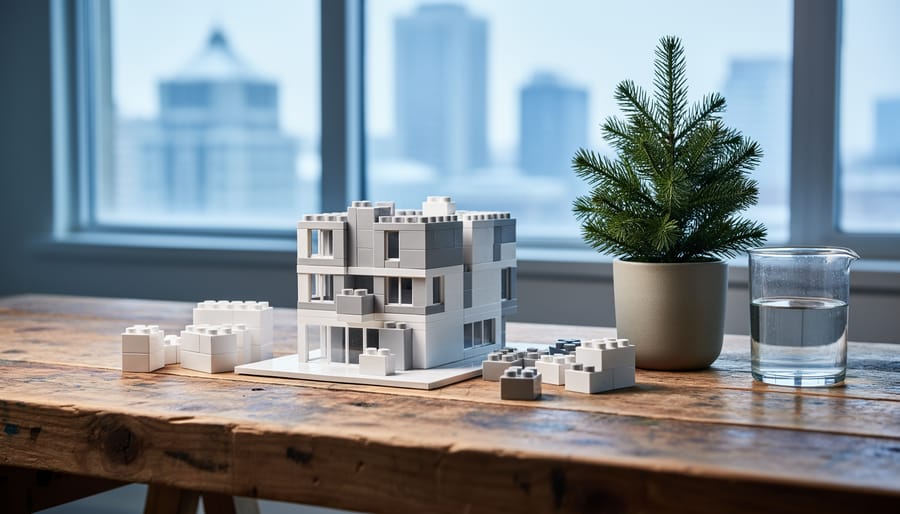
Design for sustainability is a systematic approach that integrates environmental, social, and economic considerations into every stage of product and service development, from initial concept through manufacturing, use, and end-of-life. Rather than treating sustainability as an afterthought or marketing add-on, this methodology embeds ecological responsibility and resource stewardship directly into design decisions.
The concept matters now more than ever as Canada works toward net-zero emissions by 2050 and communities across the country face mounting pressure to reduce waste, conserve energy, and build resilience against climate impacts. Design for sustainability offers a practical roadmap for meeting these goals without sacrificing innovation, comfort, or economic viability.
This approach goes beyond simply choosing greener materials. It requires designers, engineers, and businesses to rethink entire systems: How long will a product last? Can it be repaired instead of replaced? What happens to its components when it reaches end-of-life? Where do raw materials originate, and who bears the social and environmental costs of extraction?
In practice, design for sustainability shows up in diverse ways across Canadian industries. Architects create buildings that generate more energy than they consume. Manufacturers design modular electronics that users can upgrade rather than discard. Indigenous communities apply traditional ecological knowledge to contemporary infrastructure projects, demonstrating that sustainable design has deep roots in this land.
This article breaks down what design for sustainability really means, explores the frameworks that guide it, and shows how Canadian innovators are putting these principles into action across sectors from clean technology to urban planning.
What Design for Sustainability Means
Design for sustainability is a holistic approach that integrates environmental, social, and economic considerations into every stage of a product’s, building’s, or system’s existence. Unlike conventional design, which often prioritizes aesthetics, function, and cost in isolation, sustainable design asks deeper questions from the outset: Where do the materials come from? How much energy will manufacturing require? Can this be repaired, reused, or safely returned to the earth? Who benefits, and who bears the burden?
This expanded lens shifts the designer’s role from solving immediate problems to anticipating long-term consequences. It means thinking beyond the moment of purchase or completion to consider decades of use, maintenance, and eventual end-of-life. A sustainably designed building in Toronto, for example, isn’t just energy-efficient on opening day, it’s built with materials that can be disassembled and repurposed, uses systems that adapt to future climate conditions, and supports the wellbeing of everyone who enters.
Several core concepts define this approach:
- Lifecycle thinking
- Evaluating environmental and social impacts from raw material extraction through manufacturing, use, and disposal or recovery. It reveals hidden costs that traditional design overlooks.
- Cradle-to-cradle design
- A framework where products are conceived as nutrients in biological or technical cycles, eliminating the concept of waste. Materials either biodegrade safely or circulate indefinitely in manufacturing.
- Circular economy
- An economic model that keeps resources in use as long as possible through repair, refurbishment, remanufacturing, and recycling. It contrasts with the linear take-make-dispose approach.
- Regenerative design
- Goes beyond minimizing harm to actively restoring and enhancing ecosystems, communities, and economies. The goal is net-positive impact.
What distinguishes sustainable design most clearly is its commitment to foresight and accountability. Traditional design often externalizes consequences, pollution becomes someone else’s problem, resource depletion a future generation’s concern. Sustainable design internalizes these realities, treating them as design constraints as fundamental as budget or building codes. It’s design that asks not just “Does this work?” but “Does this work for everyone, now and later?”
How Sustainable Design Works in Practice
The Lifecycle Assessment Approach
Lifecycle assessment is the quantitative backbone of sustainable design. LCA evaluates life-cycle impacts by measuring energy use, greenhouse gas emissions, water consumption, and waste generation at every stage: from mining or harvesting raw materials, through manufacturing and transportation, to how a product performs during use and what happens when it reaches end-of-life. Designers feed this data into software tools that map hotspots and compare scenarios, answering questions like whether switching to recycled steel or local sourcing cuts more carbon, or whether designing for disassembly meaningfully extends material recovery.
In Canada’s building sector, architects use LCA to weigh mass timber against concrete for structural frames. A 2024 assessment of a Vancouver office tower showed cross-laminated timber sequestered roughly 1,800 tonnes of carbon compared to a conventional steel-and-concrete equivalent, though transportation emissions varied depending on mill location. Clean tech developers apply the same rigor: a Toronto solar panel manufacturer conducted an LCA revealing that 70 percent of lifetime emissions occurred during silicon refining and module assembly, prompting a shift to hydroelectric-powered facilities.
The process isn’t perfect. LCA relies on assumptions about lifespan, maintenance, and regional energy grids, and databases may lack data on emerging materials. Still, it transforms gut instinct into evidence, letting designers defend choices with numbers rather than claims.
Integrating the Principles of Sustainable Design
These foundational principles act as a compass for every decision designers make, transforming abstract sustainability goals into concrete choices about materials, processes, and systems.
At the heart of design for sustainability lie several interconnected principles:
- Reduce resource consumption and material inputs from the outset
- Reuse components and materials wherever possible
- Recycle materials at end-of-life to close the loop
- Choose renewable and bio-based materials over finite resources
- Prioritize energy efficiency throughout the product lifecycle
- Design for durability to extend useful life
- Build in modularity so parts can be upgraded or replaced
- Aim for regenerative capacity that restores ecosystems
Consider how these principles shape a building project. A designer might select locally sourced mass timber (renewable material) for structural elements, incorporate passive solar orientation (energy efficiency), specify modular mechanical systems that can adapt as technology improves (modularity and durability), and plan for material recovery when the building eventually reaches end-of-life (recyclability). The same thinking applies to energy efficient infrastructure where designers balance upfront embodied carbon against decades of operational savings.
The principles work together rather than in isolation. Choosing a durable material reduces the need for replacement (addressing both resource use and waste), while designing for disassembly enables both reuse and recycling. This integrated approach means designers constantly weigh trade-offs, asking which principles matter most for a given context and how to maximize benefit across all dimensions.
Core Approaches and Frameworks in Sustainable Design
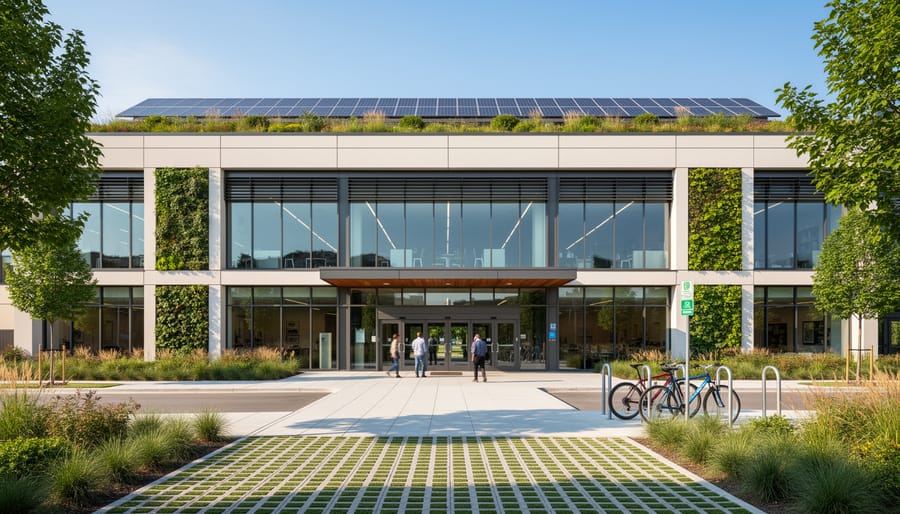
Circular Design and Closed-Loop Systems
Circular design reimagines products and systems as closed loops where materials retain value and never become waste. Rather than the traditional linear model of make-use-discard, Circular economy keeps materials in use through strategies like reuse, repair, refurbishment, and eventual recycling back into new products. This approach tackles resource depletion head-on while cutting emissions associated with virgin material extraction.
Canadian innovators are leading the charge. Vancouver-based Loop Industries developed a technology that breaks down plastic waste to its molecular building blocks, allowing it to be remade into virgin-quality plastic indefinitely. In packaging, companies like Toronto’s EcoEnclose design mailers from recycled content that can be composted or fed back into paper recycling streams. Furniture manufacturers in Quebec now offer take-back programs, refurbishing returned pieces or reclaiming materials for new production runs.
The shift requires designers to consider end-of-life from day one: choosing mono-materials that simplify separation, avoiding toxic additives, and designing for disassembly. When done right, circular design turns yesterday’s product into tomorrow’s resource.
Biomimicry: Learning from Nature
Biomimicry applies 3.8 billion years of nature’s research and development to human design challenges. Instead of imposing solutions on the environment, designers observe how organisms and ecosystems solve problems, then adapt those strategies to buildings, materials, and systems.
In practice, this means studying how a polar bear’s hollow fur traps heat, then creating building insulation with similar air-pocket structures. Or examining how maple seeds spiral to the ground, informing more efficient wind turbine blade designs. The approach works because natural systems have already optimized for energy efficiency, resource conservation, and resilience through countless iterations.
Canadian projects demonstrate this thinking in action. The Biowall at the University of Guelph mimics forest ecosystems to filter air naturally while regulating humidity. Researchers at the University of Toronto developed a building envelope inspired by polar bear fur, using trapped air chambers to dramatically reduce heat loss in cold climates without adding thickness.
These solutions often outperform conventional engineering because they work with physics rather than against it, require less energy to operate, and adapt to changing conditions. The method is particularly valuable in harsh Canadian climates where buildings must withstand temperature extremes while minimizing energy use.
Passive and Low-Impact Strategies
Passive and low-impact strategies harness environmental conditions rather than mechanical systems to regulate building temperature, light, and air quality. In Canadian architecture, passive solar design optimizes window placement and thermal mass to capture winter sun and minimize summer heat gain, reducing heating loads by 15 to 40 percent in well-executed projects. Natural ventilation uses operable windows, thermal chimneys, and cross-breezes to cool buildings without air conditioning, a technique gaining traction in mild-climate regions like coastal British Columbia.
Retrofitting existing structures with passive upgrades, adding overhangs to shade south-facing windows, improving insulation, or installing heat-recovery ventilators, delivers immediate energy savings. These strategies lower operating costs, improve indoor air quality, and reduce carbon emissions without the complexity or maintenance burden of active mechanical systems, making them particularly valuable in remote or off-grid Canadian communities.
Where Design for Sustainability Is Applied
Clean Energy and Infrastructure
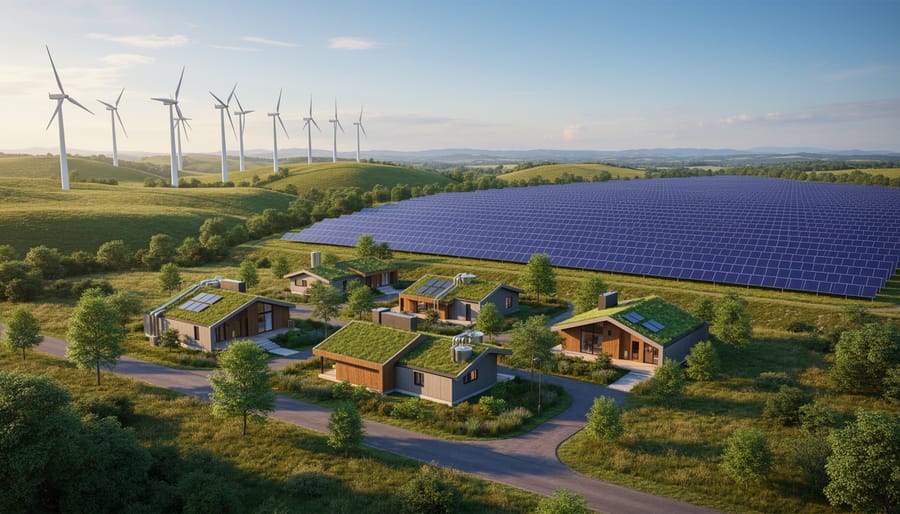
Sustainable design principles are reshaping Canada’s energy infrastructure from the ground up. Solar farms now incorporate pollinator-friendly native plantings beneath panels, creating dual-use landscapes that generate electricity while supporting biodiversity. In Alberta, some installations use low-impact mounting systems that minimize soil disruption and allow continued agricultural grazing.
Wind energy projects demonstrate similar foresight. Developers work with ecologists to site turbines away from critical bird migration corridors and bat habitats, while designing access roads that double as wildlife corridors. Offshore projects in Atlantic Canada are exploring floating turbine designs that reduce seabed impact.
Energy storage facilities showcase circular thinking too. Battery systems increasingly use modular designs that simplify component replacement and material recovery. Some Canadian clean energy innovators are piloting second-life applications for retired electric vehicle batteries in grid storage, extending their usefulness before recycling.
Integration with smart grids allows these systems to respond to real-time demand, reducing waste. Community-owned renewable projects in rural Ontario and Quebec prioritize local benefit-sharing models, ensuring economic returns stay within the regions powering the transition.
Buildings and the Built Environment
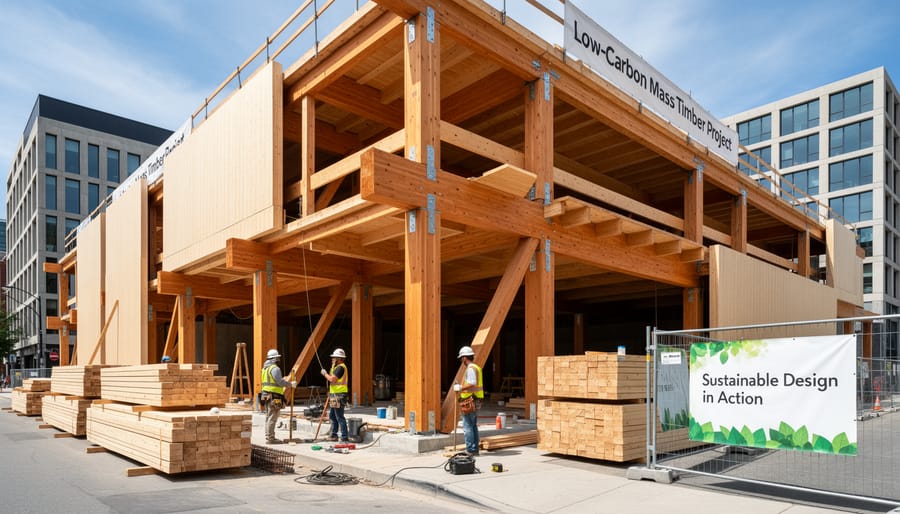
Canada’s building sector is proving that design for sustainability can deliver both dramatic emissions cuts and healthier, more livable spaces. Net-zero buildings, structures that produce as much energy as they consume, are now operating coast to coast, from Vancouver’s ultra-efficient Passive House towers to Toronto’s Evolv1 office building, powered entirely by renewable sources. These projects combine advanced insulation, triple-glazed windows, heat recovery ventilation, and rooftop solar to eliminate fossil fuel dependence.
Mass timber construction is reshaping skylines while storing carbon. British Columbia leads globally in this field, with engineered wood replacing concrete and steel in mid-rise buildings. A single mass timber tower can sequester hundreds of tonnes of CO₂, turning the structure itself into a climate solution.
Green retrofits are equally transformative. Thousands of older buildings are being upgraded with better envelopes, smart HVAC systems, and renewable heating. Standards like LEED and Passive House provide rigorous frameworks, ensuring that new construction and renovations meet measurable performance targets. The result is a built environment that uses less, wastes less, and supports Canada’s clean energy transition.
Indigenous Perspectives and Traditional Knowledge
Indigenous communities across Canada have practiced design for sustainability for millennia, grounded in principles that modern sustainability frameworks are only beginning to formalize. These approaches center reciprocity with the land, seven-generation thinking, and the understanding that all elements of an ecosystem are interconnected.
Traditional knowledge informs contemporary projects in tangible ways. The Dene community in Łutsël K’é, Northwest Territories, designed their community solar installation using consultation processes that honored relationship with the land and minimized disruption to caribou migration routes. In British Columbia, the T’Sou-ke Nation’s solar farm integrates placement decisions based on ancestral land use patterns and seasonal cycles, demonstrating how traditional ecological knowledge creates resilient infrastructure.
Indigenous design thinking challenges the extraction-based model by asking not “what can we take?” but “what can we give back?” This perspective appears in urban projects too, Vancouver’s revitalized Hogan’s Alley incorporates Coast Salish design elements that manage stormwater through natural filtration, reflecting traditional watershed stewardship. These projects prove that Indigenous knowledge isn’t historical artifact but living practice, offering pathways toward truly regenerative design that restores rather than merely sustains.
Why Design for Sustainability Matters for Canada’s Future
Canada’s commitment to reach net-zero emissions by 2050 isn’t just an environmental target, it’s a blueprint for economic transformation, and design for sustainability sits at the heart of that shift. Every building designed for energy efficiency, every product engineered for circularity, and every infrastructure project planned with ecosystem health in mind brings the country closer to its climate goals while opening doors to new markets and industries.
The economic case is compelling. Canada’s cleantech sector already employs over 282,000 people and generates $63 billion in annual revenue, with sustainable design driving innovation across renewable energy systems, green building materials, and low-carbon transportation. Companies that embed sustainability into design processes are discovering it creates competitive advantage reducing material costs, improving energy performance, and attracting investment from ESG-focused funds.
Beyond dollars and jobs, sustainable design builds resilience in a climate-changing world. Homes designed with passive cooling stay livable during heat waves without straining the grid. Infrastructure planned with nature-based solutions withstands flooding and extreme weather better than conventional alternatives. Communities designed around walkability and transit reduce both emissions and vulnerability to fuel price shocks.
This approach also positions Canada as a leader in the global shift toward regenerative economies. As international markets increasingly demand low-carbon products and services, Canadian expertise in sustainable design, from mass timber construction to renewable energy integration, becomes an export in its own right. The question isn’t whether Canada can afford to prioritize design for sustainability, but whether it can afford not to.
Common Questions About Design for Sustainability
Is sustainable design more expensive upfront? That’s the question Canadian businesses and homeowners often ask first, and the answer reshapes when you look beyond initial costs. While sustainable materials or energy-efficient systems may carry higher purchase prices, total lifecycle costs usually drop through lower energy bills, reduced maintenance, and longer product lifespans. Federal and provincial incentives also offset early investment: Canadian businesses can access grants, tax credits, and clean energy programs that make sustainable choices financially competitive from day one.
Is sustainable design more expensive than conventional design?
Initial costs can be higher, but lifecycle savings through energy efficiency, durability, and lower waste typically offset the difference. Many Canadian projects break even within five to ten years.
How can small businesses or individuals adopt sustainable design practices?
Start with high-impact, low-cost changes: choose durable materials, design for disassembly, prioritize energy efficiency, and engage with local suppliers. Many provincial programs offer technical support and funding for small-scale retrofits and product redesign.
What certifications or standards guide sustainable design in Canada?
LEED (Leadership in Energy and Environmental Design) for buildings, Passive House for energy performance, and Cradle to Cradle for product circularity are widely recognized. B Corp certification also verifies broader social and environmental commitments.
How does sustainable design differ from green design?
Green design typically addresses environmental impact reduction, while sustainable design expands to social equity, economic viability, and long-term resilience. Sustainability is the broader framework; green is one vital piece of it.
Getting started doesn’t require a complete overhaul. Designers, builders, and businesses can begin by auditing current practices, identifying material waste, energy use, or transport inefficiencies, then making targeted improvements. Free resources from Natural Resources Canada, provincial clean tech networks, and Indigenous design collectives help newcomers build knowledge without large consulting fees. The shift to sustainable design is iterative: each project teaches lessons that inform the next, building capacity and confidence over time.
Design for sustainability represents more than a set of techniques, it’s a fundamental shift in how we imagine, create, and interact with the world around us. By embedding environmental foresight, social equity, and economic viability into every stage of design, this approach transforms products, buildings, and systems from sources of depletion into catalysts for regeneration.
The Principles of Sustainable Design provide the foundation: minimize resource use, prioritize renewable materials, design for longevity and adaptability, eliminate waste, and plan for recovery. These aren’t abstract ideals. Across Canada, innovators are proving their viability through mass timber towers that sequester carbon, circular products that close material loops, and Indigenous-led projects that honour long-term stewardship. Each example demonstrates that sustainable design delivers tangible environmental benefits while strengthening communities and economies.
The path forward is clear. Canada’s net-zero commitments and growing clean tech sector create unprecedented opportunities for designers, builders, policymakers, and citizens to lead. Whether you’re specifying materials for your next project, supporting local green businesses, or advocating for sustainable infrastructure in your community, your choices accelerate this transition.
The question isn’t whether design for sustainability works, the evidence surrounds us. The question is how quickly we’ll scale these solutions to meet the climate challenge. Canada’s innovators have shown what’s possible. Now it’s our turn to champion their work and demand that sustainability becomes the standard, not the exception.