

Every spin of a slot machine, every hand of poker, and every sports bet placed consumes electricity—and Canada’s gaming industry is finally reckoning with its carbon footprint. From Vancouver’s first solar-powered casino initiatives to Ontario’s wind-energy partnerships with major sportsbooks, a quiet revolution is transforming how Canadians gamble. While platforms like mc games bet é confiável expand digital gaming options, the industry’s environmental impact demands urgent attention: a single large casino can consume as much power as a small town, running air conditioning, lighting, and thousands of electronic gaming machines around the clock.
Yet this challenge has sparked remarkable Canadian innovation. Forward-thinking operators are now installing rooftop solar arrays, purchasing renewable energy credits, and redesigning facilities with geothermal heating systems. Indigenous-led casinos in British Columbia are pioneering net-zero designs that honor traditional environmental stewardship while embracing cutting-edge technology. These aren’t merely symbolic gestures—they represent energy-intensive industries reducing emissions through measurable, auditable commitments.
For environmentally conscious Canadians who enjoy gaming entertainment, this transformation offers a pathway forward. Understanding which operators genuinely prioritize sustainability—and which engage in greenwashing—empowers consumers to vote with their wallets. The intersection of renewable energy and gaming reveals something profound: even industries built on chance can make deliberate choices about our collective climate future.
The Energy Reality Behind Online Sportsbooks and Digital Casinos
Why Your Bet Requires More Power Than You Think
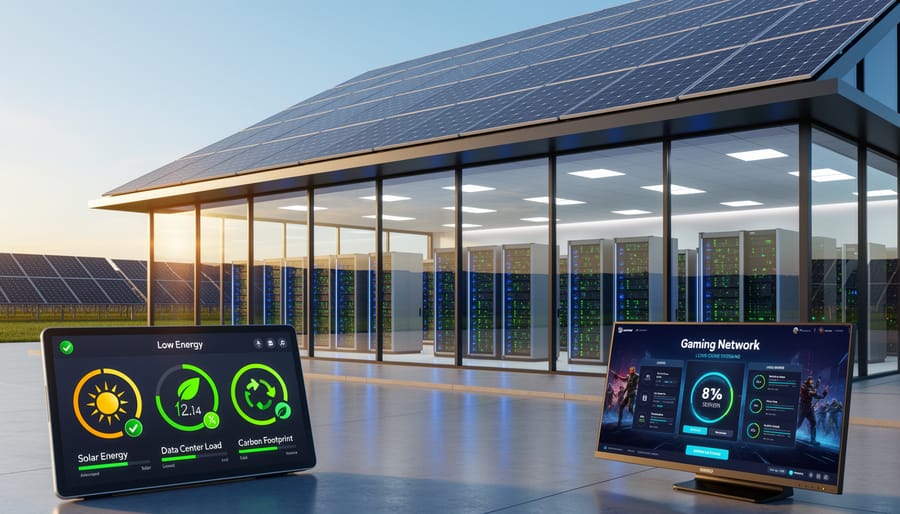
Every time you place a bet or spin a digital slot, you’re tapping into a vast, energy-hungry infrastructure that never sleeps. Behind the sleek interfaces of Canada’s online sportsbooks and casinos lies a complex network of data centers housing thousands of servers that process millions of transactions simultaneously.
Consider the technical demands: servers must maintain constant uptime to handle real-time betting on games happening across multiple time zones. Live streaming technology delivers high-definition video of sports events and live dealer tables to thousands of players at once, consuming enormous bandwidth. Payment processing systems verify deposits and withdrawals within seconds, running encryption protocols that require substantial computing power. Meanwhile, sophisticated security systems work around the clock, analyzing patterns to detect fraud and protect player data from cyber threats.
A single mid-sized online casino can consume as much electricity annually as a small Canadian town. Data centers typically require cooling systems that can account for 40 percent of their total energy use, as servers generate intense heat. When you factor in redundant backup systems designed to prevent any service interruption, the power requirements multiply further.
This is why the shift toward renewable energy in gaming isn’t just an environmental nicety – it’s an operational necessity. As gaming platforms expand and technology advances, their energy appetite grows exponentially. For environmentally conscious Canadians who enjoy gaming, understanding this hidden infrastructure helps put the renewable energy conversation into perspective.
Canadian Gaming Operators Making the Green Transition
From Solar-Powered Servers to Wind-Backed Betting
Canadian gaming operations are pioneering practical approaches to renewable energy integration, transforming how the industry powers its digital platforms and physical locations. Several online sportsbooks serving Canadian players have partnered with data centers powered by clean energy sources, recognizing that server operations represent their largest environmental footprint.
In British Columbia, where gaming operators benefit from BC’s renewable electricity grid powered predominantly by hydroelectric generation, several platforms have established server infrastructure that runs on over 90 percent clean energy. This strategic location choice dramatically reduces the carbon intensity of digital betting operations compared to jurisdictions reliant on fossil fuels.
Indigenous-owned casinos across Canada are leading on-site renewable installations. The River Cree Resort and Casino in Alberta installed a significant solar array that offsets portions of their electricity consumption, while exploring geothermal options for heating and cooling systems. These installations serve dual purposes: reducing operational costs while honoring traditional Indigenous values of environmental stewardship.
Manitoba’s gaming facilities have partnered with local wind energy providers, purchasing renewable energy certificates that support regional wind farm development. This approach allows operations to claim clean energy usage even when direct renewable connections aren’t immediately feasible, channeling investment dollars toward expanding Canada’s renewable capacity.
These concrete examples demonstrate that sustainability in gaming isn’t merely aspirational—it’s becoming standard practice through innovative partnerships and strategic infrastructure decisions that benefit both the environment and long-term business viability.

The Technology Powering Sustainable Gaming Experiences
Behind every spin of a digital slot machine or live dealer game lies a complex web of servers, cooling systems, and data infrastructure—traditionally some of the most energy-hungry components of online entertainment. Today’s renewable-powered gaming platforms are transforming this reality through breakthrough innovations that marry performance with sustainability.
At the heart of this revolution is energy-efficient server architecture. Modern gaming operators are deploying next-generation processors that deliver the same computational power while consuming up to 40% less electricity than previous models. These advances matter enormously in an industry where milliseconds determine user satisfaction and server uptime is non-negotiable.
Canadian data centers supporting these platforms are pushing electric technology limits through innovative cooling solutions. Rather than energy-intensive air conditioning, facilities are leveraging Canada’s naturally cool climate with ambient air cooling systems—some even using snowmelt technology pioneered in northern regions. These approaches slash cooling energy requirements by up to 60%, a game-changing reduction for facilities operating 24/7.
AI-driven power management represents another leap forward. Machine learning algorithms now predict gaming traffic patterns, automatically scaling server capacity to match demand. During off-peak hours, systems intelligently power down unnecessary infrastructure, while maintaining instant readiness for player surges. This smart orchestration cuts waste without compromising the seamless experience gamers expect.
Perhaps most impressively, these technologies enhance rather than diminish game quality. Lower heat generation means more stable systems, reducing lag and downtime. Players enjoy smoother gameplay, faster load times, and more reliable connections—all while their entertainment choices support Canada’s clean energy transition. It’s proof that environmental responsibility and exceptional user experience aren’t opposing forces, but complementary goals driving the industry’s sustainable future.

What This Means for Canadian Players and the Environment
The shift toward renewable-powered gaming venues represents more than an environmental checkbox—it creates meaningful opportunities for Canadians from coast to coast. When a casino switches to solar panels or wind energy, the ripple effects extend far beyond reduced utility bills.
Consider the employment landscape. Installing and maintaining renewable energy systems at gaming facilities creates specialized jobs in clean technology sectors. From solar panel technicians to energy management consultants, these positions offer competitive wages and training opportunities for workers transitioning from traditional energy roles. A single large-scale casino retrofit can generate dozens of long-term positions while supporting hundreds more during construction phases.
The carbon emission reductions tell a compelling story in relatable terms. A mid-sized casino switching entirely to renewable power prevents approximately 2,500 tonnes of CO2 emissions annually—equivalent to taking 540 cars off Canadian roads each year. Across multiple facilities adopting similar measures with federal climate support, the cumulative impact becomes significant.
For Indigenous communities, these partnerships offer promising pathways toward economic sovereignty and environmental stewardship. Several First Nations are exploring joint ventures where renewable energy projects power gaming operations on their territories. These arrangements generate revenue streams while aligning with traditional values of land protection. The Cowessess First Nation in Saskatchewan, for instance, has demonstrated how solar installations can complement gaming enterprises, creating employment while reducing environmental footprints.
Canadian players hold considerable influence through their choices. Supporting gaming venues committed to transparency about their energy sources sends market signals that sustainability matters. Many operators now display their environmental certifications prominently, making informed decisions easier. When consumers prioritize these greener options—whether visiting physical locations or choosing online platforms powered by renewable energy—they accelerate the industry’s transformation. This collective action demonstrates that entertainment and environmental responsibility can coexist, setting standards for other sectors to follow while building a cleaner energy future for all Canadians.
Challenges and the Road Ahead
The path toward renewable-powered gaming in Canada isn’t without its hurdles. Infrastructure costs remain substantial, with a single large-scale solar installation for a major casino potentially reaching several million dollars. For smaller gaming operators already navigating tight margins, this represents a daunting upfront investment, even with long-term energy savings factoring into the equation.
Regulatory frameworks haven’t quite caught up with this emerging trend either. Provincial gaming authorities are still developing guidelines for energy reporting and sustainability claims, creating uncertainty for operators wanting to market their green credentials authentically. Meanwhile, Canada’s varied climate presents unique technical challenges—solar efficiency drops during long northern winters precisely when heating demands spike.
Scalability poses another genuine concern. While individual facilities can successfully transition to renewables, expanding this model across Canada’s diverse gaming landscape requires coordinated effort between provincial governments, utility companies, and Indigenous communities who steward much of the land suitable for renewable installations.
Yet innovation continues pushing forward. Battery storage technology is advancing rapidly, addressing intermittency issues that once seemed insurmountable. Virtual power purchase agreements now allow smaller operators to invest in renewable projects without onsite installations. Several Canadian gaming companies are collaborating on shared renewable infrastructure, pooling resources to reduce individual costs.
Indigenous-led renewable energy partnerships are opening new pathways, combining traditional environmental stewardship with modern technology. These collaborations respect territorial sovereignty while advancing sustainability goals that benefit entire communities. The journey requires patience, investment, and cooperation, but the destination—a genuinely sustainable gaming industry—remains achievable and increasingly within reach.
Canada stands at a pivotal moment where entertainment and environmental stewardship are converging in unexpected ways. The renewable-powered gaming sector emerging across the country represents more than just an industry transformation—it’s a blueprint for how digital entertainment can embrace sustainability without compromising experience. From British Columbia’s hydroelectric facilities powering online platforms to Ontario’s operators investing in solar infrastructure, Canadian innovators are proving that thriving businesses and environmental responsibility aren’t mutually exclusive.
The implications extend far beyond gaming tables and slot machines. When an energy-intensive industry like gaming commits to renewable power, it creates a ripple effect across the digital economy. Streaming services, data centers, and cloud computing providers are watching closely, recognizing that if casinos can successfully transition to clean energy, so can they.
For Canadians who care about climate action, supporting renewable-powered gaming options sends a powerful market signal. Every wager placed at a green-certified casino, every hour spent at a solar-powered sportsbook, becomes a vote for sustainable entertainment. Research operators’ environmental commitments, ask questions about their energy sources, and celebrate platforms making genuine progress.
This movement also honors Indigenous perspectives on sustainability—recognizing our responsibility to future generations and the interconnectedness of our actions. As Canada positions itself as a global leader in sustainable gaming, we’re not just reshaping an industry; we’re redefining what responsible entertainment looks like in the twenty-first century. The future of gaming is green, and Canada is lighting the way.