
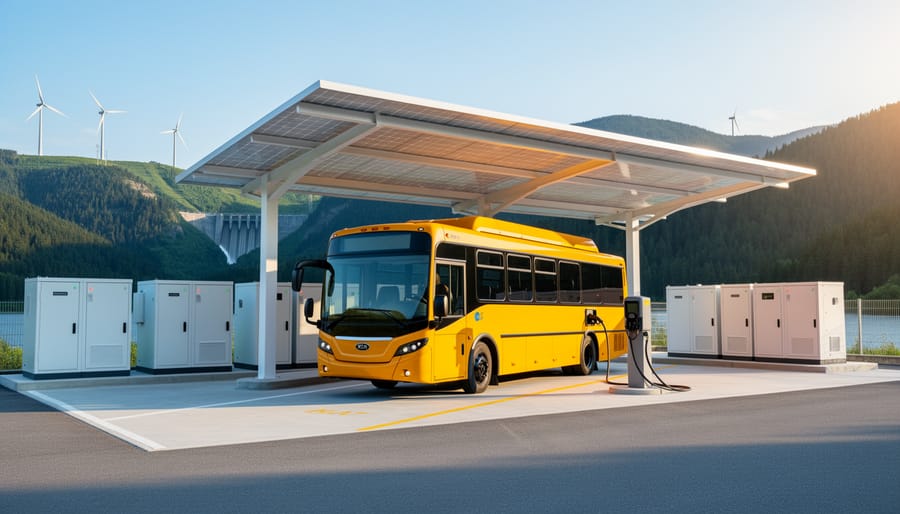
From Vancouver’s battery breakthroughs to Montreal’s smart grid systems, Canadian innovators are electrifying the future of energy. Electric innovations represent far more than technological advancement—they embody our collective response to climate change, our economic reinvention, and our commitment to building sustainable communities for generations ahead.
Across the country, entrepreneurs, researchers, and engineers are developing solutions that transform how we generate, store, and consume electricity. These aren’t distant possibilities confined to laboratories. They’re operational systems powering homes, businesses, and transportation networks right now. Indigenous communities are deploying microgrids that replace diesel generators. Manufacturing hubs are retooling for electric vehicle production. Coastal provinces are harnessing tidal forces while prairie innovators perfect grid-scale battery storage.
Canada’s clean energy transition depends fundamentally on these electric innovations. Our nation’s abundant renewable resources—hydroelectric potential, wind corridors, solar capacity, and geothermal reserves—require sophisticated technologies to reach their full promise. Canadian companies are rising to this challenge with remarkable ingenuity, creating export opportunities while addressing domestic needs.
This examination reveals the people behind these breakthroughs: the scientists reimagining energy systems, the business leaders taking calculated risks, and the communities embracing change. Their stories illuminate how electric innovations are reshaping Canadian industry, creating employment opportunities, and positioning our nation as a global clean energy leader. The electricity revolution isn’t coming—it’s already here, powered by Canadian vision and determination.
The Electric Vehicle Revolution Made in Canada
Lion Electric: Transforming Public Transit
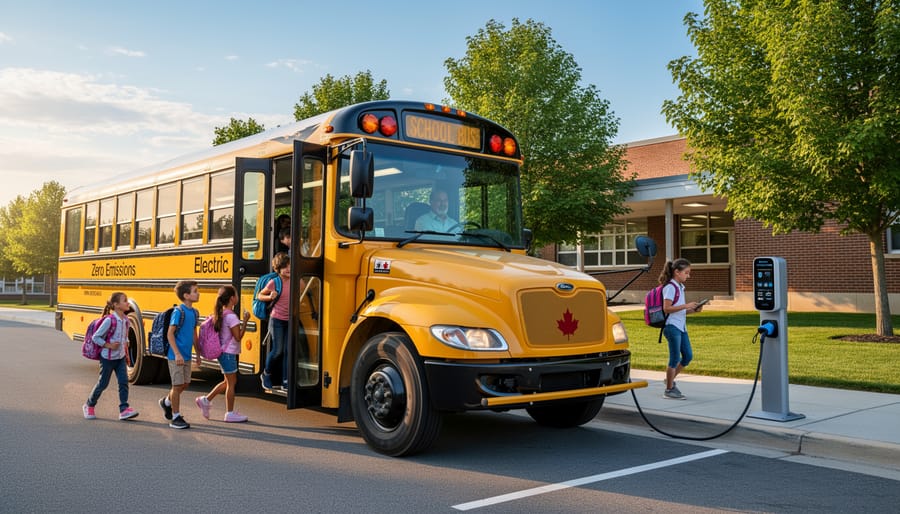
Every morning, millions of children across North America climb aboard school buses that haven’t changed much in decades. But Saint-Jérôme, Quebec-based Lion Electric is rewriting that story with zero-emission vehicles that are transforming how we think about public transit.
Founded in 2008, Lion Electric has become North America’s leading manufacturer of all-electric medium and heavy-duty urban vehicles. Their sleek electric school buses and commercial trucks are now operating in over 300 locations across the continent, quietly revolutionizing transportation one route at a time. Unlike their diesel predecessors, these vehicles produce no tailpipe emissions, significantly improving air quality for children and communities while reducing greenhouse gas emissions by up to 80 percent over their lifetime.
The company’s state-of-the-art manufacturing facility in Mirabel, Quebec represents a new chapter in Canadian manufacturing. This innovation hub produces battery systems, chassis, and complete vehicles while creating hundreds of skilled jobs in the clean technology sector.
What makes Lion’s impact particularly meaningful is the accessibility of their technology. School districts and transit agencies discover that while electric buses cost more upfront, they save substantially on fuel and maintenance over time. Fewer moving parts mean less maintenance, and electricity costs a fraction of diesel fuel. For communities committed to reducing their carbon footprint, Lion Electric offers a practical pathway forward, proving that environmental responsibility and fiscal prudence can drive together toward a cleaner future.
Charging the Future: Canadian Infrastructure Pioneers
Canada’s sprawling geography presents both a challenge and an opportunity for electric vehicle infrastructure. Several pioneering Canadian companies are rising to meet this unique challenge, developing innovative charging solutions that make EV adoption practical from coast to coast.
Ivy Charging Network, a subsidiary of Ontario Power Generation, exemplifies this forward-thinking approach. The company has installed fast-charging stations along major highway corridors, strategically addressing range anxiety by ensuring drivers can traverse long distances confidently. Their stations deliver up to 350 kilowatts of power, enabling vehicles to charge in minutes rather than hours.
Meanwhile, Vancouver-based FLO is revolutionizing smart charging technology with solutions that balance grid demand and renewable energy availability. Their intelligent systems automatically adjust charging speeds based on electricity prices and carbon intensity, helping users charge when the grid is cleanest and most affordable. This innovation matters tremendously as we integrate more variable renewable energy sources like wind and solar.
AddÉnergie, Quebec’s charging leader, has deployed over 20,000 stations across North America, proving Canadian innovation can scale globally. Their solar-powered charging canopies demonstrate how infrastructure itself can generate clean energy while serving communities.
These companies aren’t just building charging posts; they’re creating the nervous system for an electric transportation future, ensuring Canada’s vast distances become an opportunity rather than an obstacle.
Smarter Grids for a Cleaner Tomorrow
Intelligent Energy Management Systems
As Canada’s electricity grid grows more complex with increased renewable energy integration, a new generation of companies is harnessing artificial intelligence to keep power flowing efficiently. Toronto-based Rxvii is leading the charge with machine learning algorithms that predict electricity demand patterns, helping utilities balance supply from intermittent sources like wind and solar. Their system analyzes weather data, consumer behaviour, and grid conditions in real-time, reducing waste and preventing blackouts.
Meanwhile, Vancouver’s Opus One Solutions has developed software that manages distributed energy resources across neighbourhoods, coordinating rooftop solar panels, battery storage, and electric vehicle charging to optimize grid performance. Their platform has been adopted by utilities serving millions of Canadians, demonstrating how smart technology can transform our energy infrastructure.
Calgary’s NOVACAB takes a different approach, creating demand response systems that automatically adjust building energy consumption during peak hours. By temporarily reducing air conditioning or delaying equipment startups, businesses save money while relieving grid strain without compromising comfort. These intelligent systems represent the invisible backbone of Canada’s clean energy future, proving that innovation isn’t always visible but always essential.
Connecting Remote Communities
Across Canada’s vast northern regions, innovative microgrid systems are transforming how remote communities access reliable electricity. These self-contained power networks, combining solar panels, wind turbines, and battery storage, are replacing expensive and polluting diesel generators that have long been the only option for off-grid settlements.
Indigenous-led initiatives are at the forefront of this transformation. In northern Ontario, the Attawapiskat First Nation partnered with technology providers to install a 1-megawatt solar farm paired with battery storage, dramatically reducing diesel consumption while creating local employment. The project design incorporated traditional knowledge about seasonal patterns and land use, ensuring installations respect sacred sites and wildlife corridors.
These innovations extend beyond technology alone. Community-owned microgrids empower local decision-making and keep energy revenues circulating within Indigenous economies. Training programs are developing the next generation of renewable energy technicians from within these communities, building long-term capacity and self-sufficiency.
The environmental benefits are substantial. Each microgrid installation can eliminate hundreds of thousands of litres of diesel fuel annually, reducing both greenhouse gas emissions and the risks associated with fuel transportation across sensitive ecosystems. For communities that have stewarded these lands for millennia, renewable microgrids offer a pathway to energy independence that honours both tradition and innovation.
Battery Breakthroughs and Energy Storage Solutions
Next-Generation Battery Chemistry
Canadian researchers and companies are reimagining what batteries can be, moving beyond conventional lithium-ion technology to create safer, more sustainable alternatives. At the forefront is Hydro-Québec’s research center in Varennes, Quebec, where scientists have developed solid-state battery technology that replaces flammable liquid electrolytes with solid materials, dramatically reducing fire risk while increasing energy density. This breakthrough has attracted partnerships with major automakers seeking next-generation electric vehicle batteries.
Meanwhile, Nano One Materials in British Columbia is revolutionizing battery manufacturing itself. Their patented process produces cathode materials with significantly lower carbon footprints and reduced reliance on cobalt, a metal often associated with problematic mining practices. The company’s approach makes battery production more economical and environmentally responsible.
Toronto-based Li-Cycle addresses the full battery lifecycle through innovative recycling technology that recovers up to 95 percent of critical materials from end-of-life batteries. As electric vehicle adoption accelerates, this circular economy approach ensures valuable resources don’t end up in landfills.
These Canadian innovations demonstrate that the path to electrification requires not just better batteries, but smarter, more sustainable ones that consider environmental and social impacts from production through disposal.
Storing Renewable Power at Scale
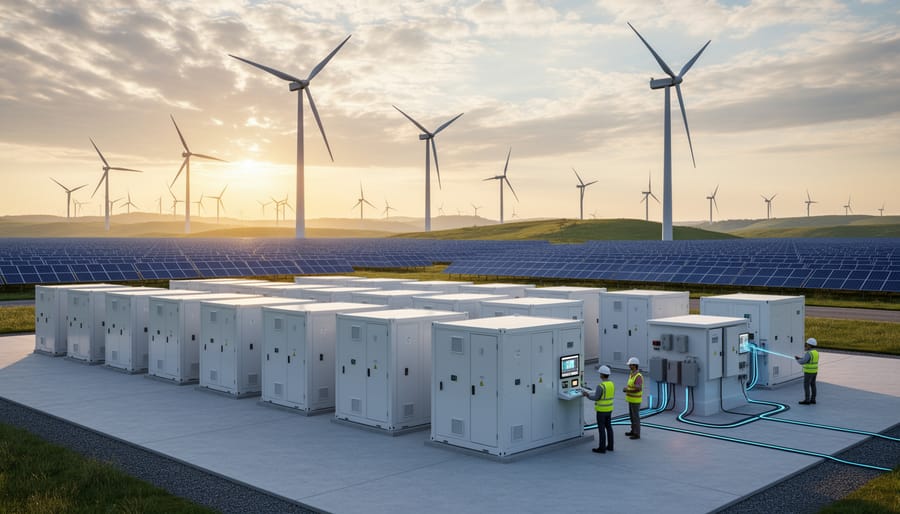
The challenge with renewable energy has always been timing—the sun doesn’t always shine, and the wind doesn’t always blow when we need electricity most. Canadian innovators are tackling this head-on with breakthrough storage solutions that are transforming how we think about grid reliability.
Ontario-based Hydrostor is pioneering Advanced Compressed Air Energy Storage, converting surplus renewable electricity into compressed air stored in underground caverns. When demand peaks, the compressed air powers turbines to generate electricity—a process that can store energy for days or even weeks. Their system in Goderich, Ontario, demonstrates how abandoned mine sites can become vital energy storage hubs.
Meanwhile, companies are also exploring flow batteries and thermal storage systems that can store massive amounts of energy at lower costs than traditional lithium-ion batteries. These technologies allow wind farms in Alberta and solar installations across the Prairies to provide consistent power around the clock, effectively bridging the gap between renewable generation and constant demand. As these systems scale up, they’re proving that a grid powered entirely by renewables isn’t just possible—it’s becoming practical.
Electric Solutions for Heavy Industry
Mining’s Electric Makeover
Deep beneath the earth’s surface, a quiet revolution is transforming one of Canada’s most energy-intensive industries. Mining companies are trading diesel-powered equipment for electric alternatives, dramatically cutting emissions while creating safer working conditions for underground crews.
MacLean Engineering, an Ontario-based manufacturer, has pioneered battery-electric mining vehicles that eliminate toxic diesel fumes in confined underground spaces. Their innovations are already operating in mines across Northern Ontario, where workers report immediate improvements in air quality and reduced noise levels. Meanwhile, Nouveau Monde Graphite in Quebec is developing North America’s first all-electric mine, demonstrating that zero-emission operations are achievable at scale.
The shift extends beyond vehicles. Companies like Cementation Canada are electrifying entire underground infrastructure systems, replacing diesel generators with clean power distribution networks. These advances address a dual challenge: reducing the mining sector’s substantial carbon footprint while protecting workers from harmful exhaust exposure. As battery technology improves and costs decline, electric mining equipment is becoming the practical choice for operations nationwide.
Industrial Heat and Process Electrification
Canada’s heavy industries are undergoing a quiet revolution as electric technologies replace fossil fuel combustion in some of the nation’s most energy-intensive processes. From steel manufacturing to chemical production, companies are discovering that electrification can deliver both emissions reductions and operational advantages.
Electric arc furnaces now enable steelmakers to produce metal using electricity rather than coal, cutting emissions while offering greater temperature control and flexibility. Similarly, electric boilers and heat pumps are replacing natural gas systems in food processing facilities and pulp and paper mills across the country. These technologies can operate on renewable electricity, transforming carbon-intensive operations into clean manufacturing hubs.
Canadian innovators are also developing electric plasma technologies for cement production and electrolytic processes for chemical manufacturing. While the transition requires significant upfront investment, early adopters report lower long-term operating costs and improved product quality. As Canada’s electricity grid becomes cleaner, industrial electrification represents one of the most promising pathways to decarbonize manufacturing while maintaining competitive advantage in global markets.
The People Behind the Innovation
Behind every breakthrough battery and charging station is a person with a vision for a cleaner future. Across Canada, innovators from diverse backgrounds are reshaping how we think about electric power, bringing unique perspectives that strengthen our path toward sustainability.
In Thunder Bay, Ontario, Cree engineer Sarah Atlookan combines traditional ecological knowledge with modern engineering to develop microgrids for remote northern communities. Her company partners with First Nations to create solar-battery systems that reduce diesel dependence while respecting land-based values. “Our ancestors understood living in balance with nature,” she explains. “We’re applying that wisdom to twenty-first-century technology.”
Meanwhile, in Montreal, Yasmin Patel leads a team developing next-generation solid-state batteries at a startup spun out from university research. After immigrating from India to study chemical engineering, she noticed how Canadian winters challenged electric vehicle performance. Her innovation focuses on batteries that maintain efficiency in extreme cold, addressing a distinctly Canadian problem with global implications.
Vancouver-based Marcus Chen took a different route to electric innovation. A former video game developer, he now designs user interfaces for commercial charging networks, making them intuitive for drivers of all ages and technical abilities. “Technology only succeeds when everyone can use it,” he says.
These stories represent just a fraction of Canada’s electric innovation ecosystem. From Métis-owned renewable energy cooperatives in Saskatchewan to Acadian entrepreneurs in New Brunswick developing marine electrification solutions, the diversity of perspectives enriches our approach to sustainability. Indigenous innovators particularly bring invaluable insights about long-term stewardship and community-centered development, reminding us that true innovation considers seven generations forward, not just the next quarterly report.
Building the Workforce of Tomorrow
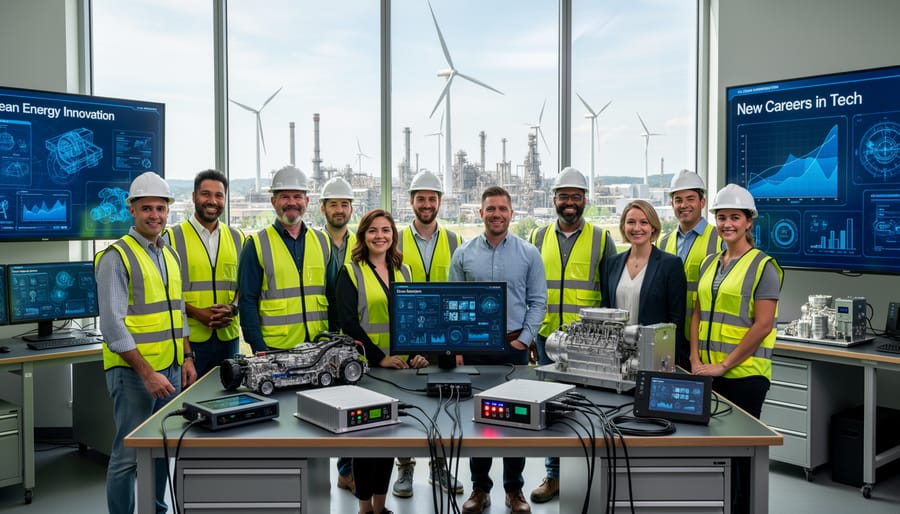
Canada’s electric technology revolution isn’t just about innovation—it’s creating thousands of meaningful jobs across the country. From solar panel installers in Ontario to battery engineers in Quebec, the sector is generating diverse opportunities that didn’t exist a decade ago.
Colleges and universities are responding with specialized programs tailored to industry needs. British Columbia Institute of Technology now offers a Sustainable Energy Management program, while Mohawk College in Hamilton trains students in electric vehicle maintenance and charging infrastructure. These hands-on programs connect learners directly with employers, ensuring graduates are job-ready from day one.
Indigenous communities are also embracing clean energy careers through targeted training initiatives. The First Nations Power Authority partners with technical schools to prepare Indigenous youth for roles in renewable energy projects on their traditional territories, combining modern skills with traditional environmental stewardship values.
Industry leaders like Hydro-Québec and Ontario’s electricity sector are investing heavily in apprenticeships and upskilling programs for existing workers transitioning from traditional energy roles. These initiatives recognize that Canada’s clean energy future depends on supporting workers through this transformation, ensuring no one is left behind as we build a more sustainable economy for generations to come.
Canada stands at a pivotal moment in the global clean energy transition, and the electric innovations emerging from coast to coast demonstrate that this nation is not merely participating in change—it’s leading it. From battery breakthroughs in Quebec to electric aviation developments in British Columbia, Canadian companies are proving that environmental responsibility and economic prosperity can advance hand in hand.
The benefits are already tangible. Communities across the country are experiencing cleaner air, reduced greenhouse gas emissions, and new employment opportunities in sectors that didn’t exist a generation ago. Indigenous communities are partnering with innovators to bring clean energy solutions to remote regions, honoring traditional relationships with the land while embracing cutting-edge technology. The economic dividends are equally compelling, with billions in investment flowing into Canadian clean tech companies and thousands of skilled jobs being created in sustainable industries.
Yet the journey is far from complete. The innovations profiled here represent just the beginning of what’s possible when creativity, determination, and commitment to sustainability converge. For this momentum to continue, it requires collective action—from policymakers who create supportive frameworks, to businesses that invest in clean solutions, to individuals who choose sustainable alternatives in their daily lives.
Canada’s clean energy future is bright, but it’s also a responsibility we all share. By supporting these innovations, adopting new technologies, and championing the companies pushing boundaries, every Canadian can contribute to a legacy of environmental stewardship and technological excellence that will benefit generations to come.